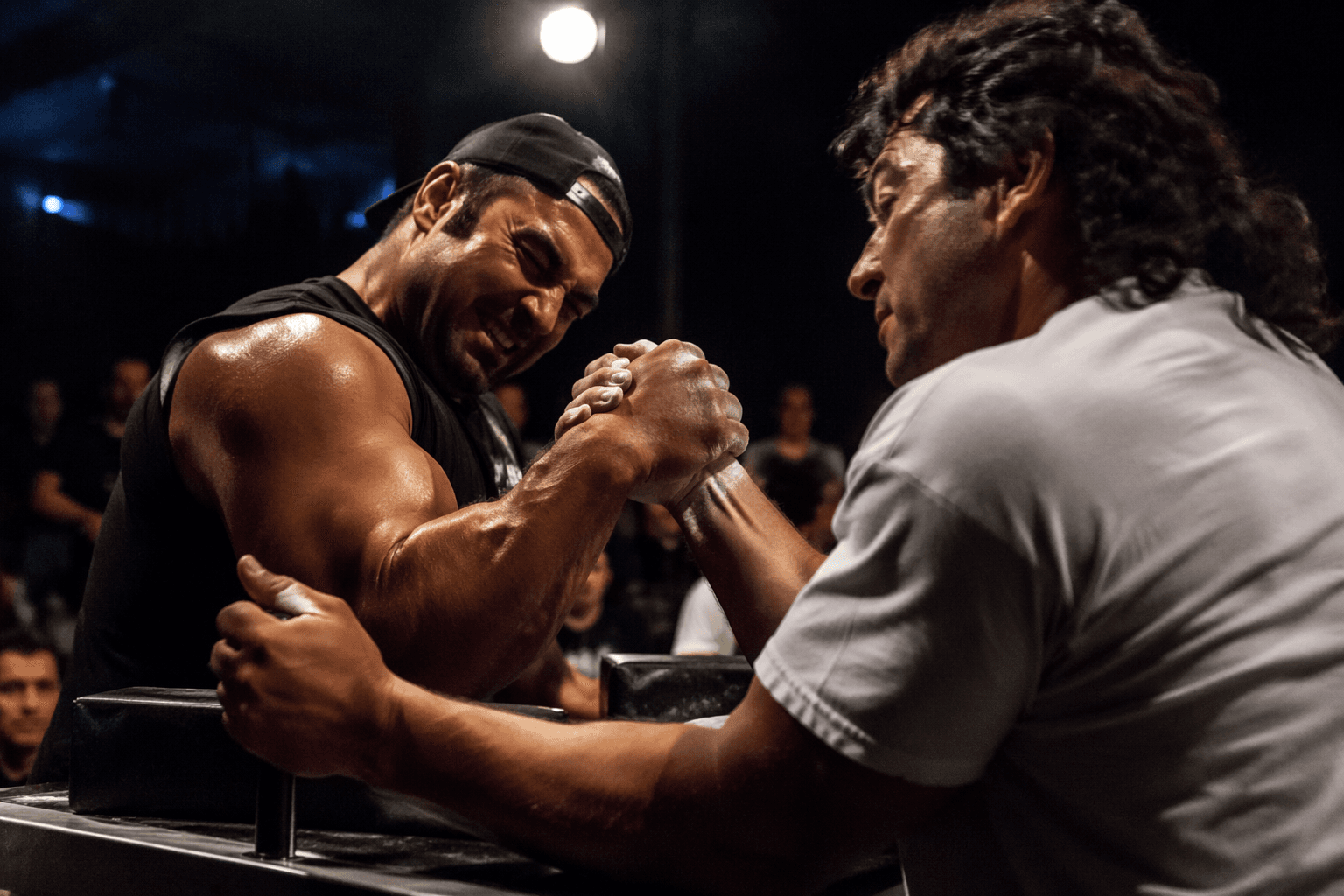
Vancouver club maps armwrestling path from Japan to New Delhi worlds
Vancouver's armwrestling calendar runs from Tsuchiura to New Delhi to Langford, showing a BC club plotting real routes to world titles and local staying power.
The Vancouver Armwrestling Club’s calendar reads like a pathway, not a noticeboard. Athletes can train in British Columbia, point first toward the IFA World Armwrestling Championships in Tsuchiura, Japan, then the WAF World Armwrestling and Para Armwrestling Championships in New Delhi, India, before coming back to the Island Championships in Langford. That sequence turns one club page into a map of how the sport moves from local tables to global stages.
A BC club with roots deeper than the current season
The Vancouver Armwrestling Club says it formed in 1993 after two Alberta armwrestlers, Bernie Lemay of Edmonton and Dave Hicks of Stoney Plain, moved to British Columbia. The club was based in New Westminster at the time and carried the name West Coast Arms before adopting its current identity. That origin matters because the club’s calendar does not look like the schedule of a small social group. It looks like the product of a program that has spent decades learning how to place athletes into real competitive lanes.
The club’s history page pushes that lineage even farther back. It traces organized armwrestling in British Columbia to the BC Wristwrestling Association, started in 1976 by Keith Koenig after his participation in the Petaluma, California wristwrestling tournaments from 1971 to 1975. That stretch from Petaluma to present-day Vancouver gives the province a rare continuity in a sport that often lives event to event. It also helps explain why the club’s archive is so substantial, with BC Provincial Championship results recorded from 2011 through 2026, alongside earlier Vancouver-area stops such as the VanCity Showdown and Team Canada Fundraisers.
Japan comes first, and the entry path is explicit
The first major marker on the club’s upcoming-events page is the IFA World Armwrestling Championships, scheduled for September 22 to September 27, 2026, in Tsuchiura, Japan. The invitation names the International Federation of Armwrestling and the Japan Arm Wrestling Association as hosts, and it places the championship at Civic Hall Tsuchiura, Japan 300-0052. That venue detail matters because it roots the event in a specific competitive setting, not just a country on a map.
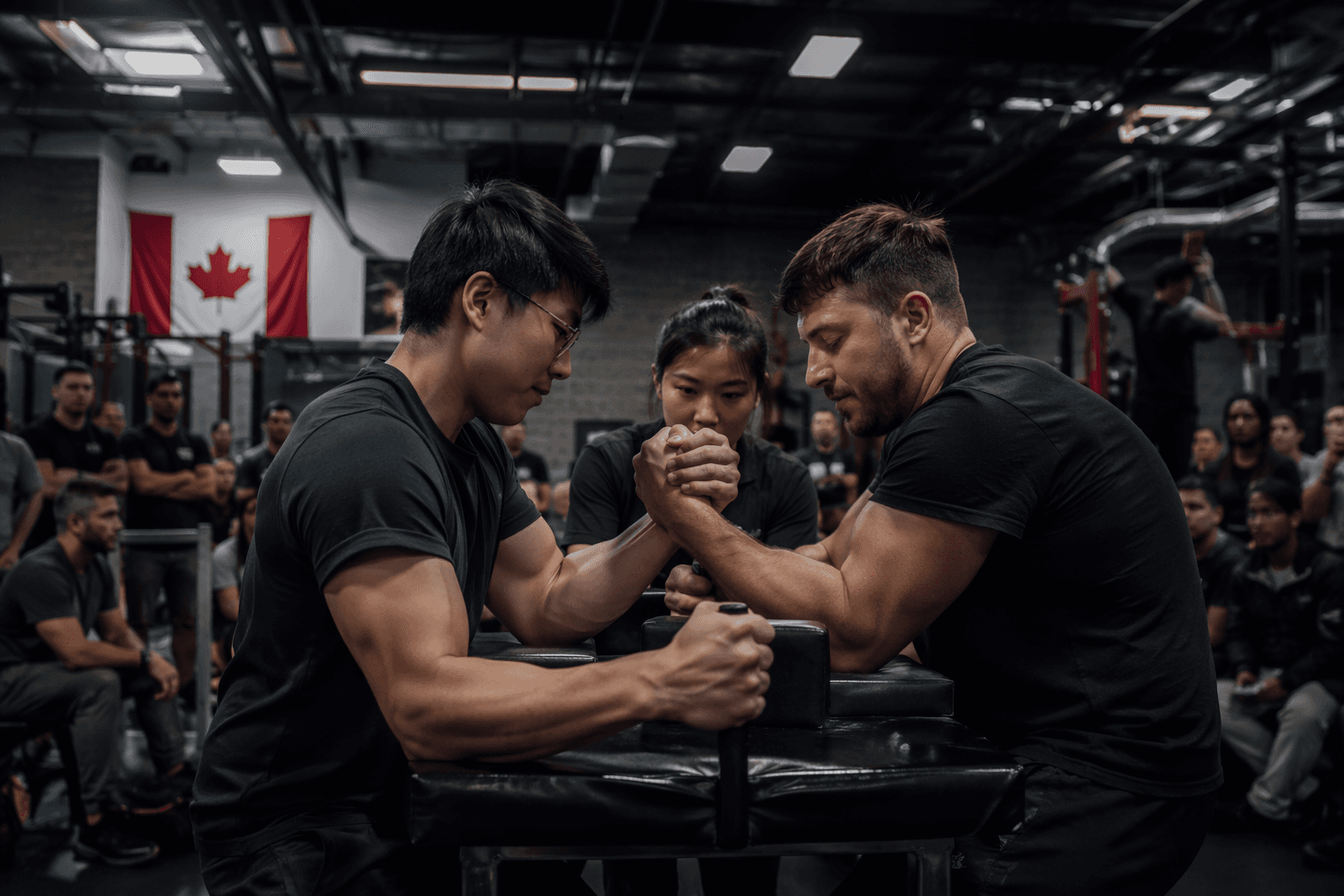
The IFA invitation also shows how the route works. The championship is open to federations that have joined the IFA, along with individual members from countries without a national federation that is an IFA member. That structure gives athletes a way into the world stage even when national systems are uneven or incomplete. For a club like Vancouver’s, that opens a clear line from local training to international table time, with Tsuchiura as the first target on the calendar.
New Delhi represents a bigger, broader world championship field
The next stop is the WAF World Armwrestling and Para Armwrestling Championships, set for October 26 to November 7, 2026, in New Delhi, India. The venue is the Leela Ambience Convention Hotel, and the projected scale is significant: more than 2,000 athletes from more than 75 countries. That is not a niche gathering. It is a large, multi-nation championship with both able-bodied and para competition on the same World Armwrestling Federation stage.
World Armwrestling Federation president Assen Hadjitodorov framed the event with a direct invitation, calling on “all the strongest arms” to come to Delhi. The line fits the scale of the championship and underlines why the club calendar matters. With two separate world-level championships on the horizon, athletes in Vancouver are not choosing between practice and ambition. They are choosing between paths inside a sport that now carries multiple international lanes, multiple sanctioning bodies, and real opportunity for those who can travel, qualify, and peak at the right time.
Langford brings the ladder back home
The last stop on the Vancouver club’s list is the Island Championships in Langford, British Columbia, on November 7. On paper, that may look like a local finish line after two global destinations. In practice, it is part of the same ladder. A club that can point athletes toward Japan and India can also keep them grounded in a regional title scene that still has meaning, pressure, and status.
That island circuit is not hypothetical. A January 2026 local report described Keanu McGill as a Langford champion competing in the Vancouver Island Arm Wrestling Supermatch Series in Sooke. His presence shows that the Island Championships sit inside an active competitive ecosystem, not on the edge of one. Langford is where regional bragging rights are still earned, and for many athletes it is the bridge between club nights and the more demanding international calendar.
Why the calendar matters
The value of the Vancouver club’s page is in its sequence. It begins with a world championship in Japan, moves to a larger world and para world stage in India, and ends with a provincial-scale title event on Vancouver Island. That is the ladder the club is building around, and it reflects a sport with enough structure to reward planning over impulse.
For Vancouver armwrestlers, the message is plain. Train locally, qualify where you can, choose the federation route that fits your path, and keep the Island Championships in view as both a milestone and a proving ground. The calendar shows a BC club rooted in 30-plus years of history, plugged into a national and international system, and still feeding its athletes toward the next table.
This article was produced by Prism’s automated news system from verified source data, official records, and press releases, then run through automated quality and moderation checks before publishing. The system is built and supervised by the people who set the standards it runs under. Read our full AI policy.
Did this article answer your question?