Why armwrestling tables are built to exact WAF standards
WAF tables turn a match into a controlled test of leverage, with 40-inch height, 7-by-7 pads, and a fixed peg shaping every start and pin.
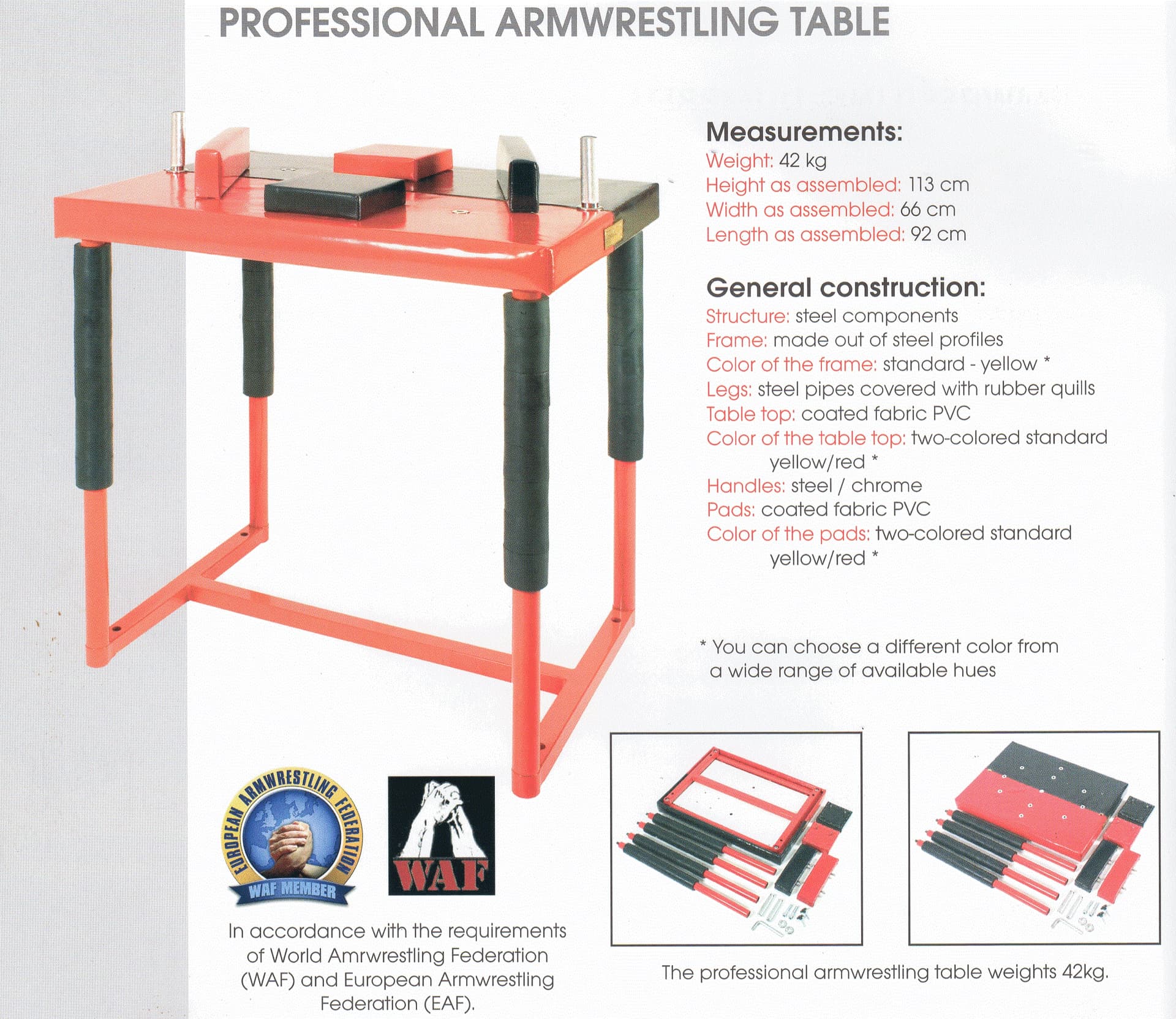
The World Armwrestling Federation’s stand-up table is 40 inches high, with a 36-by-26-inch surface. Those measurements set the start, shape the lane, and protect athletes when pressure spikes. A few inches can change wrist angle, shoulder position, and the entire match dynamic.
The table sets the terms of the fight
The WAF table design document sets the inside frame at 28 inches wide by 19 inches deep. Those dimensions matter because armwrestling is built on leverage, not just strength. If a table sits too high or too low, the athlete’s shoulder angle changes, and that can affect how much back pressure or side pressure can be generated before the referee even says go.
A taller setup can favor certain body types differently than a regulation table, while a shorter one changes how an athlete settles into a hook or launches a top roll. Standardized WAF dimensions keep the contest anchored to the same geometry whether the match happens in a local club, a national final, or a world-level title event.
Why the pads define fairness and fouls
The elbow pads are 7 by 7 inches and 2 inches high. Elbows need a known surface so referees can judge the start and see when an arm leaves its lane. In a sport where the line between control and foul can be razor-thin, a consistent pad helps make the call consistent too.
The pin pads are also tightly specified, at 2 by 10 inches and 4 inches high. They define where a winning touch must occur, which keeps the finish from becoming subjective. That matters in close matches where an athlete may drive an opponent to the edge of the pin area and finish with only a narrow margin. The pads turn force into a visible result that a referee can judge cleanly.
AAA and WAF specs both include a 40-inch stand-up table height, a 26-inch width, and a 38-inch length.
The peg is part of the start, not just a handle
The hand peg is built from 1-inch round material and stands 6 inches above the table. It fixes the referee start and gives the athletes a consistent place to secure the free hand. Without a standardized peg, the starting position could drift from table to table, and that would change the way athletes load their bodies before the go command.
The peg also affects how pressure is distributed at the start. Athletes use the free hand to stabilize themselves, and if the peg sits too high, too low, or in the wrong place, the start can feel different before the first pull. In a sport where a false move can lead to a foul or a lost hand position, the peg helps make the start repeatable.
Safety is built into the surface
AAA’s specifications include 1/4-inch foam on the table top along with padded elbow and pin pads, and that padding serves a clear purpose. Armwrestling concentrates force at the elbow and hand contact points, and those are the spots that absorb the most stress during a match. The foam and upholstery help soften those contact points without changing the controlled geometry of the table.
If the elbow pad is too soft or too small, it can alter grip breaks and referee setup. If the pin area is not properly padded, athletes are exposed to harder contact at the end of a match, right when speed and torque can be at their highest.
Why exact dimensions shape match styles
The table influences which styles can be loaded cleanly and which positions become harder to hold. A hook depends on being able to settle the hand, elbow, and shoulder into a tight lane; a top roll needs room to apply wrist attack and back pressure in a controlled way. When the table height, pad size, and peg position are standardized, those styles can be tested on the same terms every time.
Small deviations become a big deal in competition. A table that is too tall can shift leverage in a way that helps some arm lengths and hurts others. Pads that are too soft can change how a referee sees a grip break, and a peg that is not placed correctly can make the start inconsistent from one event to another.
This article was produced by Prism’s automated news system from verified source data, official records, and press releases, then run through automated quality and moderation checks before publishing. The system is built and supervised by the people who set the standards it runs under. Read our full AI policy.
Did this article answer your question?