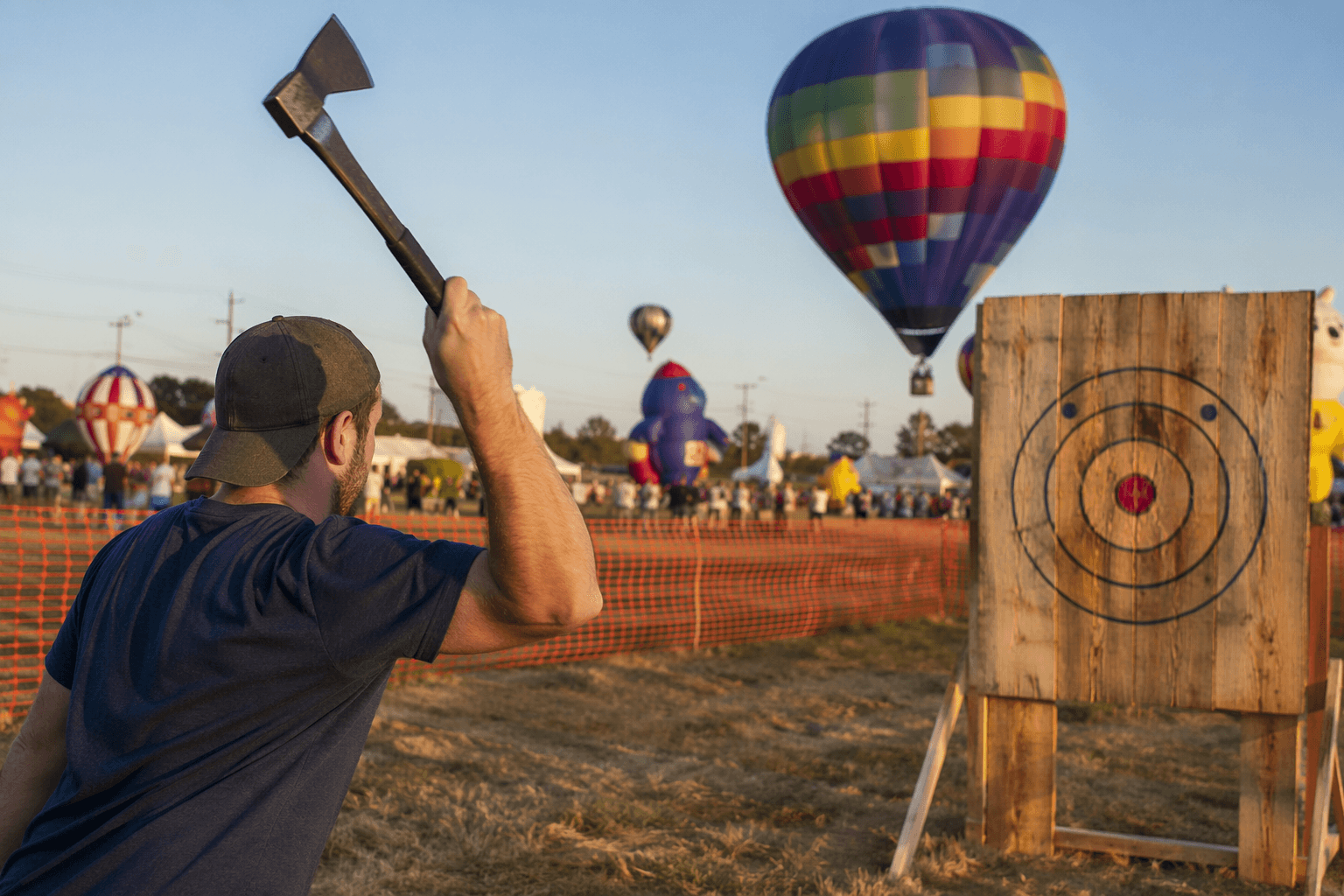
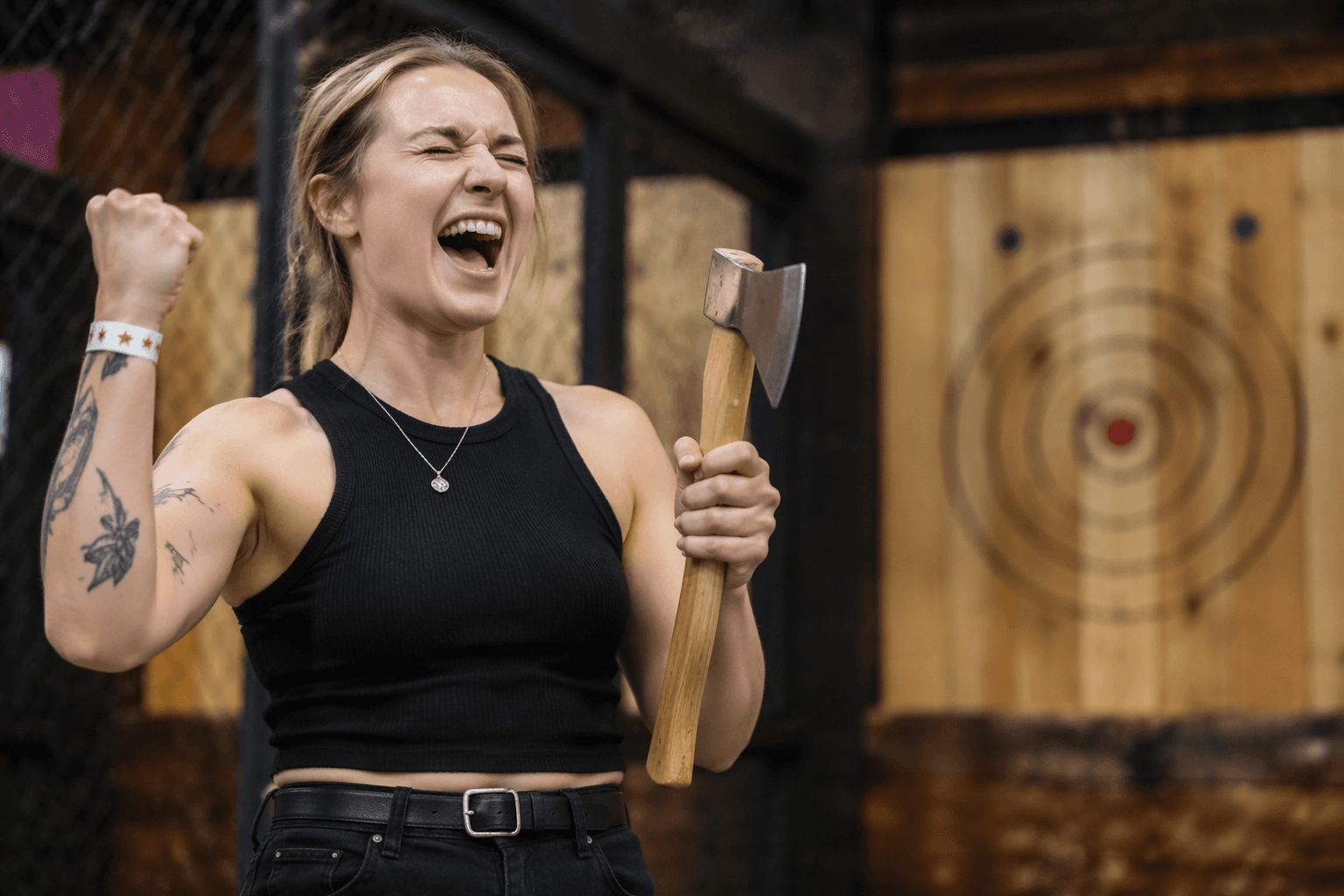
Axe throwing study shows accuracy comes from timing, not power
Accuracy in axe throwing tracks trunk timing, not raw power. Wearable-sensor studies show elite throws are a repeatable chain from stance to release.
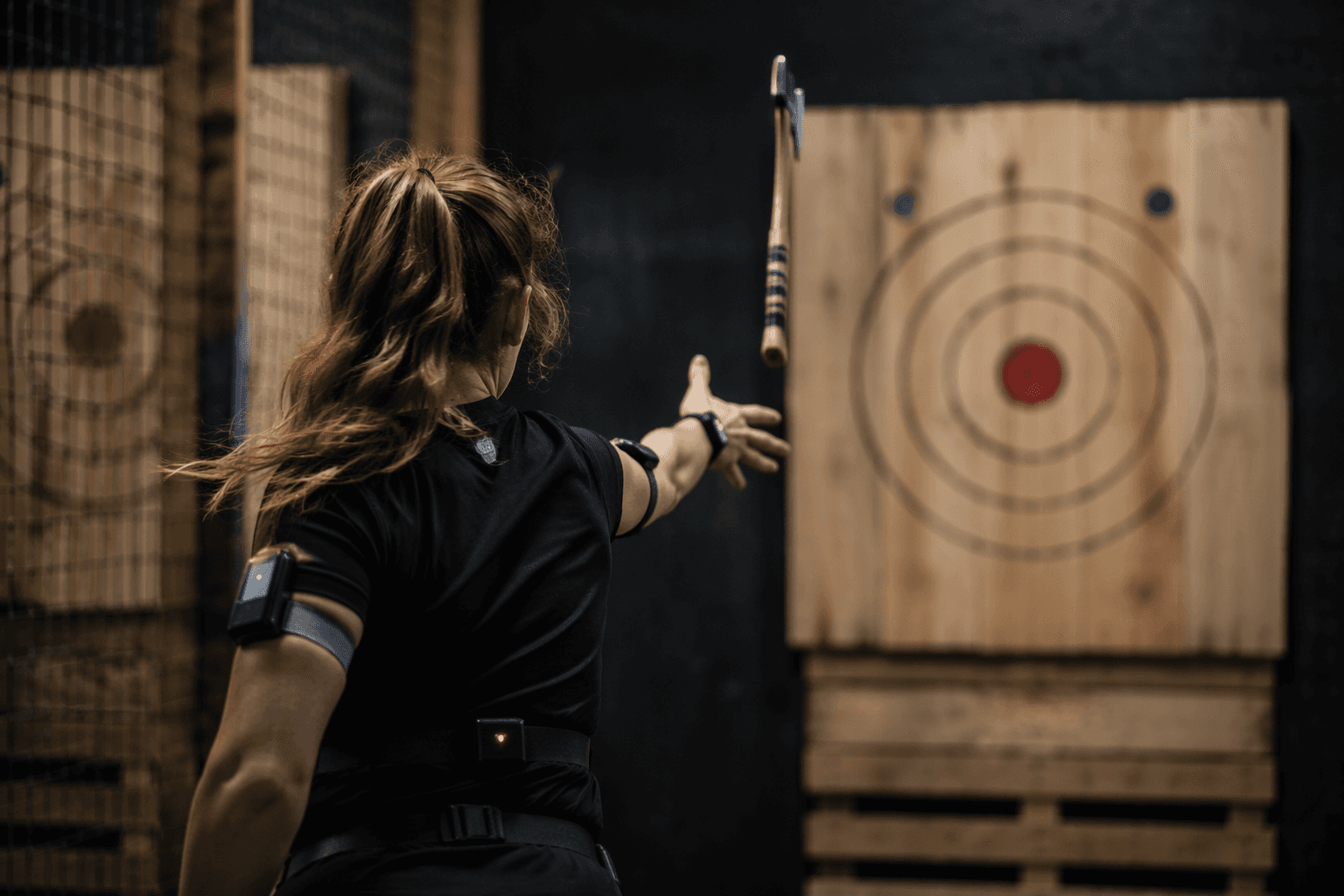
A 2023 pilot study in Applied Sciences followed 10 adult axe throwers and found a strong correlation between trunk acceleration magnitude and accuracy among the men in the sample, with r = 0.87. Wearable-sensor studies point to the trunk, not the forearm, as the engine of accuracy, and the best competitors win by repeating the same motion under pressure. In a sport built on standardized rules and a standardized implement, timing and body control are the real edge.
Trunk motion is the hidden variable
The study also found that trunk center-of-mass acceleration differed significantly between male and female throwers.
The throw is not an arm-only action. It is a coordinated kinetic chain that starts with stance and balance, moves through the torso, and finishes at release. The researchers identified trunk center-of-mass involvement as an area where real-world evidence had been thin.
Technique changes the shot path
A second sensor-based case study of an elite axe thrower makes the same case from a different angle. The athlete performed a one-hand underarm throw, a two-handed overhead throw, and a one-hand overarm throw, and the resulting mechanics were not interchangeable. The study found significant differences in scapula acceleration across those styles, while elbow acceleration was noisier and less clearly separated.
There is no single universal motion to copy. The body organizes force differently depending on grip, release path, and overhead versus underarm mechanics. Dr. Stuart Evans said there was significantly more scapula acceleration with the two-handed overhead technique.
The rulebook rewards repeatability
The World Axe Throwing League makes this easier to see because it has locked down the competitive environment. In WATL hatchet matches, games are 10 throws long, scoring runs from 1 to 8 points per throw, and tied matches go to sudden-death Killshots after the 10th throw. If the match is still level, only Killshots count, and each thrower selects which Killshot to attempt.
The equipment is standardized too. WATL hatchets are capped at 3 pounds, 19 inches in length, and a 4-inch bit.
What training actually looks like
WATL’s training materials state that there is “no one correct way to throw.” A solid stance and knowing your distance still matter because small changes in foot placement and release point change the angle to the bullseye. In WATL’s training materials, releasing from 12 feet instead of 13 feet creates an 8.3% larger angle for a bullseye trajectory.
- Set a stance you can reproduce under pressure, not one that only feels powerful once.
- Measure distance carefully, because 12 feet and 13 feet are not the same shot.
- Keep torso timing consistent, since trunk motion is tied to accuracy in the 2023 study.
- Match release point to the same upper-body path, because different techniques create different scapula and elbow patterns.
From a Toronto stump to world stages
BATL traces modern urban axe throwing to Toronto in 2006, when a group of friends started throwing at a stump. WATL says it was founded in 2017 and now lists 300-plus affiliated venues across 20 countries, with four seasons a year and three disciplines: Hatchet, Big Axe, and Duals.
WATL’s 2026 materials break sanctioned events into Nationals, Regionals, and Locals, while the 9th World Axe Throwing Championship landed in Tulsa, Oklahoma, in 2026. WATL also announced a 2026 US Open for September 18-20 at The Axe Trap in Winter Park, Florida. Major championship events have even reached ESPN.
This article was produced by Prism’s automated news system from verified source data, official records, and press releases, then run through automated quality and moderation checks before publishing. The system is built and supervised by the people who set the standards it runs under. Read our full AI policy.
Did this article answer your question?