Axe throwing’s two rival governing bodies shape the sport’s future
Axe throwing is split between WATL and IATF, and the rulebook you follow changes scoring, formats, equipment, and even where you can climb to a title.
Axe throwing does not run on one global rulebook. The sport now lives in two overlapping competitive systems, and the difference matters the moment you step into a lane, book a league night, or try to enter a championship path. The International Axe Throwing Federation and the World Axe Throwing League both built modern structure around the sport, but they built different ladders, different formats, and different definitions of what sanctioned competition looks like.
Two systems, two identities
The IATF says it was established in 2016 to standardize rules and support interleague competition, and it says its rule system dates back more than 16 years. It also says that system underpins league play for more than 20,000 competitive throwers. WATL, founded in 2017, presents itself as the sport’s global governing body and says it has 300+ affiliated venues in 20 countries. That split is the first thing a fan needs to understand: this is not one federation with one ladder, but two institutions with their own geography, membership base, and championship language.
That distinction is not cosmetic. It shapes where leagues are played, which events count toward advancement, and what kind of equipment and formats get used in sanctioned competition. If you are watching casually, you will see the same general action, but the title on the wall, the scoring standard, and the route to a championship can belong to entirely different systems.
How IATF builds its path to the top
IATF organizes member organizations into nine geographic regions, and each region hosts an annual Regional Axe Throwing Championship. Winners advance to the International Axe Throwing Championship, which gives the federation a clear local-to-global ladder. That regional structure matters because it ties competitive play to geography and advancement, rather than to one universal seasonal table.
The federation added another layer in July 2023 when it announced the Integrated Tournament Circuit. That circuit includes endorsed member tournaments such as Majors and Grand Slams, plus the International Axe Throwing Championship, and it gives elite players another route through the calendar. The top 4 finishers from Grand Slams are guaranteed spots in Rounds 1 and 2 of the Wilson Cup, and winners of Majors get the same protection.

That is not a small detail. It means IATF is not just staging isolated events, it is connecting them into a hierarchy. The federation said its annual circuit was created to foster competition among IATF players, and that organizing tournaments into a circuit increased the profile of the tournaments, their hosts, their competitors, and the federation itself. For a competitor, that changes the stakes of every major event. For a fan, it explains why a tournament win in one city can carry real weight months later.
How WATL structures the other lane
WATL’s system is built around a different set of boundaries. Its official rules cover hatchet, big axe, and hatchet duals competition, and the league says those are the complete rules for sanctioned play. WATL also says it sanctions four official seasons with eight weeks of gameplay per year, then sends competitors through a leaderboard and tournament circuit toward its World Championship.
That seasonal format matters because it turns league play into a recurring competitive product, not just a one-off event. WATL says league play is a cornerstone of a successful affiliated venue, which helps explain why its 300+ venues across 20 countries are such a big part of its identity. If IATF leans on regional and circuit advancement, WATL leans on a standardized venue network and a season-by-season competition rhythm.
WATL’s own history is tied to the growth of that structure. It says the first annual World Axe Throwing League Championship was won by Chris Morning in 2017. Another WATL page says the first annual league started on October 9, 2017 with a $15-per-week entry and a $3,500 grand prize. Those numbers show how quickly the sport moved from novelty-night energy to a real competitive circuit with cash stakes and repeatable rules.
What changes in the lane: scoring, formats, and equipment
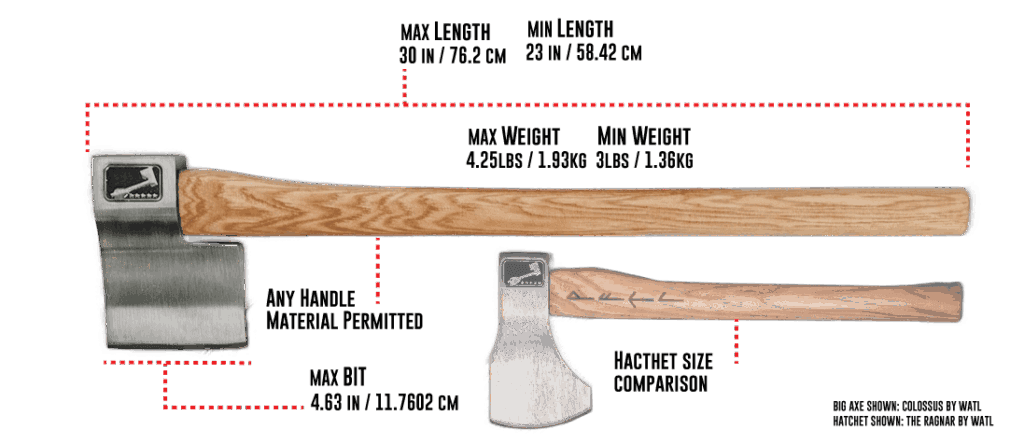
This is where the split becomes practical. IATF’s rules page says its gameplay rules also cover league and tournament operational guidelines, plus lane, target, and equipment specifications. That means IATF is not only telling players how to throw, it is defining the playing environment itself. The federation’s rule set is broader than pure scoring, because it governs the operational details that make an event run the same way in different cities.
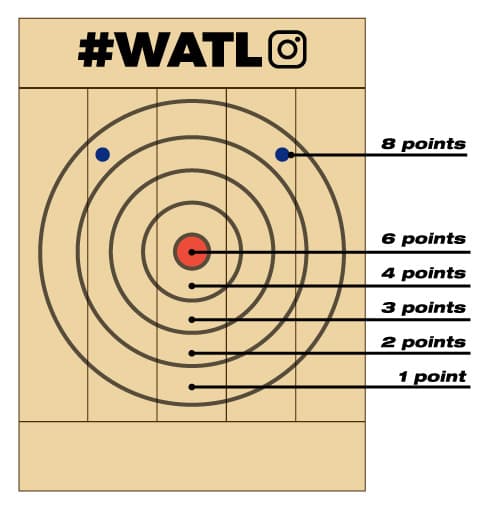
WATL’s current rulebook is more format-specific. It is the complete ruleset for sanctioned hatchet, big axe, and hatchet duals competition, and its updated rules emphasize standardized competition and fair play. A current WATL rules update says the revision was informed by feedback from venue owners, competitors, industry staff, and volunteers. That matters because it shows the league treating its rulebook as a living document shaped by the people who actually run and play the sport.
For training, the split is simple: you do not just practice “axe throwing,” you practice the rule set you intend to compete under. Lane distance, target design, and equipment standards are not universal across the sport’s governance structures, so the habits that win one sanctioned lane may need adjusting in another. For event eligibility, the stakes are even clearer: if a tournament feeds the Wilson Cup on the IATF side, or counts toward WATL’s seasonal leaderboard, the pathway is different even if the thrower is holding the same axe.
Which rule set matters, and when
If you are watching, the governing body tells you what kind of event you are seeing and what advancement means. An IATF Regional Championship points toward the International Axe Throwing Championship and, for top performers in the new circuit, the Wilson Cup. A WATL event fits into one of four official seasons, then into a leaderboard and championship route that culminates in its own World Championship.
If you are training, the rulebook tells you what equipment, lane, and target standards to drill. IATF’s specifications reach into gameplay, operations, and equipment; WATL’s rules are organized around sanctioned hatchet, big axe, and hatchet duals play. That is the difference between throwing generally well and throwing in a way that holds up under a specific federation’s inspection.
If you are entering competition, the name on the sanctioned event matters as much as the score. WATL and IATF are not merely competing brands. They are the architecture of the sport, and the architecture determines who advances, where titles are won, and which performances count when axe throwing moves from a casual night out to a serious bracket.
This article was produced by Prism’s automated news system from verified source data, official records, and press releases, then run through automated quality and moderation checks before publishing. The system is built and supervised by the people who set the standards it runs under. Read our full AI policy.
Did this article answer your question?