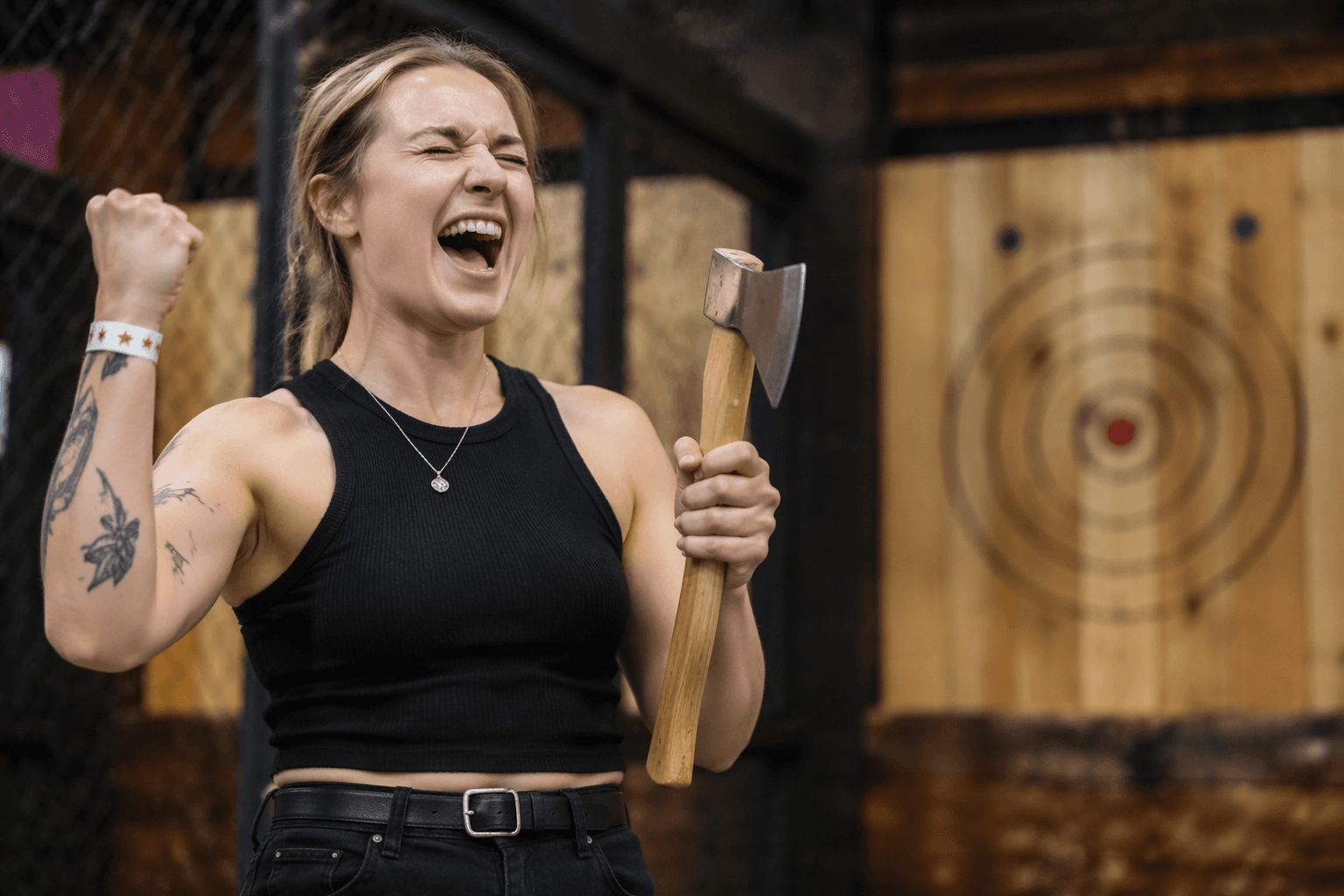
How urban axe throwing grew from backyard pastime to pro sport
What started with a $10 hatchet in a Toronto backyard became a rules-driven sport with 300-plus venues, certified judges, and championship formats.

Urban axe throwing stopped feeling like a bar novelty when Matt Wilson turned a Toronto backyard experiment into something that could be scored, officiated, and repeated on purpose. BATL traces the modern scene to 2006, when Wilson started throwing with friends in Toronto, and says that circle grew from eight regulars to 16, then 32, before becoming two full leagues of more than 60 people per night.
From backyard game to warehouse league
The first real step toward a venue model came in 2011, when BATL opened a warehouse location in Toronto and described itself as the first place in the world built around an urban axe-throwing experience. That mattered because it gave the sport a fixed home, a consistent target setup, and a place where the same throwing motion could be repeated under the same conditions night after night.
Wilson’s earliest sessions had the scrappy economics that later made the sport feel accessible. Red Bull described him returning to his downtown apartment after a cottage trip, duct-taping a target in his backyard, buying a $10 hatchet, and starting Tuesday-night sessions with friends who each chipped in $20 for wood. That detail captures the core of the format: a cheap object, a simple lane, and a group of people willing to turn repetition into competition.
BATL’s scale now shows how far that backyard habit traveled. Its Toronto material says more than 2 million people have experienced axe throwing at BATL locations across North America, and Wilson said in a TEDxWindsor talk that more than 15,000,000 axes have been thrown across BATL locations. The numbers do not just measure popularity. They explain why the sport needed rules, staffing, and standard layouts that could survive growth.
The governing body that made it legible
The World Axe Throwing League was founded in 2017 to unify venues and standardize rules and regulations across the sport. WATL says it now operates through 300-plus affiliated venues in 20 countries, which shows the sport’s expansion was built on governance as much as on novelty.
That structure was partly a response to fragmentation. WATL says it created a forum because many facilities were already using similar practices, but they lacked communication and common standards. Mario Zelaya, WATL’s founder and commissioner, framed the league as part of the same institutional logic that underpins major sports organizations: if the game is going to be taken seriously, the rules, officials, and formats have to be consistent from one venue to the next.

WATL also expanded the sport’s language in December 2019, adding Big Axe League and Duals League to complement Standard Hatchet competition. That move mattered because it signaled a sport moving beyond a single novelty format. Instead of one lane, one grip, and one way to play, axe throwing now had multiple disciplines with distinct competitive identities.
The rules that turn a throw into a match
WATL’s official rules make the sport feel like a sport because they reduce every match to a repeatable scoring structure. Axe throwing under WATL has three disciplines: Hatchet, Big Axe, and Hatchet Duals. A standard game is 10 throws, the highest total wins, and tied matches go to a sudden-death Killshot round.
The equipment standards are just as specific. WATL’s 2026 rules set the maximum hatchet weight at 3 pounds, the maximum length at 19 inches, and allow only one sharp bit. Those limits are the difference between a casual throw and a sanctioned competition, because they define what can be brought to the lane and what cannot.
Scoring also got sharper. Under the 2026 rules, outer Killshots in Hatchet are worth 7 points, while inner Killshots are worth 8. The league also gives the head judge authority to interpret and overrule rules in the interest of fair play, a detail that matters in a sport where a millimeter can change a score and a disputed call can alter a match.
Judges, safety, and sanctioned play
Once axe throwing became league play, officiating had to become as routine as the throwing itself. WATL says certified judging requirements depend on event size: local and regional tournaments require one judge per 16 competitors, while national tournaments require one judge per lane. That staffing model is central to how the sport keeps matches orderly and consistent across venues with different layouts and crowds.
Sanctioned events also come with format requirements. WATL’s tournament guide says Nationals and Regionals must host Amateur Hatchet, Open Hatchet, Big Axe, and Duals, and must have one certified judge per lane in use. It also says sanctioned tournaments cannot cap registrations above the minimum agreed with WATL, which keeps fields large enough to preserve competitive depth and ensures events are built to the same standard from one city to the next.
The governance structure is still community-driven. WATL says its council members are volunteers from the axe-throwing community, which helps explain how the sport moved so quickly from informal backyard sessions to regulated tournament play. The rules did not arrive from a distant federation. They were built by the people already running the lanes.
How the sport formalized itself
BATL’s own history adds the final layer of the story. A secondary history page says BATL members helped found the National Axe Throwing Federation in 2016, and another says the company expanded into the United States in 2017. That timeline places BATL inside the sport’s institutional shift, from a local league culture in Southern Ontario to a broader cross-border competition model.
The broad arc is simple, but the details are what made it stick. A $10 hatchet became a lane. A backyard target became a league night. A warehouse venue became a template. Then came the rulebook, the certified judges, the killshot, the multiple disciplines, and the national tournament structure that made results comparable from one city to the next.
That is the point where axe throwing stopped reading as a gimmick and started functioning like a sport.
This article was produced by Prism’s automated news system from verified source data, official records, and press releases, then run through automated quality and moderation checks before publishing. The system is built and supervised by the people who set the standards it runs under. Read our full AI policy.
Did this article answer your question?