Cornhole rules reveal exact board specs, court size and bag evolution
A regulation cornhole setup is more exact than most backyards: board size, hole placement, bag fill, and court spacing all shape how the game slides and scores.

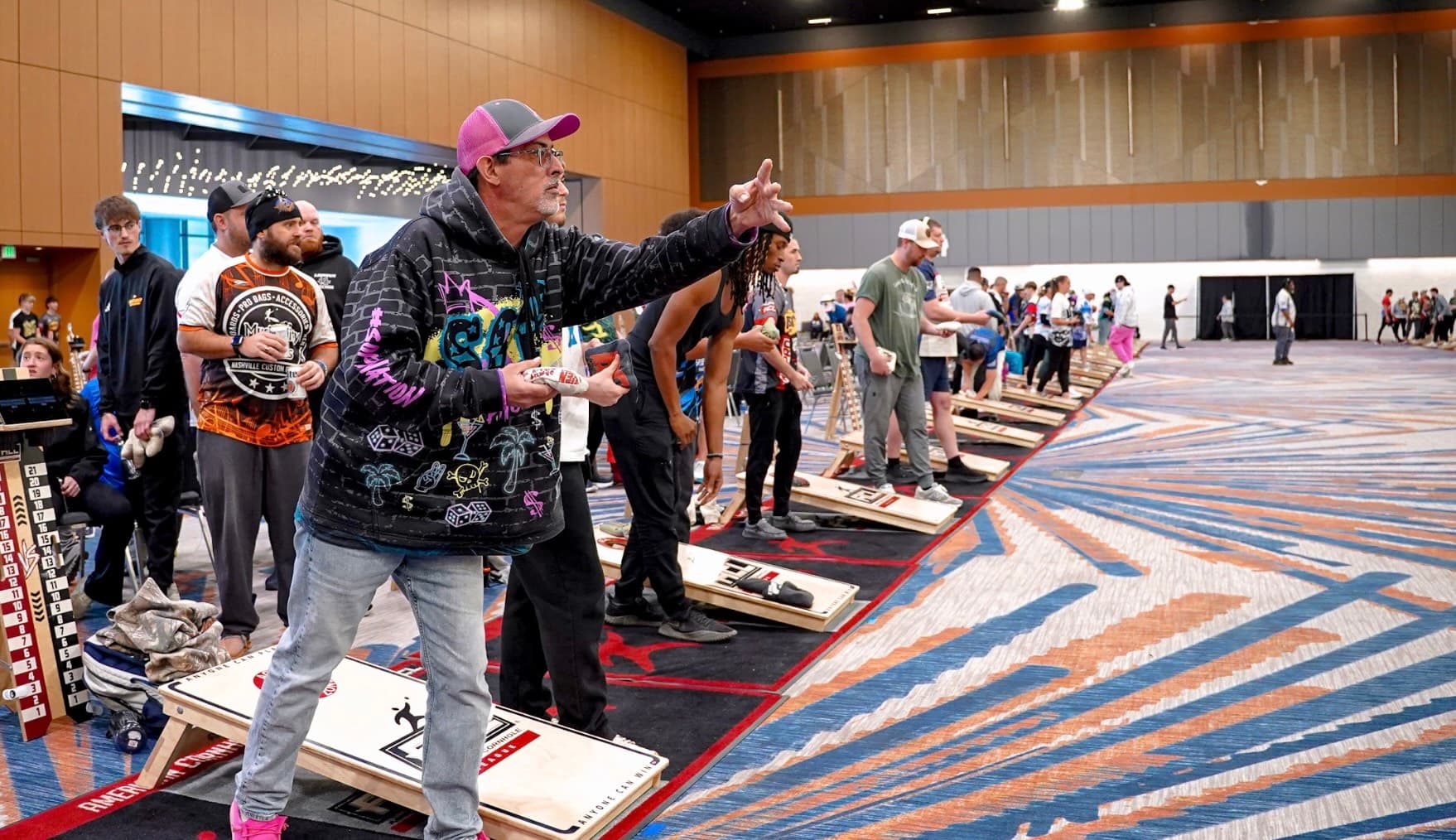
Under the American Cornhole Organization rules, a cornhole board stands 3 to 4 inches high in front and 12 inches in back. It has to be hardwood plywood, measure 47.5 to 48 inches long and 23.5 to 24 inches wide, and have a 6-inch hole centered 9 inches from the top edge. The surface has to be finished so bags slide cleanly without skidding back down.
The board is where the game starts
A small change in angle or finish changes how the bag behaves the second it lands. The standard is built around control: the board should be smooth enough to create slide, but not so slick that a bag keeps traveling and falls off the platform. In tournament cornhole, the difference between a point, a blocker and a miss often comes down to how the bag grabs the board.
In the American Cornhole Association’s familiar shorthand, standard boards are 2 feet by 4 feet, and the game is played to 21 points or more.
Court dimensions turn a throw into a standard
The court is just as specific. A regulation court is 8 feet wide and 40 feet long, with boards placed front edge to front edge 27 feet apart. Tournament settings also call for 12 feet of vertical clearance overhead to keep lobs, arcs and ceiling interference from changing the match.
The 27-foot spacing stretches the throw just enough to reward repeatable mechanics, while the 8-by-40 court creates a lane that keeps each side identical.
Bag design changed the sport, not just the look of it
The modern bag follows the same push toward standardization. Cornhole bags evolved from canvas bags filled with corn to resin-pellet fill because the newer fill improves consistency in weight and playability. That shift changes how a bag reacts on a fast board or in damp weather, when a little inconsistency can turn a scoring shot into a dead slide.
The organization later developed a two-sided bag with one sticky side and one slick side, another change that made the game more tactical. The slick side is built for slide shots and controlled movement, while the sticky side helps with stopping power and placement. In practice, that split gives players more deliberate control over how a bag lands and settles, which is why regulation bags are as important to tournament readiness as the boards themselves.
The current ACO rules also specify approved bag standards, and the 2024 rules include adaptive cornhole provisions that can be adjusted on a tournament-to-tournament basis as the organization collects data, allowing rule changes for adaptive athletes without abandoning the core idea of uniform competition.
Why surface and fill change scoring
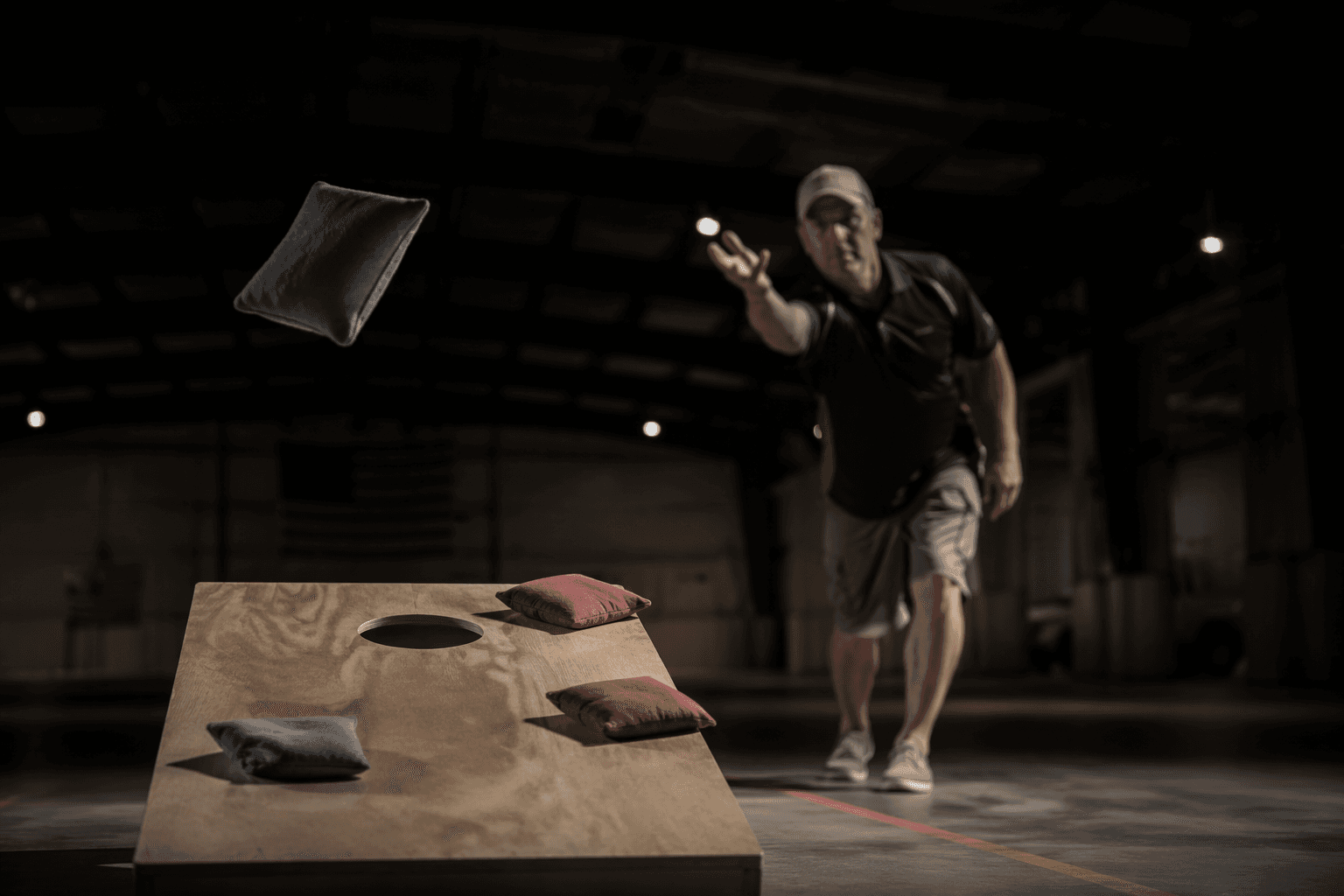
A 1-point lander on a regulation board depends on how the surface and bag interact. The finish has to let a bag slide, but not so much that the bag rockets off the back edge. A resin-pellet bag reacts differently than a corn-filled bag, and the two-sided sticky-and-slick design adds another layer of control, especially when players are trying to deaden a board, roll a bag into the hole or block a lane.
Official gear keeps scoring consistent. If the board finish, bag fill and court spacing all behave the same from one venue to another, then a score in one state means the same as a score somewhere else.
The American Cornhole Organization built the rulebook around that standard
The American Cornhole Organization was established in 2005 and is headquartered near Cincinnati, Ohio, in the Camp Dennison area. Frank Geers founded the organization, and its first ACO Nationals Championship was held in December 2006 in Northern Kentucky. From the start, the group pushed uniform rules and standardized products as the sport grew.
Those uniform rules have been adopted by leagues around the world, and that standardization has helped create the structure for rankings, tournaments and world championships.
What to check before calling a setup tournament-ready
A player looking at a setup can spot the difference fast if the measurements are right. A regulation board should be hardwood plywood, between 47.5 and 48 inches long and 23.5 and 24 inches wide, with a 6-inch hole centered 9 inches from the top. The court should measure 8 feet by 40 feet, the boards should sit 27 feet apart front edge to front edge, and the playing area should allow for 12 feet of clearance overhead in tournament conditions.
The bag matters just as much. A competition-ready bag should meet the organization’s approved standards, and the evolution from corn fill to resin pellets, plus the later two-sided sticky and slick format, shows why casual throw pillows do not play the same way. If the board finish is too rough, the bag dies early; if it is too slick, it slides off the back.
This article was produced by Prism’s automated news system from verified source data, official records, and press releases, then run through automated quality and moderation checks before publishing. The system is built and supervised by the people who set the standards it runs under. Read our full AI policy.
Know something we missed? Have a correction or additional information?
Submit a Tip