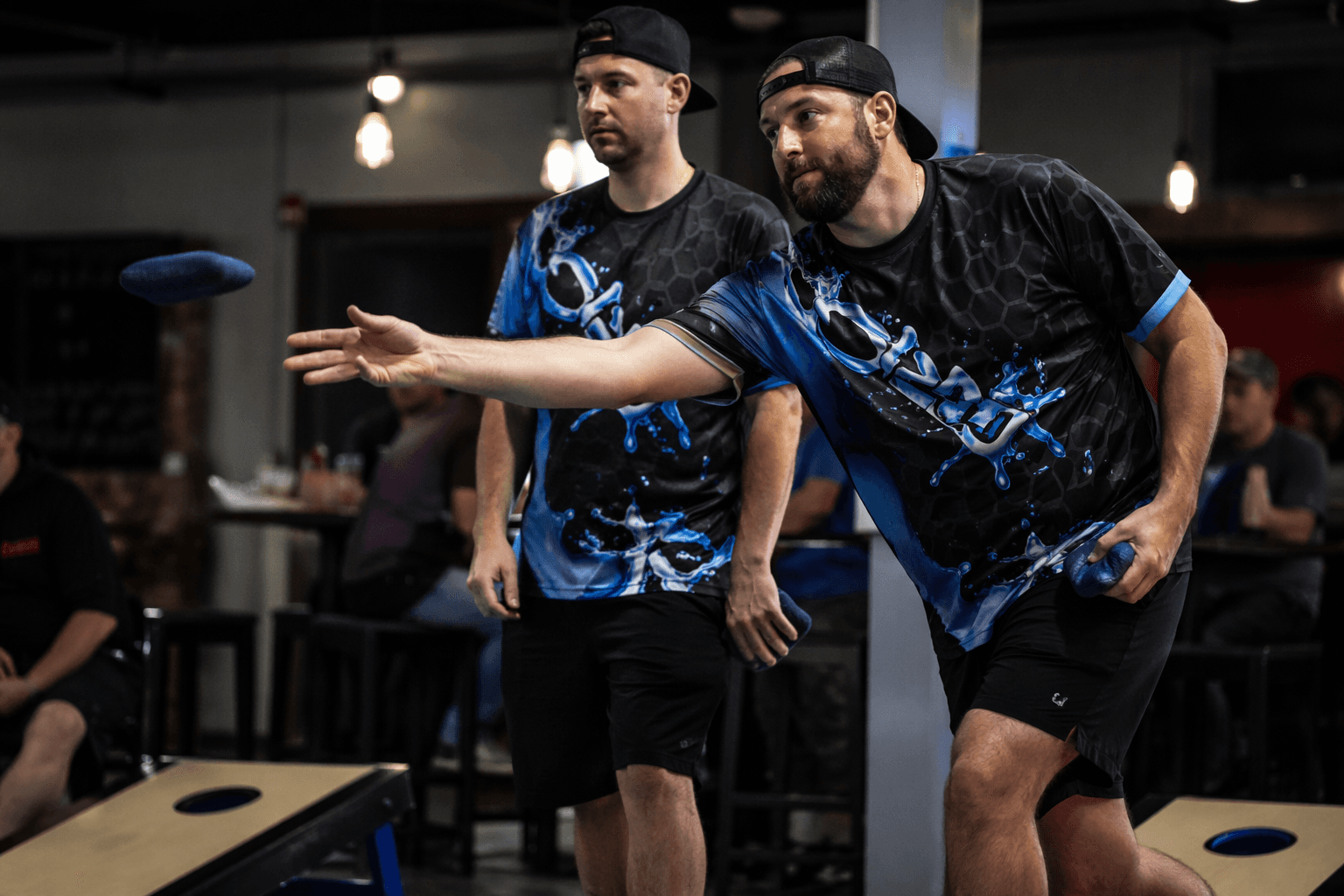
Matt Guy’s Hall of Fame cornhole résumé still powers ACL dominance
Matt Guy keeps the GOAT debate alive because his Hall of Fame résumé still turns into ACL production, even against a deeper field.

Why Matt Guy still belongs at the center of the GOAT case
Matt Guy is not being carried by nostalgia. He is still producing numbers that belong in the conversation with the best players the sport has ever seen, and that is what separates him from a lot of decorated names. A Cornhole Addicts profile makes the case plainly: Guy is treated as the GOAT because his résumé is already stacked, his technique still travels, and his game remains dangerous when the pressure rises.
That is the real test here. The greatest-ever conversation is not just about what a player won years ago. It is about whether that player still sets the standard now, and Guy does that through a blend of title count, durability, and the kind of shot-making that other pros still have to build around.
The résumé that built the benchmark
Guy’s career started before the modern ACL spotlight fully swallowed the sport. He was a former horseshoe pitcher before moving into cornhole in 2000, and that background matters because it explains the texture of his game. The profile points to precision, consistency, and airmail shots when the board looks covered, which is a useful way to understand how he has stayed relevant across eras.
The title line is the first place the case gets loud. Guy has nine ACO World Singles Championships, a number that alone would put him on the short list for any all-time discussion. He also won the 2016 ACO World Doubles Championship with his son, Bret Guy, and later added an ACL Pro Doubles Championship with Jamie Graham in 2021. That mix of singles dominance and doubles success shows a player whose value is not tied to one format or one era.

Why the numbers still matter right now
The 2024 singles season gave the argument fresh fuel. Guy posted a PPR of 10.4, a 4Bag percentage of 50.16, a DPR of 0.35, and a rounds-won rate of 38.25. Those are not just tidy stats for a veteran profile page. They are the kind of numbers that show a player still dictating pace, still converting chances, and still winning enough rounds to stay in the mix with the league’s best.
A PPR above 10 in singles keeps a player dangerous every week, but the rest of the profile sharpens the picture. A 4Bag percentage above 50 means the firepower is still there when the board opens up. A DPR of 0.35 and a rounds-won rate of 38.25 point to a game built on damage control and repeatability, not just highlight throws. That balance is why Guy’s presence still lands with weight in ACL play.
Longevity is part of the argument, not a footnote
The strongest GOAT cases usually survive because the player has done it across changing conditions. Guy’s arc does exactly that. He is not just a historic champion from the old days of cornhole’s growth curve, and he is not just a name that survives in memory. He is still a relevant force in a league that has expanded dramatically, which is a harder achievement than piling up wins in a smaller pool.
The profile’s year-by-year finishes make that point clear. In 2022, Guy finished 3rd in singles and 2nd in doubles. In 2023, he dropped to 20th in singles and 15th in doubles. That is the sort of spread that proves how competitive the modern field has become, but it also shows something else: even in seasons that were not peak trophy runs, Guy remained inside the conversation. A lesser legend disappears when the field deepens. Guy stayed visible.
The style that keeps him relevant
There is a reason players still talk about his name as a standard to chase. Guy’s reputation is built on the exact skills that hold up under playoff pressure: precision, consistency, and the ability to throw the airmail when the lane is nearly closed. Those are the shots that decide majors, signatures, and worlds, where one miss can tilt an entire bracket.
That is also why his career has a broader influence on the pro game than his trophy count alone suggests. He represents a version of elite cornhole that rewards control as much as aggression. In a sport that keeps getting deeper and more explosive, Guy’s style remains proof that disciplined shot-making still wins when the stakes are highest.
The family thread and the person behind the profile
The profile also gives Guy a human frame that helps explain why the longevity is real, not just statistical. He lives in Alexandria, Kentucky, works as a sales rep, and spends much of his free time with family. That grounding matters because it suggests a career built on repetition, routine, and a life outside the spotlight that has helped sustain the inside-the-lines excellence.
His doubles title with his son Bret in 2016 adds another layer to the story. It is one thing to collect championships. It is another to do it in a format that ties a family connection directly to the sport’s highest level. That title helps explain why Guy’s legacy lands differently than a pure stat line might. It is a career that has combined pedigree, partnership, and a long runway of competitive relevance.
What keeps Matt Guy in the greatest-ever conversation
The answer is not one thing. It is the combination of nine ACO World Singles Championships, a family doubles title, an ACL Pro Doubles crown, and singles numbers that still look sharp enough to matter in 2024. It is also the fact that his game was built on fundamentals that never go out of style: precision, consistency, and the ability to clear a crowded board with one shot.
That is why current stars are still chasing him. They are not just chasing a trophy case. They are chasing the standard he established, one that asks whether your résumé still holds up when the field gets deeper, the pressure gets louder, and the margins get smaller. Matt Guy’s answer has remained the same for years: yes, and then some.
This article was produced by Prism’s automated news system from verified source data, official records, and press releases, then run through automated quality and moderation checks before publishing. The system is built and supervised by the people who set the standards it runs under. Read our full AI policy.
Know something we missed? Have a correction or additional information?
Submit a Tip