Early disc golf pros chased cars and cash at historic 1974 Open
A Datsun in Rochester and a $40,870 purse in Huntington Beach show when disc golf stopped feeling like a stunt and started looking like a pro sport.
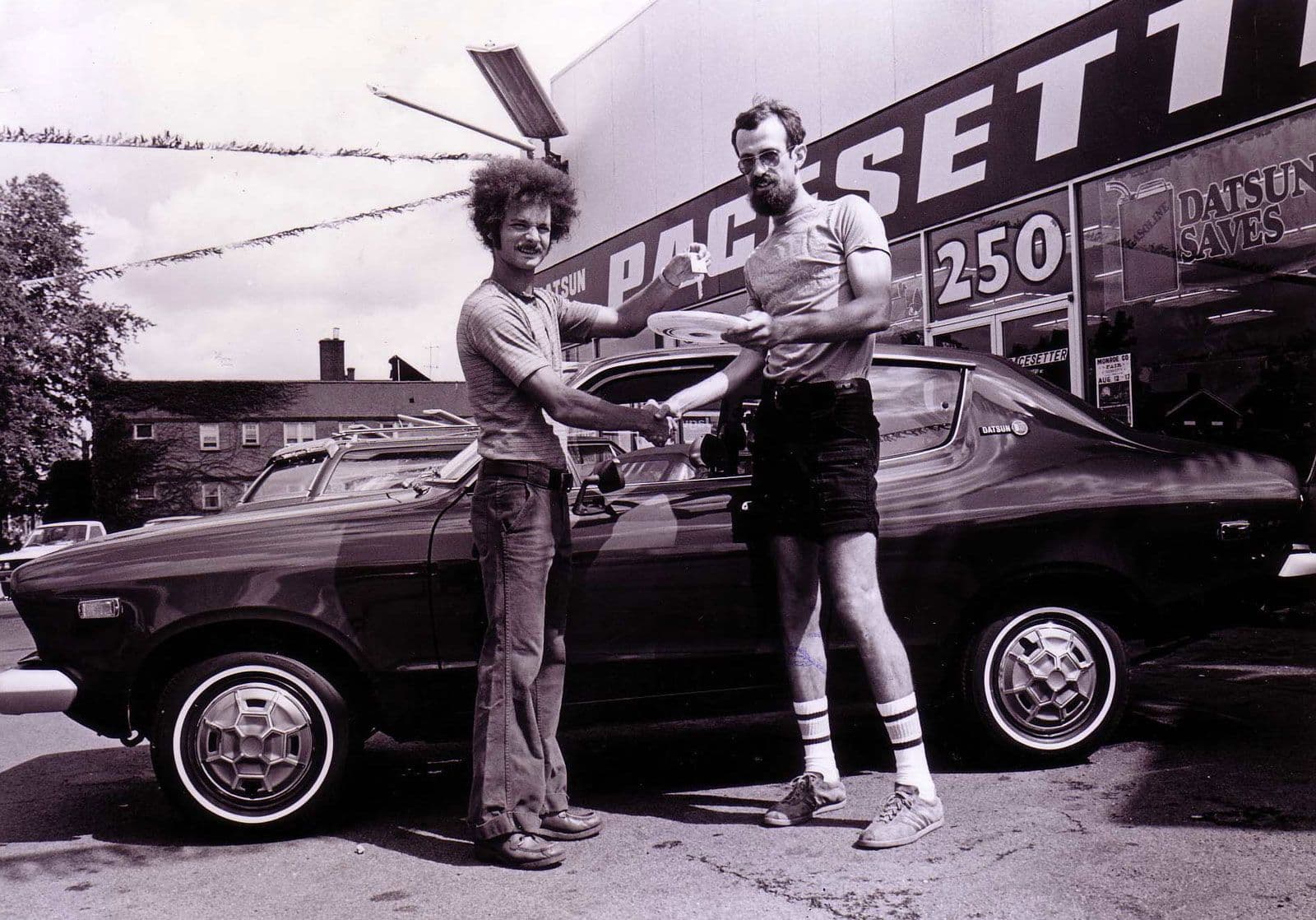
A brand-new 1974 Datsun B210 was more than a prize in Rochester. It was the kind of reward that told players, promoters, and spectators that disc golf was starting to build a real economy around competition. Five years later, a Huntington Beach event carrying a $50,000 headline announced a different standard entirely: by then, the sport had begun speaking the language of purses, prestige, and paid travel.
The Rochester prize that changed the tone
The first American Flying Disc Open ran August 4-5, 1974, in Rochester, New York, with Jim Palmeri as tournament director and a 52-player field listed in the PDGA record. Dan "Stork" Roddick won the event, and the payoff was a brand-new 1974 Datsun B210, a prize that now reads like a snapshot of disc golf’s improvisational years. The PDGA history page memorializes the moment with a line that says, "Stork wins a brand new 1974 Datsun B210."
That detail matters because it shows how early disc golf marketed itself to competitors. The prize was not just cash in a pocket or a trophy on a shelf; it was a car, something tangible enough to sell the idea that winning could change your day, your weekend, even your life. The Rochester tournament still exists in evolved form as the Rochester Flying Disc Open, which gives that original 1974 event a direct line to the modern calendar.
Jim Palmeri’s role reaches beyond that one weekend. The PDGA’s Hall of Fame profile says his pivotal work in the early 1970s helped launch disc golf as a competitive sport, and the association inducted him in 1993. In other words, Rochester was not an isolated novelty stop. It was part of the first serious attempt to turn a flying-disc pastime into an organized competitive scene.
When cash became the headline
If Rochester showed that disc golf could offer a prize worth chasing, Huntington Beach showed that it could advertise money as the main attraction. The WHAM-O $50K Frisbee Disc Golf Invitational ran May 15-20, 1979, in Huntington Beach, California, with Steady Ed Headrick directing a 79-player field. The PDGA event page lists an official purse of $40,870, and Tom Kennedy collected $10,000 for first place.
That is the inflection point. In five years, the sport moved from a prize car to a five-figure winner’s check, and the event title itself made the purse part of the brand. For a touring player, that changes everything: the weekend is no longer only about who wins, but about whether the field, the payout, and the prestige all justify the trip. Disc golf’s early pro scene did not become credible because someone declared it so. It became credible because events started putting real money on the line and naming the money in the marquee.
The PDGA later preserved results from close to 4,000 tournaments played from 1979 through 2001 through its historical-events project. The earliest event in that archive is the 1979 Wham-O $50,000 Frisbee Disc Golf Invitational, a reminder that this was not just a one-off headline but the beginning of a documented pro era.
The PDGA gave the sport a spine
The timing between those two events is the important middle chapter. The PDGA was founded in 1976, right between the Rochester prize-car era and the Huntington Beach cash era, and that makes the late 1970s the sport’s first real institutional proving ground. Steady Ed Headrick modeled the PDGA after the International Frisbee Association he had created at Wham-O, and in the summer of 1976 he sent letters to roughly 100 of the top players in the country inviting them to join.
The early membership structure says as much about ambition as any purse announcement. According to the PDGA’s history material, those first members paid $10 for annual membership and received PDGA numbers for life. That gave players something disc golf had never had before: a durable identity inside a formal competitive system. It also gave tournament organizers a pool of known competitors, a basic framework for legitimacy, and a way to treat disc golf events like a circuit rather than isolated exhibitions.
Headrick’s role runs through both sides of the story. He was the director of the 1979 Wham-O Invitational, and he was also one of the people turning disc golf from an ad hoc pastime into an organized sport. The early field sizes, the named prize structures, and the growing tournament calendar all came together because the PDGA began to standardize what competition looked like.
Why those early numbers still matter now
Today’s touring pros expect posted purses, recognizable event names, and a path from one major stop to the next because those expectations were built in the 1970s. A 52-player field in Rochester and a 79-player field in Huntington Beach were not just attendance figures. They were proof that the sport could gather enough serious players to justify an organizer, a prize, and a title worth promoting.
The PDGA now describes disc golf as having grown from humble beginnings into a global community of competitive athletes, builders, advocates, and fans. The organization also says its inaugural National Tour began in 2003 with 11 events, which shows how long the runway was between those early experiments and the modern pro circuit. The line from a Datsun B210 to a five-figure purse to a full touring schedule explains why payouts and sponsorships still matter so much: they are not side benefits, they are the evidence that the sport has crossed into professional territory.
That is the real story of Rochester and Huntington Beach. One event proved a prize could matter. The next proved cash could headline. Together, they marked the point when disc golf stopped behaving like a novelty and started building the expectations of a legitimate pro sport.
This article was produced by Prism’s automated news system from verified source data, official records, and press releases, then run through automated quality and moderation checks before publishing. The system is built and supervised by the people who set the standards it runs under. Read our full AI policy.
Did this article answer your question?