EDGE and PDGA push disc golf into schools through teacher training
Teacher training may decide disc golf’s school future, and EDGE is building the sport one PE class, grant, and lesson plan at a time.
The biggest barrier to school disc golf is not interest. It is whether a teacher can make it fit between crowded schedules, tight budgets, and the rest of the curriculum, because a child can spend more than 13,000 hours in school before graduation.
The school day is the real battleground
That is the logic behind EDGE, the Educational Disc Golf Experience, and the reason its work with PDGA matters beyond the sport’s usual promotional cycle. If disc golf is going to grow in a durable way, it has to survive the same pressures that shape every other classroom unit: time, simplicity, standards, and the confidence of the adult delivering it.
EDGE is betting that schools are not just another place to hand out discs. They are the place where habits get formed, movement becomes routine, and a sport can become familiar enough to last. PDGA’s youth-and-education mission is framed around creating opportunities for junior disc golf with an emphasis on learning, playing, and enjoying the sport, and EDGE gives that mission a practical route into real classrooms.
Why teachers matter more than hype
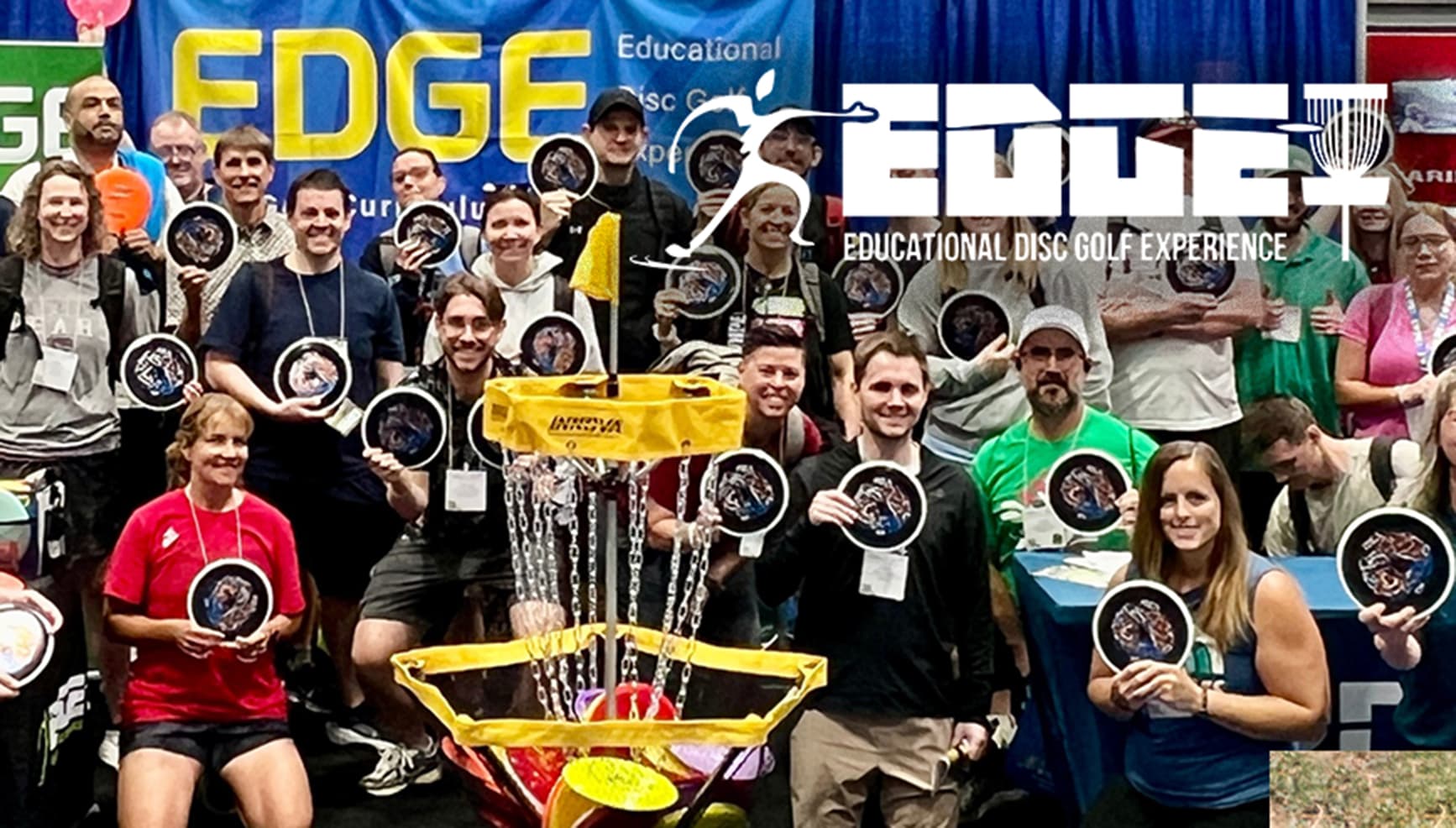
The 2026 SHAPE America gathering made that case in a very concrete way. Newly trained EDGE teachers left with PDGA discs, which is a small detail that says a lot about the larger strategy: the sport is being packaged for immediate use, not just long-term awareness. The goal is not to ask educators to become disc golf specialists. The goal is to make the first lesson easy enough that the sport can be introduced through physical education and then repeated.
That is where the implementation gap shows up. National advocacy can create buzz, but a teacher decides whether disc golf becomes a one-day novelty or a repeatable unit that fits a PE block, a youth program, or an after-school session. EDGE’s whole model is built around that reality, with standardized programming, teacher training, and broader awareness around disc golf as a learning tool.
What EDGE actually brings into a school
EDGE’s value is not only in the discs themselves. It brings curriculum, equipment packages, and a structure that helps educators use disc golf without having to invent the lesson from scratch. Earlier PDGA reporting said EDGE had long provided curriculum and equipment packages to schools, and that kind of support matters because the fastest way to stall a new sport is to make teachers improvise everything.
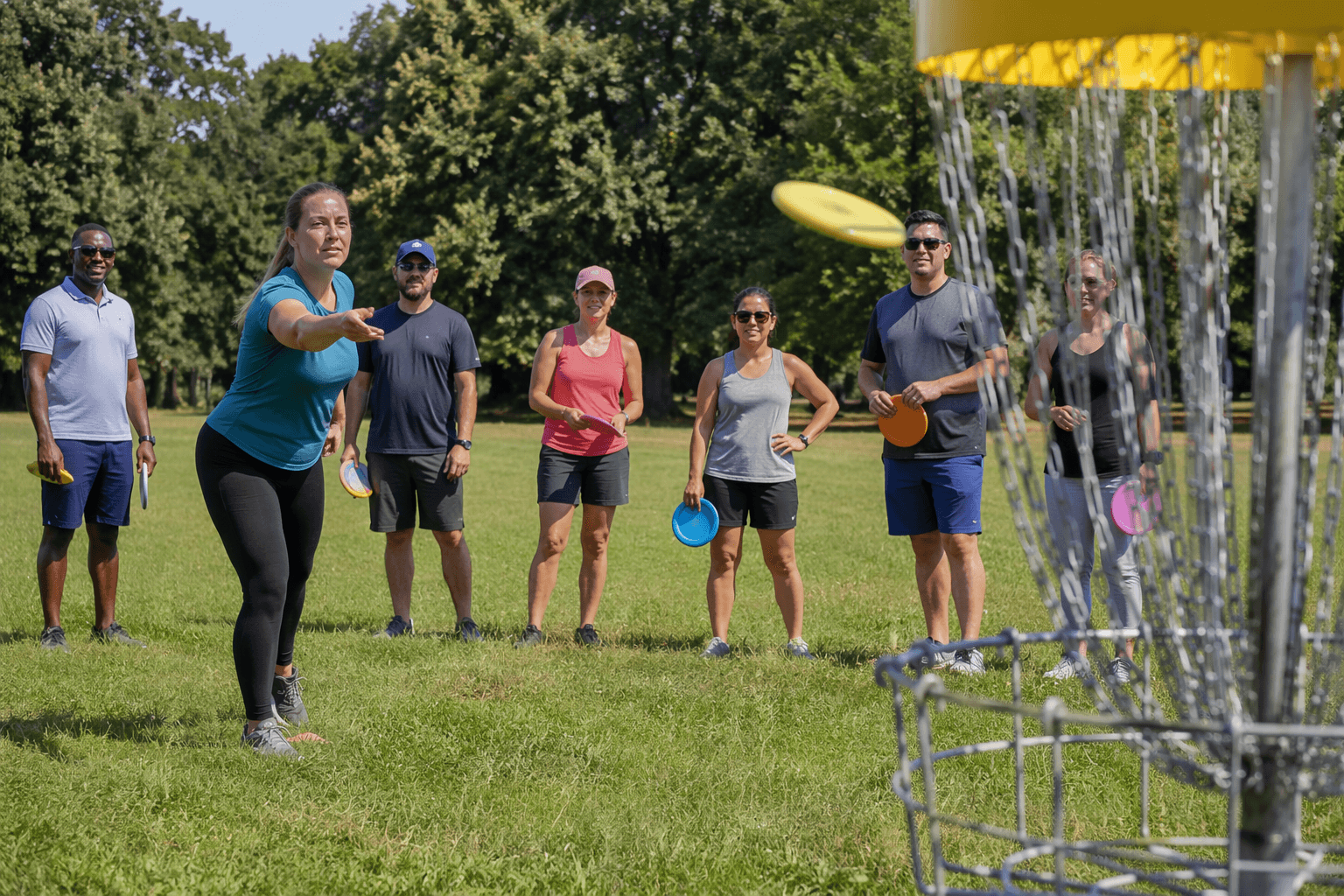
The attraction for schools is straightforward:
- It is low-cost compared with many organized sports.
- It is adaptable across different ages.
- It builds movement, coordination, and confidence.
- It does not require the kind of infrastructure many other sports demand.
That mix makes disc golf unusually compatible with school environments, especially when the lesson has to work for a wide range of students in a short time. The sport also scales well: one trained teacher can reach a full class, and a simple set of equipment can be used over and over again.
Why the standards shift matters
The timing helps. SHAPE America released its new National Physical Education Standards in March 2024 after a multi-year revision process, giving educators a fresh framework for what quality physical education can look like. Disc golf fits neatly into that conversation because it is easy to teach, standards-aligned, and inexpensive to run once the setup is in place.
That is important for another reason: schools do not adopt new sports only because they are fun. They adopt them when they can be justified inside learning goals. EDGE and PDGA are positioning disc golf as a tool that helps students move, focus, and gain confidence while still fitting the language of modern PE.
The numbers behind the push
The scale of the partnership shows this is more than a feel-good outreach project. PDGA says EDGE has awarded more than $300,000 to schools and youth programs and has introduced more than 2,000,000 kids to disc golf. In 2025 alone, the PDGA-EDGE partnership produced 23 grants across 17 states, and PDGA says the partnership led to $134,600 in grants awarded on behalf of PDGA members.

PDGA also says its Youth and Education program gave EDGE a $25,000 grant in 2025 to support its mission. Those numbers matter because they show a system that is not just handing out discs once, but repeatedly feeding schools with the tools and backing to keep the game alive. The educational award created in 2003, in partnership with PDGA, was designed to honor people bringing disc golf to new, often under-represented audiences, and that same logic now runs through the teacher-training model.
How the model has evolved
The school push did not begin with a single splashy campaign. An earlier PDGA article traces EDGE back to 2001, when it was already providing schools with curriculum and equipment. PDGA also describes EDGE as a nationally recognized 501(c)(3) nonprofit founded in 2003, and the same year saw the launch of the EDGE/PDGA Educational Award.
By 2016, the EDGE Tournament Charity Program had already funded more than $100,000 in grants through 252 grants to schools and youth programs. The current SHAPE America presence fits into that longer arc, with the 2026 teacher-training push serving as the latest sign that the sport’s growth strategy is moving deeper into institutions rather than staying on the edges of the youth game.
What lasting adoption looks like
For disc golf to take hold in schools, the winning formula is not grand. It is practical. Teachers need lesson plans that are easy to deliver, equipment that does not strain budgets, and a sport that produces visible student outcomes without requiring a major facility commitment. EDGE is trying to supply all three, and PDGA is using its youth-and-education platform to widen the reach.
That is why the future of school disc golf may depend less on national attention than on what happens in ordinary PE departments. If teachers can fit it into the day, the sport has a real chance to grow from a novelty into a routine part of how students learn to move, compete, and enjoy the game.
This article was produced by Prism’s automated news system from verified source data, official records, and press releases, then run through automated quality and moderation checks before publishing. The system is built and supervised by the people who set the standards it runs under. Read our full AI policy.
Did this article answer your question?