How disc golf flight numbers explain speed, glide, turn and fade
Flight numbers are a starting point, not a promise: speed, glide, turn and fade all shift with arm speed, angle, wind, plastic and wear.
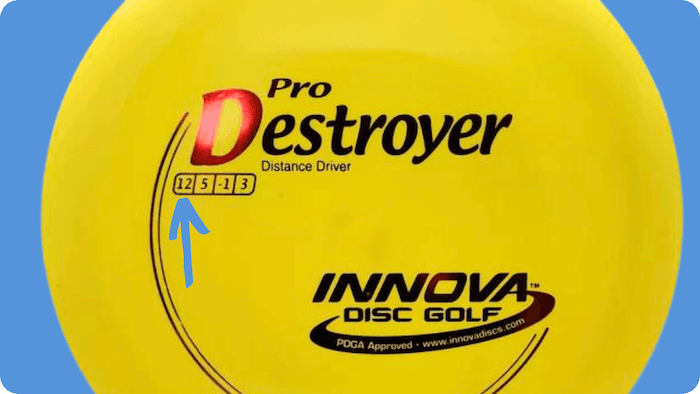
Innova founder Dave Dunipace introduced the four-number flight system in the 1990s, and it is now stamped on nearly every golf disc. The system is meant to turn a flight into something you can read at a glance. The catch is simple: those four numbers predict behavior, they do not guarantee it.
What the four numbers are meant to tell you
Flight numbers are a way to understand a disc before you throw it. The order matters: speed, glide, turn and fade. That sequence is less about marketing than it is about giving players a common language for how a disc is built to move through air.
Speed is the first and most misunderstood number. Glide tells you how long the disc wants to stay aloft. Turn describes the early high-speed drift in flight, while fade describes the late move that finishes the disc as it slows down. MVP Disc Sports uses those four labels directly. The scale is based on a right-hand backhand throw, which is why the same disc can present differently for forehands or left-handed throws.
Speed is about the rim, not the sticker
A disc’s speed number is tied to rim width and the amount of initial velocity it needs to reach its intended flight. That is why a speed 10 driver is not automatically longer for every player than a speed 5 disc. The faster mold usually asks for more arm speed, cleaner release and more spin before it comes alive.
The PDGA’s practical ranges put that in context. Putters usually sit at 1 to 3, midranges at 4 to 5, fairway drivers at 6 to 8 and distance drivers at 9 to 14. For many intermediate players, lower-speed discs can actually travel farther and straighter because they are easier to throw at the speed they were designed for. A disc cannot show off its full intended flight if the throw never gives it enough speed.
Glide, turn and fade explain the shape of the flight
Glide is the disc’s ability to hang in the air. High-glide discs can make a fairway feel longer, especially on open holes where there is space for the disc to carry before it settles. That does not mean glide is always the answer, but it does explain why some discs seem to float while others fall out of the sky.
Turn and fade are the pieces that usually decide whether a disc looks straight, flippy or stubborn. MVP’s scale places turn between 0 and -5 and fade between 0 and 5, which captures the full range from a disc that resists moving right early to one that wants to drift right before finishing left. In player terms, stable discs hold a line, understable discs turn more easily and overstable discs finish more aggressively.
Why the same mold can behave very differently
Flight numbers start to break down the moment real throwing conditions enter the picture. Arm speed matters first, because a disc can only act “as designed” if the throw gives it the pace it needs. Nose angle matters too: tip the nose up and even a forgiving disc can stall; release it clean and the same mold can suddenly look much faster and straighter.
Wind, plastic type, disc weight and wear all change the story. Wind, throwing speed, disc weight and disc wear all affect stability, which is why the same mold can feel trustworthy one day and touchy the next. A disc in a slicker or stiffer blend may hold its shape longer, while a beaten-up copy of the same disc often turns earlier and fades less.
That is also why flight numbers are best read as brand-specific design language rather than laboratory data. Discs are not rated through tightly controlled testing; the numbers are educated guesses based on things like rim width, parting line height and real-world observation. Two discs with the same stamp from different manufacturers may not fly the same way, and even one mold can drift as it wears.
How to use the numbers without getting fooled by them
The smartest way to use flight numbers is as a starting point for building a bag, not as a promise of identical flight in every condition. If you want a disc for long open holes, more glide can help. If you need something reliable in wind, more overstability usually earns trust. If you want a controlled turnover or a disc that helps newer players shape shots without fighting the disc, understable molds can open up lines that faster, more aggressive drivers will not.
The PDGA advises many new players to start with midranges around speed five with minimal turn and fade. That recommendation matches the reality of the learning curve, because generating spin and clean release speed is hard before timing is consistent. A speed 10 driver may look tempting, but for a developing thrower it can behave more like a short, unpredictable meathook than a distance machine.
Why the system matters in a sport with formal standards
The PDGA’s online Official Rules and Competition Manual are the authoritative versions, and major revisions are generally effective on January 1 each year. It also maintains Technical Standards and an approved-discs database that keeps adding new models, including into 2026.
That history runs back to Innova. Innova was formed in 1983 and credits Dunipace with creating the Eagle that same year, the world’s first disc designed specifically for disc golf. Innova credits Dunipace as the inventor of the golf disc and a 1993 Disc Golf Hall of Fame inductee. The stamp is everywhere now, from the amateur tee pad to the Disc Golf Pro Tour. The Disc Golf Pro Tour describes itself as the premier professional circuit for the best men’s and women’s players in the world.
This article was produced by Prism’s automated news system from verified source data, official records, and press releases, then run through automated quality and moderation checks before publishing. The system is built and supervised by the people who set the standards it runs under. Read our full AI policy.
Did this article answer your question?