How disc golf grew from experiments into a mapped course network
Disc golf became a sport when Headrick’s pole holes, parks, and course lists turned scattered play into a mapped network. By 1980, dozens of new courses were being added.
Disc golf became a real sport when its early targets left the park and entered the map. The breakthrough was not a single miracle shot or a single first round. It was a chain of baskets, course lists, newsletters, and park installations that let players in different places find the game and copy it.
From scattered experiments to a real beginning
The sport’s origin story is blurrier than its later growth story. The PDGA says disc golf has a long prehistory and that the question of who first played it cannot be answered cleanly because there were many isolated accounts of people throwing a flying disc at golf-like targets before the organized game took shape. That matters because disc golf did not begin as a finished product. It began as a set of local experiments, each one small enough to disappear unless someone wrote it down.
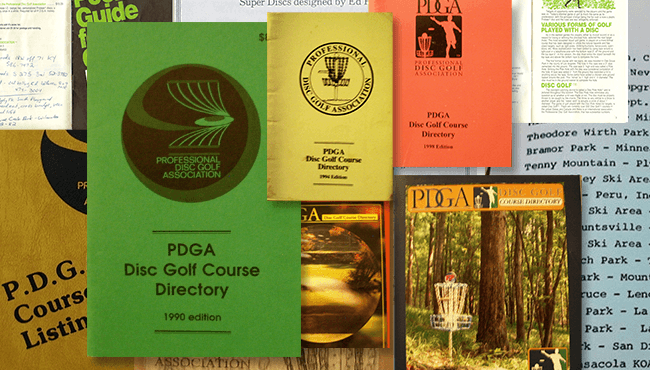
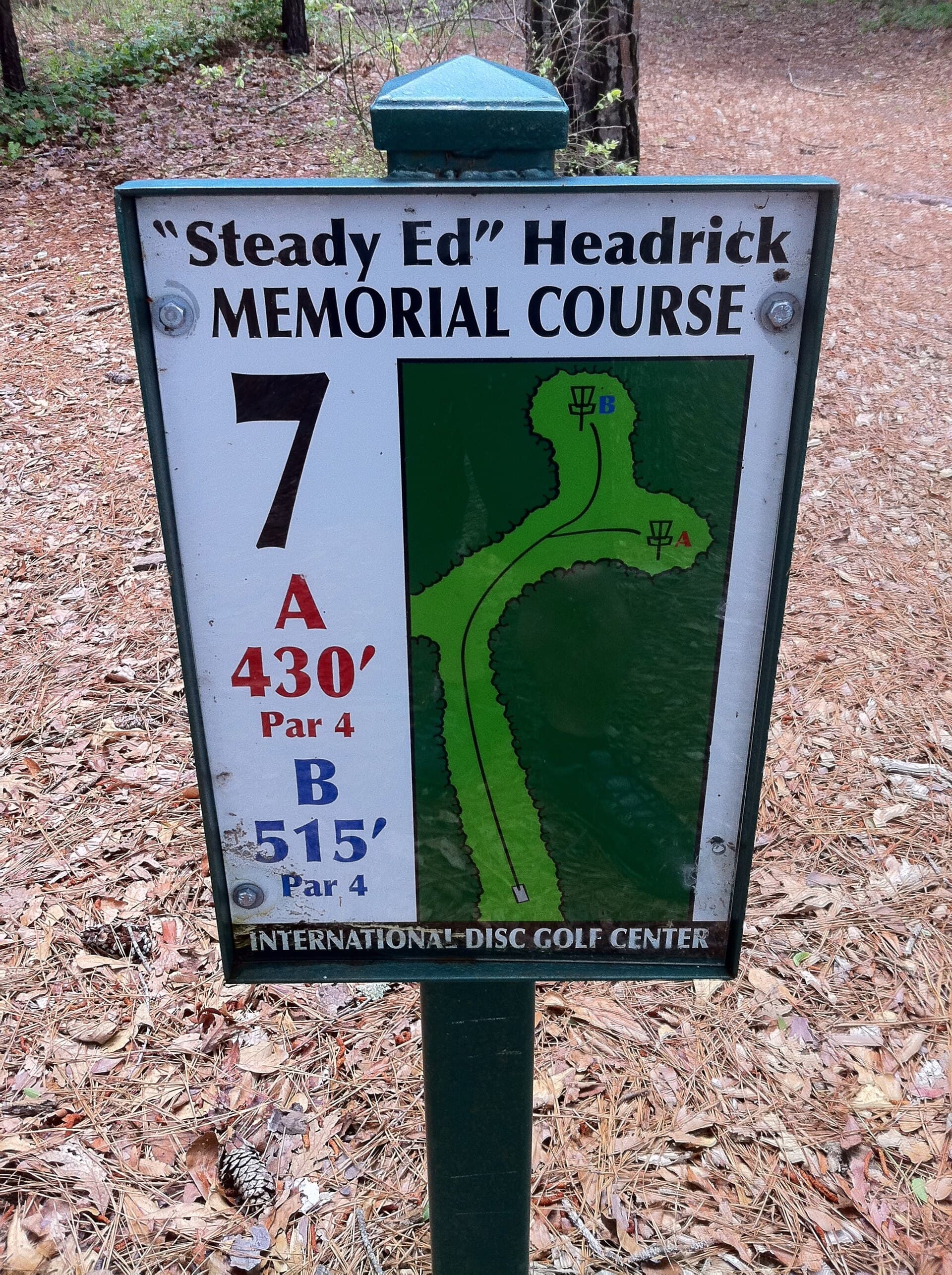
The first hard milestones came when Steady Ed Headrick turned those experiments into hardware and a governing frame. The PDGA says Headrick patented the Frisbee in 1967 and the Disc Golf Pole Hole in 1975. The organization itself was founded in 1976, and Headrick is still listed by the PDGA as player No. 1. Those dates mark the shift from an informal pastime to something that could be installed, repeated, and organized.
Oak Grove gave the sport its first fixed address
Oak Grove Park in Pasadena, Los Angeles County, California, was the crucial proof of concept. The PDGA identifies 1975 as the year of the first official disc golf course there, and its Oak Grove course page calls the site the world’s first permanent polehole course. The targets were nothing more than permanent poles placed into the ground, but that was enough to give the game a physical layout that could be copied.
The setting was just as important as the hardware. A 1978 DGA catalog says Oak Grove was the first attempt to formalize the game and that people had already been playing Frisbee golf there for several years before the course was formally installed. Play had been mostly limited to personal friends and family, which is exactly why the course mattered: once the layout became official, the game could move beyond a private circle and into public view.
That same site became a symbol. The PDGA’s 50th-anniversary coverage of Oak Grove described it as the birthplace of disc golf and noted that people traveled hundreds of miles to celebrate there half a century later. A course that began as a local experiment became a destination, and that long arc starts with a handful of poles in a Pasadena park.
The early course lists turned the game into a network
The best way to understand disc golf’s 1970s expansion is to follow the paper trail. In July 1977, Headrick sent Wham-O a letter listing 22 courses he had installed or was about to install. By December 1977, the Disc Golf Association had a list of 29 courses that circulated with one of the Wham-O discs it sold. That is the moment when the sport stopped being just a place and became a list.
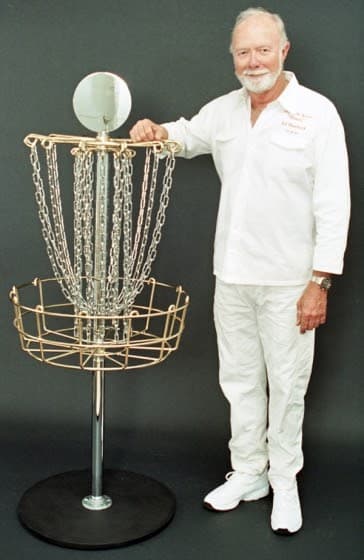
The growth did not pause there. A DGA newsletter in July 1978 listed 14 new courses. Another newsletter in April 1980 listed 31 more new courses, followed by 12 additional courses in June 1980. Those numbers show a sport that was spreading by documentation as much as by play. Every newsletter made the next course easier to locate, and every course made the next one easier to imagine.
Eric Vandenberg, the PDGA course archivist, built the earliest-courses project by compiling directories, historical lists, and other documents. That archive matters because it shows how disc golf spread not through mythology, but through repeatable information. Once a course could be named, listed, and circulated, the game had the beginnings of a map.
Headrick and the DGA made installation part of the mission
Headrick’s role was bigger than invention. The DGA says it was established in 1976 by Headrick to form a new international sport and to promote the installation and use of disc golf courses around the world. He traveled the country to install courses, recruit players, and add members to the new PDGA, which made him both an organizer and a builder. The sport did not just need enthusiasm. It needed someone willing to put targets in the ground and persuade parks to let them stay.
That parks relationship is one of the most important parts of the story. A 1978 DGA catalog says county parks officials saw the potential in Oak Grove, which points to the real engine of spread: local land managers who were willing to make room for the game. Disc golf did not grow only because fans wanted to play it. It grew because parks departments, course builders, and early organizers created a structure that could be repeated in another city, then another region, then another state.
The 1970s became a launchpad, not a footnote
By the end of the decade, disc golf had moved from informal play to organized competition. The PDGA history page marks 1979 as the year of Wham-O’s $50,000 Disc Golf Tournament, a sign that the game was already drawing larger events after the first wave of course-building. The sport was no longer only a novelty in a park. It was beginning to support tournaments, branding, and a wider competitive culture.
The directory numbers show how quickly that early network compounded. The PDGA says the course directory passed 1,000 courses in 2000, 3,000 in 2009, 5,000 in 2015, and 7,500 in 2017. Those figures are the long tail of the 1970s experiment. The first 22 courses, then 29, then 14 more, became the template for a growth pattern that could be counted in thousands.
Disc golf’s early history is often told as an invention story. The more revealing version is an infrastructure story. Headrick’s pole hole, Oak Grove’s permanent targets, the DGA’s newsletters, and the PDGA’s directories did the same thing in different ways: they turned isolated play into a network that people could find, install, and expand.
This article was produced by Prism’s automated news system from verified source data, official records, and press releases, then run through automated quality and moderation checks before publishing. The system is built and supervised by the people who set the standards it runs under. Read our full AI policy.
Did this article answer your question?