How PDGA disc golf divisions work, from pros to juniors
Start with class, then age and rating: PDGA divisions are built so one event can host pros, amateurs, juniors, and masters without mixing the wrong fields.
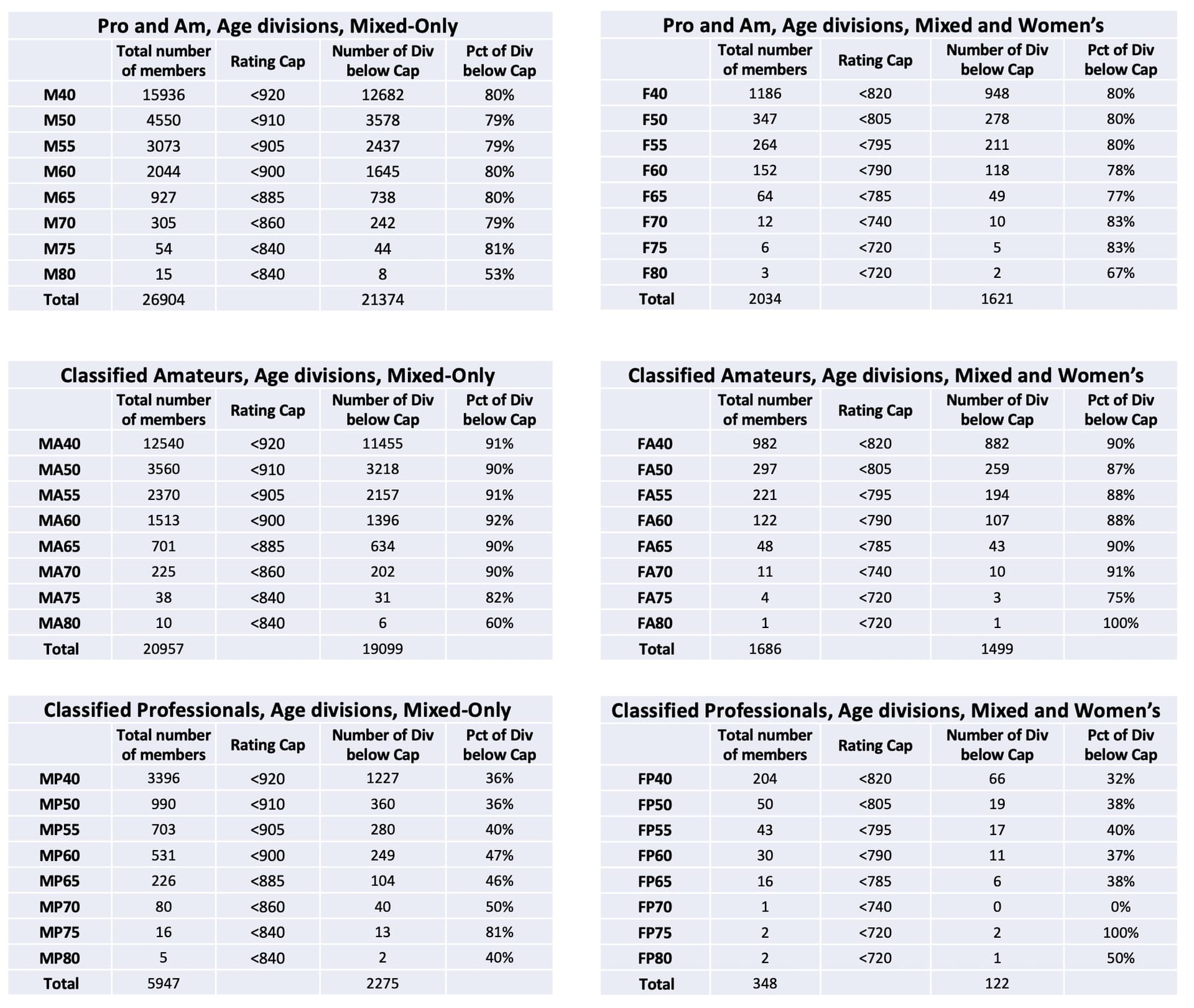
An amateur who accepts cash in a professional division is automatically reclassified as professional. The cleanest way to choose a PDGA division is to start with class, then work outward. First ask whether you are entering as a professional, amateur, or junior, then check whether the event uses age, rating, or gender to separate fields. Get that order wrong, and you can end up in a division that does not match your status, your eligibility, or, in the case of cash, your entire classification.
Start with class, not the trophy
The PDGA organizes divisions around three basic classifications: Professional, Amateur, and Junior. Professionals compete for money, while amateurs and juniors compete for trophies and prizes. That distinction determines what happens if you accept cash.
An amateur can choose to play a professional division without immediately becoming a professional-class member. Accepting cash in a professional division automatically reclassifies that player as professional.
The reverse is restricted too. Professional-class members can play amateur divisions only under specific conditions, and they may not play junior divisions at all. Under the current competition manual, eligible players must qualify by class, age, gender, and player rating, and any exception has to be approved in advance by the PDGA Director of Event Support.
Then check age, because PDGA uses the calendar year
Age-based divisions are built on year of birth, not a birthday countdown. If you turn 40 in a given year, you count as 40 for the whole year for eligibility purposes.
The PDGA’s age ladder reaches across the sport’s main categories. In the pro side, that means Open and a full set of masters divisions. In the amateur side, the structure mirrors that ladder with MA and FA prefixes. Junior divisions are offered in six age-based brackets.
A teenager, a 40-something veteran, and a 60-plus player can all be part of the same event without being dropped into the same bracket.
Ratings are the hidden gate
PDGA divisions are not just split by status and age. In many events, player rating is part of the entry test too, and players compete in more than 30 possible divisions across gender, age, and skill level. Most members qualify for more than one division, which is why tournament registration can feel like a decision tree rather than a single checkbox.
Some events use divisions based only on player rating, which allows men, women, and youth of all ages to compete together if their ratings fall in the same range.
The PDGA rating system is built from sanctioned singles events and league rounds once the tournament director submits official scores and course layouts to PDGA HQ. A player’s rating is based on rounds played in the previous 12 months before the most recently rated round, and once a player has at least nine rated rounds, the most recent 25 percent of those rounds are double-weighted.
That system has been in place since 2002 to group amateur players and help prevent sandbagging, the practice of entering below one’s skill level.
Where women, college, and juniors fit
The division table includes collegiate divisions used exclusively at College Disc Golf events.

The junior pathway runs from local C-tier events all the way to World Championships. Juniors still compete for trophies and prizes. The pathway also includes junior world invite criteria tied to age eligibility and amateur status.
For the Women’s Global Event divisions, the PDGA has waived temporary membership and player fees.
The most common mistakes are usually status mistakes
Players usually do not get tripped up by the names of divisions. They get tripped up by the rules underneath them.
- Signing up for a professional division and treating cash like a side issue. If you accept cash as an amateur in that setting, you are professional-class from that point forward.
- Assuming your birthday controls age eligibility. PDGA age divisions use year of birth, so a player who turns 40 during the year is eligible as 40 all year.
- Using an old rating as if it were permanent. Ratings are based on the most recent 12 months, and the number can change as new rounds are added.
- Forgetting that a pro cannot simply enter any amateur field. Pros may play amateur divisions at A-, B-, and C-tier events and leagues only if they meet the published criteria.
- Ignoring the possibility that an event is rating-based instead of age-based. Some tournaments care more about skill range than age, which changes the registration choice completely.
How to make the right call at registration
If you are staring at a division list and wondering where you fit, the cleanest path is sequential:
1. Decide whether you are entering as professional, amateur, or junior.
2. Check whether your age lands you in a masters or junior bracket, using your year of birth.
3. Look at your rating, especially if the event uses rating-based fields or rating caps.
4. Confirm whether the division is gender-based, age-based, or open to all eligible players.
5. If you are unsure about an exception, get approval before the event, not after check-in.
One player may be choosing between an amateur skill division and an age division, while another is stepping into an open field, and a third is entering a junior or collegiate bracket.
The organization was founded in 1976, and it held its first Professional Disc Golf World Championships in Los Angeles in 1982. Since then, the online rules and competition manual have served as the authoritative version, with major revisions generally taking effect on January 1.
This article was produced by Prism’s automated news system from verified source data, official records, and press releases, then run through automated quality and moderation checks before publishing. The system is built and supervised by the people who set the standards it runs under. Read our full AI policy.
Did this article answer your question?