Maple Hill’s rise, from Christmas tree farm to disc golf icon
Maple Hill turned a working Christmas tree farm into disc golf’s measuring stick, with five layouts and a championship history that keeps growing.

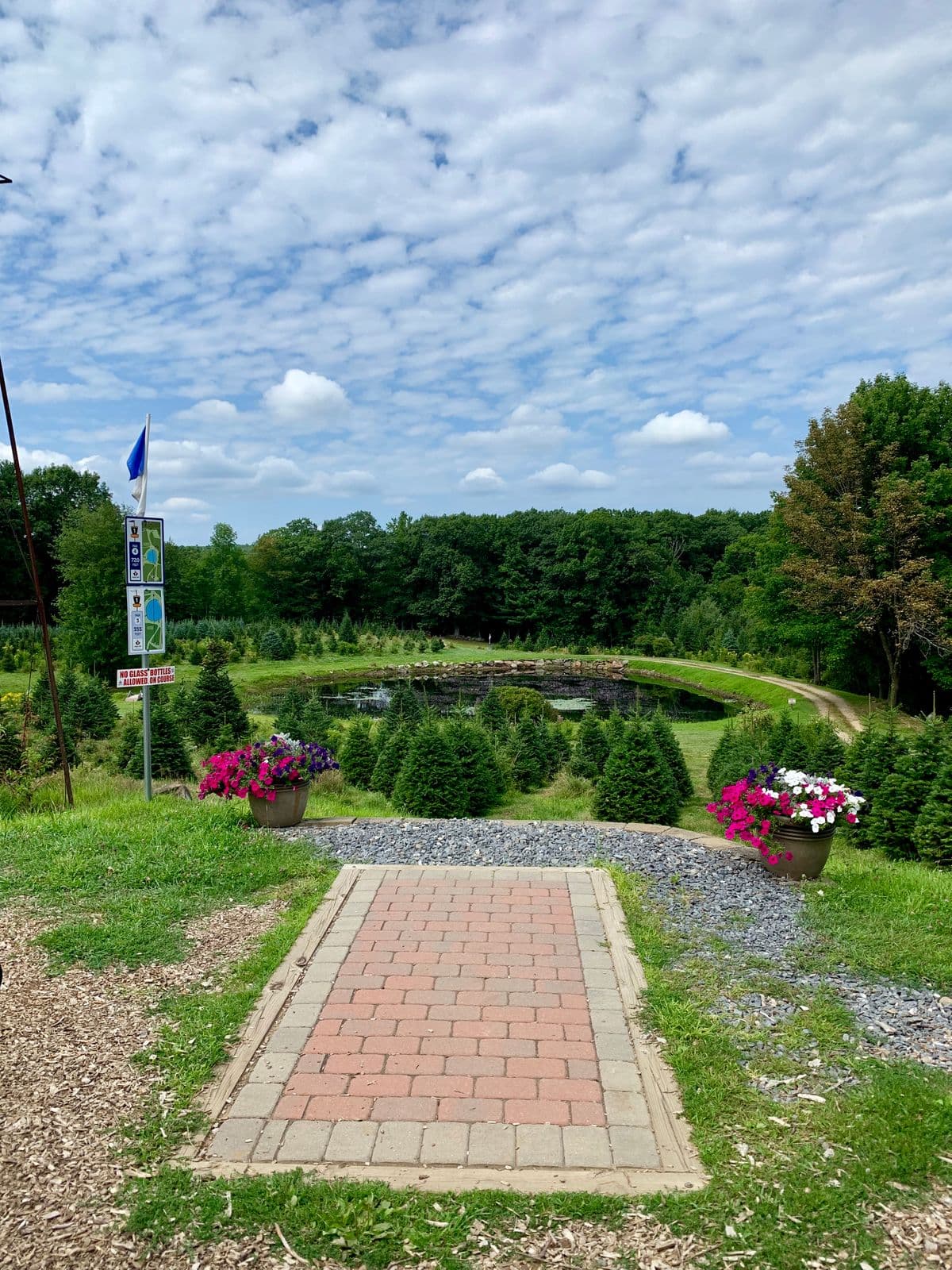
Maple Hill is the rare disc golf property that feels like a destination before a round even starts. Outside Worcester in Leicester, Massachusetts, the course sits on family land that still carries the marks of Maple Hill Farms and neighboring Southwick Farms, and the place has spent more than two decades turning private stewardship into competitive identity.
A family farm built for championship pressure
The land itself explains part of the course’s authority. The Dodge family owns and operates the Christmas tree farms that shape the property, and the family home on site has been in the family for nearly 200 years. That kind of continuity matters in disc golf, where championship venues are often temporary fixtures; Maple Hill has the feel of a place that was shaped over generations and then refined for elite play.
Maple Hill Disc Golf was founded in 2003 by Tom Southwick and Steve Dodge, and the site was built around a specific design idea: honor the sport’s shorter par-3 roots while also embracing the longer modern layouts that touring pros now expect. That mission shows up in the way the course functions on the ground. It is not a single trophy layout, but a property with five configurations and enough flexibility to serve both casual rounds and major events.
What makes the course instantly recognizable
Maple Hill’s identity comes from the features players remember shot after shot. The course mixes elevation change, heavily wooded fairways, iconic water hazards, and Christmas tree nurseries that make even open looks feel demanding. Those elements are not decorative; they are part of why the venue feels so exacting when a tournament pressure point arrives on a late Sunday card.
The core layouts give that range structure. The PDGA course directory lists Red at 5,071 feet, White at 6,089 feet, Blue at 7,975 feet, and Gold at 8,415 feet. Maple Hill Disc Golf also runs a league layout listed at par 61 and about 6,100 feet, a configuration intended to show the property’s signature shots at a more accessible level. In other words, the same land that can test the best touring professionals can also be scaled into a round that teaches the course’s vocabulary without demanding a full championship attack.
Why elite players keep returning
Maple Hill’s rise was fast, but it was not accidental. The course first hosted Maple Hill One in 2006, then became a PDGA Elite Series mainstay beginning in 2008. The Vibram Open made its debut there in 2008, and the PDGA has long framed the event as one of the most anticipated stops on tour. By 2016, the Vibram Open at Maple Hill became the first DGPT event ever held, a marker that tied the course to the rise of modern pro disc golf rather than just its earlier National Tour era.
That history is the reason Maple Hill is more than a scenic stop. The venue has repeatedly been used to crown champions and define seasons, including in years when the field knew the course would expose any soft spot in a player’s game. The property’s status is reinforced by the events it hosts now, the MVP Open and the Maple Hill Invitational, both of which keep the site central to the calendar.
The moments that built the reputation
The course’s reputation rests on more than logos and event names. Maple Hill accumulated signature moments that became part of disc golf memory. Paul McBeth’s 2013 lake jump remains one of the venue’s defining shots, a play that matched the course’s visual drama with real competitive consequence. Paige Pierce’s run of wins beginning in 2014 gave the course another layer of high-stakes history, while Jeremy Koling earned his first National Tour win there in 2014.
James Conrad added another chapter in 2018 with his first DGPT win at Maple Hill. That sequence matters because it shows how the course has served different eras of the professional game. It has not simply stayed famous by being pretty or difficult; it has kept producing moments that players and fans use as reference points for what elite golf looks like under heat.
A public-facing destination with tournament edge
Maple Hill is also more than a once-a-year stadium for pros. The course is open from New Year’s to Thanksgiving, and that operating window makes it a year-round part of the disc golf economy rather than a dormant tournament site between events. Tee times and lessons have helped turn the property into a broader public destination, extending its influence beyond championship weekends.

That business model reinforces the course’s place in the sport. A player can show up for a league round, a lesson, or a tournament tune-up and still walk the same property that has hosted elite finishes for years. The result is a venue that works on two levels at once: a playable everyday course and a championship benchmark that keeps its prestige because so many of the sport’s biggest moments have already happened there.
Why Maple Hill became the standard
Maple Hill’s rise is best understood as the convergence of land use, design, and repetition. The farm setting gives it a distinct identity, the five configurations give it flexibility, and the tournament record gives it authority. Few courses in the sport can match that combination of private-land stewardship and recurring high-pressure use.
That is why Maple Hill still feels like a standard rather than a nostalgia piece. It is a course that asks pros to solve the same landscape in different ways, and it keeps proving that a family property in Massachusetts can become one of disc golf’s most important championship stages.
This article was produced by Prism’s automated news system from verified source data, official records, and press releases, then run through automated quality and moderation checks before publishing. The system is built and supervised by the people who set the standards it runs under. Read our full AI policy.
Did this article answer your question?