PDGA explains order of play, who throws first in disc golf rounds
One bad guess about order of play can wreck a card's flow. PDGA's 802.02 settles it: first tee honors, then lowest score, then the player farthest from the basket.

Official Rules of Disc Golf section 802.02 tells players when it is their turn to throw from the first tee through the final putt. PDGA Rules School Episode 2, “Order of Play,” centers on that rule.
First tee honors start the round
On hole 1, the card needs a starting order before anyone throws. In PDGA tournament play, the teeing order for the first hole is determined by the order in which players are listed on the scorecard, which is a clean answer on paper and a practical one in the park. In casual rounds, that starting sequence might come from a random draw, a quick agreement, or whoever set up the card, but the key is that the group decides it before the first drive.
That detail sounds small until a card wastes time arguing about it. If your name is first on the scorecard, you tee first on hole 1, period. Brian Earhart’s Rules School episode walks through that moment for players who know how to throw a disc but have not yet internalized the turn-taking logic.
The best score earns the next tee
After the first hole, disc golf turns into a score-based pecking order. The player with the lowest score on the previous hole has the honor and throws first on the next tee. If the previous hole was tied, the scores are counted back until the order is resolved, so the card keeps moving without a coin flip or a debate.
This is where a birdie can matter in a way casual players do not always appreciate. Winning a hole gives you a small tactical edge on the next tee, which can matter on a tight opening gap, a windy pad, or any hole where getting the first clean look helps. First-hole order comes from the scorecard, and every hole after that comes from the previous scores, with tie countback breaking the deadlock.
Once the hole starts, distance takes over
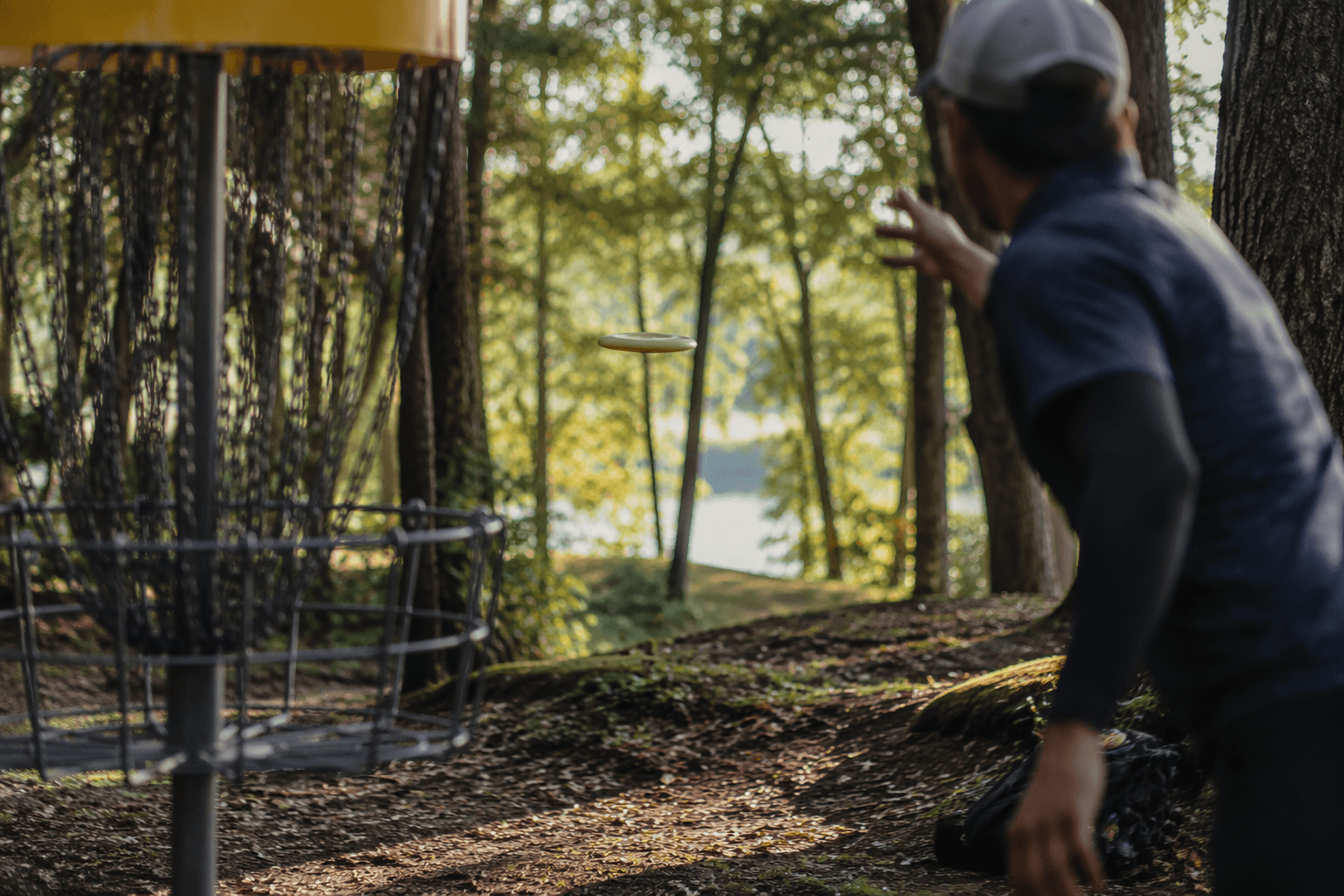
The second the whole card is off the tee, the rule changes. Now the player farthest from the target throws next, whether that player is in the fairway, the rough, or still fighting a bad angle off the tee. That keeps the round fair and readable, and it keeps players from leapfrogging each other all over the hole.
A real-hole example makes it obvious. If one player parks a drive at 14 feet, another is sitting 60 feet out, another is 110 feet away, and a fourth is still scrambling from the woods, the 110-foot shot goes first. The parked drive does not get to jump the line just because it was the best throw of the group. Order of play sits alongside teeing off, lie, marking the lie, stance and excessive time in the mechanics of a hole, not just a tee box decision.
Putting order changes the same way your lies do
This is the part newer players usually miss. “Last to the tee” does not mean “last to throw forever.” Once you are on the green, the putting order changes as distances change, and the player farthest from the basket is next. A player who parked the hole might still putt after someone who missed long or landed in the circle on a worse line.
Picture a par 3 with four very different finishes: one disc inside 15 feet, one at 28 feet, one just outside the circle, and one long putt from 45 feet. The 45-footer goes first because that player is farthest away. Then the next longest, then the shorter looks, and finally the tap-in. That is the simplest way to remember 802.02: score sets the next tee, distance sets the shot order on the hole.
Ready golf works in casual rounds, but it is not a loophole
Ready golf gets thrown around a lot, usually when a group wants to speed things up. In a casual round, it means the player who is ready and safe can go instead of making everyone wait on a rigid sequence, as long as the card agrees and nobody is being rushed into a bad shot. That can be useful on busy courses, especially when one player is still walking to the lie while another is already set and clearly not in the way.
But ready golf is a pacing tool, not a substitute for knowing who is actually away. Alex Williamson’s UDisc beginner guide includes order of play in the core rules every first-tournament player needs, and Dynamic Discs includes it in its top five PDGA rules to know before your first tournament.
Why this keeps showing up in PDGA teaching
Official Rules of Disc Golf section 802.02 has its own place in the rulebook, and PDGA Media built a 12-part Rules School video series around the basics of the Official Rules of Disc Golf.
PDGA’s 2026 rulebook update discussion page shows that the Official Rules of Disc Golf and the Competition Manual get periodic attention.
This article was produced by Prism’s automated news system from verified source data, official records, and press releases, then run through automated quality and moderation checks before publishing. The system is built and supervised by the people who set the standards it runs under. Read our full AI policy.
Did this article answer your question?