PDGA technical standards shape discs, targets and competition approvals
A disc’s path to sanctioned play runs through PDGA testing, where diameter, rim shape and flexibility decide whether innovation becomes legal competition gear.
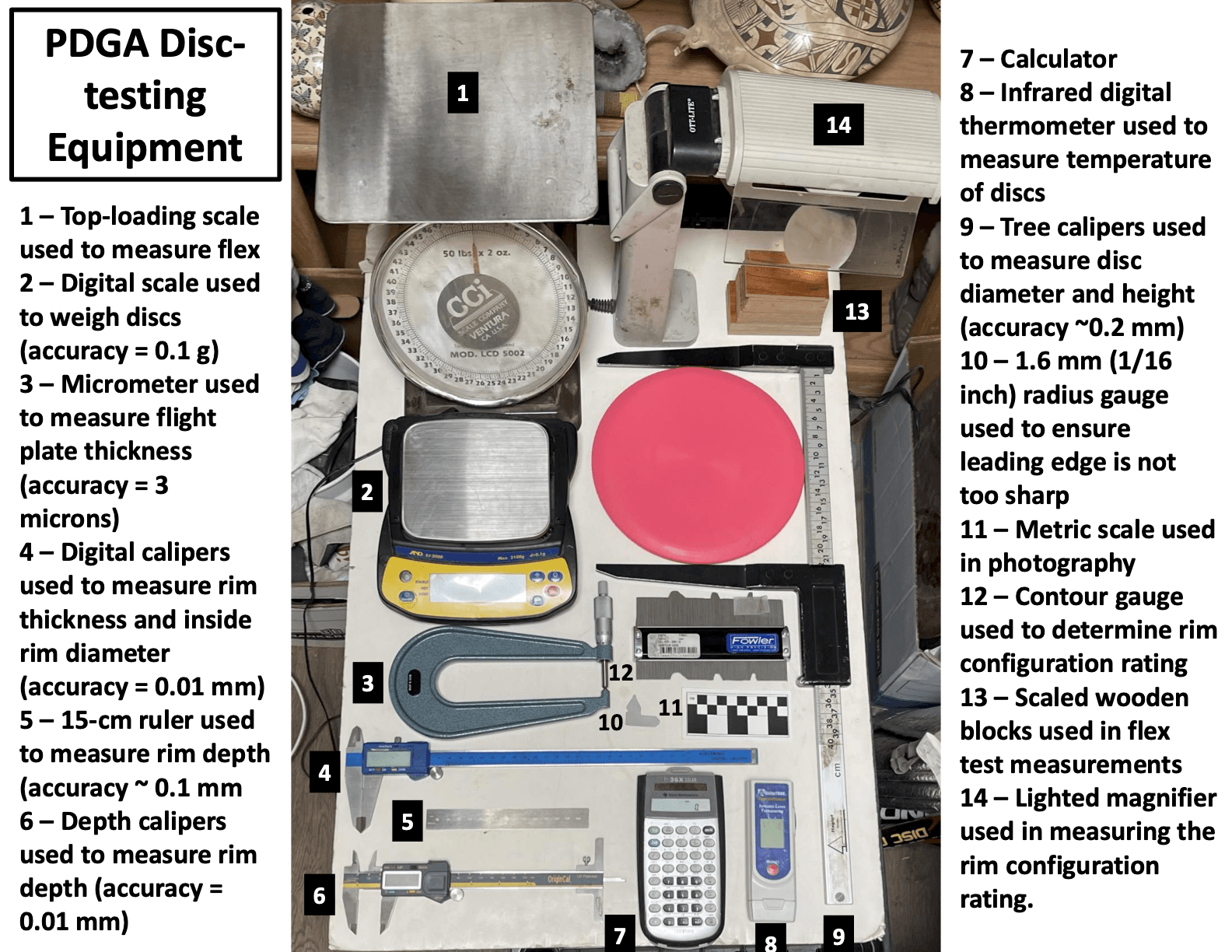
A disc does not earn its place in sanctioned play through hype or distance claims. It has to pass a technical gate that decides whether the equipment fits the sport as the PDGA defines it, from the first prototype submission to the moment a model appears on the approved list.
How PDGA approval works
The Professional Disc Golf Association routes new discs and targets through its Technical Standards Working Group, which evaluates equipment for potential approval in PDGA-sanctioned events. Manufacturers and distributors must submit at least three samples of a disc, or one sample target, and the submission is tested either by an independent laboratory or by a qualified working-group member with the right equipment.
That process is designed to move quickly. In most cases, the PDGA says review is finished within 15 or fewer business days, and if it takes longer, the manufacturer or distributor receives an explanation. Once a disc or target clears that process, it moves onto the official approved-discs or approved-targets lists, and only then can it be used in sanctioned competition.
The approval system is not just a paperwork hurdle. It is the mechanism that lets players trust that a disc sold this season still belongs to the same competitive framework as the one they threw last season. It also gives manufacturers a clear path from prototype to legal tournament gear, with the standards process serving as the sport’s technical boundary line.
Why the measurements matter
The PDGA’s approval rules matter because disc golf is played on the edges of small differences. Diameter, flexibility, rim configuration and edge radius can change how a disc releases, how it flies and how it finishes. Those details are not cosmetic, because the standards decide whether a design is simply new or legally playable in a sanctioned round.
The history of the sport shows why those measurements became central. The PDGA was founded in 1976, and early competition had no formal testing system. The Flying Disc Museum’s account says the first competitions allowed only Wham-O discs, which meant the sport initially ran on brand restriction rather than technical evaluation.
That changed in 1983, when Tom Monroe and Lavone Wolfe allowed non-Wham-O and DGA discs at the 2nd Pro Worlds if they met PDGA standards. The early criteria cited by the museum included a 200-gram overall weight cap, a 21-centimeter minimum diameter and a rim-depth-to-diameter ratio of at least 5 percent. Those numbers show how early disc golf began turning broad playability into measurable rules.
By 1994, the standards had become more precise. The PDGA Board approved revisions that added tests for rim configuration, edge radius and flexibility. In other words, the rulebook shifted from basic size limits to more detailed engineering checks, which is exactly where modern disc design now lives.
From informal play to a formal testing regime
The people behind the standards helped turn a loose set of allowances into a formal approval pipeline. Jeff Homburg became chair of the Technical Standards Committee in late 1989, and that period marked a deeper push toward structured disc testing and approval. The evolution matters because it shows the standards were built in response to the sport’s actual equipment disputes, not in a vacuum.
The PDGA’s technical-standards resources reflect that history. The association maintains equipment approval charts, disc-testing equipment documents, a 1994 disc-certification revisions file and manufacturer-distributor guidelines. That archive turns the standards into a living record of what the sport has allowed, rejected and refined over time.

The scope is large enough to show how deeply the system now shapes the market. A PDGA tag page says there are over 700 approved disc models on the books. That number signals a crowded and mature equipment landscape, where every new model has to fit inside a long-established technical structure before it can matter in competition.
What manufacturers have to watch besides flight numbers
Approval is not only about physical geometry. The PDGA says it does not arbitrate or mediate trademark disputes over approved disc names, which means manufacturers have to settle naming conflicts themselves. That matters in a sport where branding, model identity and legal protection all collide around a single disc mold.
The PDGA also encourages developers to contact the Technical Standards Working Group chair early if they have design questions. That advice is practical, because the line between a legal innovation and a noncompliant one can hinge on details that are easier to correct before submission than after testing begins.
- build to the measurable rules before submission
- send at least three disc samples or one target sample
- expect testing through a lab or qualified working-group member
- plan for a review window that usually closes in 15 business days or fewer
- resolve naming and trademark issues outside the approval process
For manufacturers, the standards process is both a gate and a roadmap:
That structure keeps the competition side clear. A disc can be creative, fast, overstable or unusual, but if its design strays outside PDGA parameters, it stays out of sanctioned play.
Targets are part of the same rulebook
The standards system does not stop at discs. The PDGA also approves targets, and the Disc Golf Pro Tour’s approved competition baskets are certified for championship-level use by the PDGA. That creates a common equipment floor for elite play, even when basket models differ in construction and catch profile.
The current approved-targets list shows the system remains active, with recent approvals spread across basic, standard and championship categories. The tour’s basket list includes models such as the Latitude 64 Pro Basket, approved on June 14, 2017, the Latitude 64 Elite Championship basket, approved on January 29, 2018, and the Disc Golf Association Mach X, approved on September 23, 2013. Those dates show how target approval moves in step with the sport’s competitive levels.
The World Flying Disc Federation also relies on this framework. WFDF adopts PDGA-certified disc-catching targets, which extends the PDGA’s technical authority beyond a single tour or national scene and makes the standards part of the broader architecture of modern disc golf.
That is the real shape of the hidden rulebook. A disc or basket may look like a piece of plastic and chain, but under PDGA standards it is a regulated object with a history, a testing path and a clear line between innovation and competition legality.
This article was produced by Prism’s automated news system from verified source data, official records, and press releases, then run through automated quality and moderation checks before publishing. The system is built and supervised by the people who set the standards it runs under. Read our full AI policy.
Did this article answer your question?