Western North Carolina high school disc golf thrives after 15 years
A 15-year volunteer spine keeps Western North Carolina high school disc golf alive. The model works because schools, sponsors, and coaches all pull in the same direction.
Why this league still works
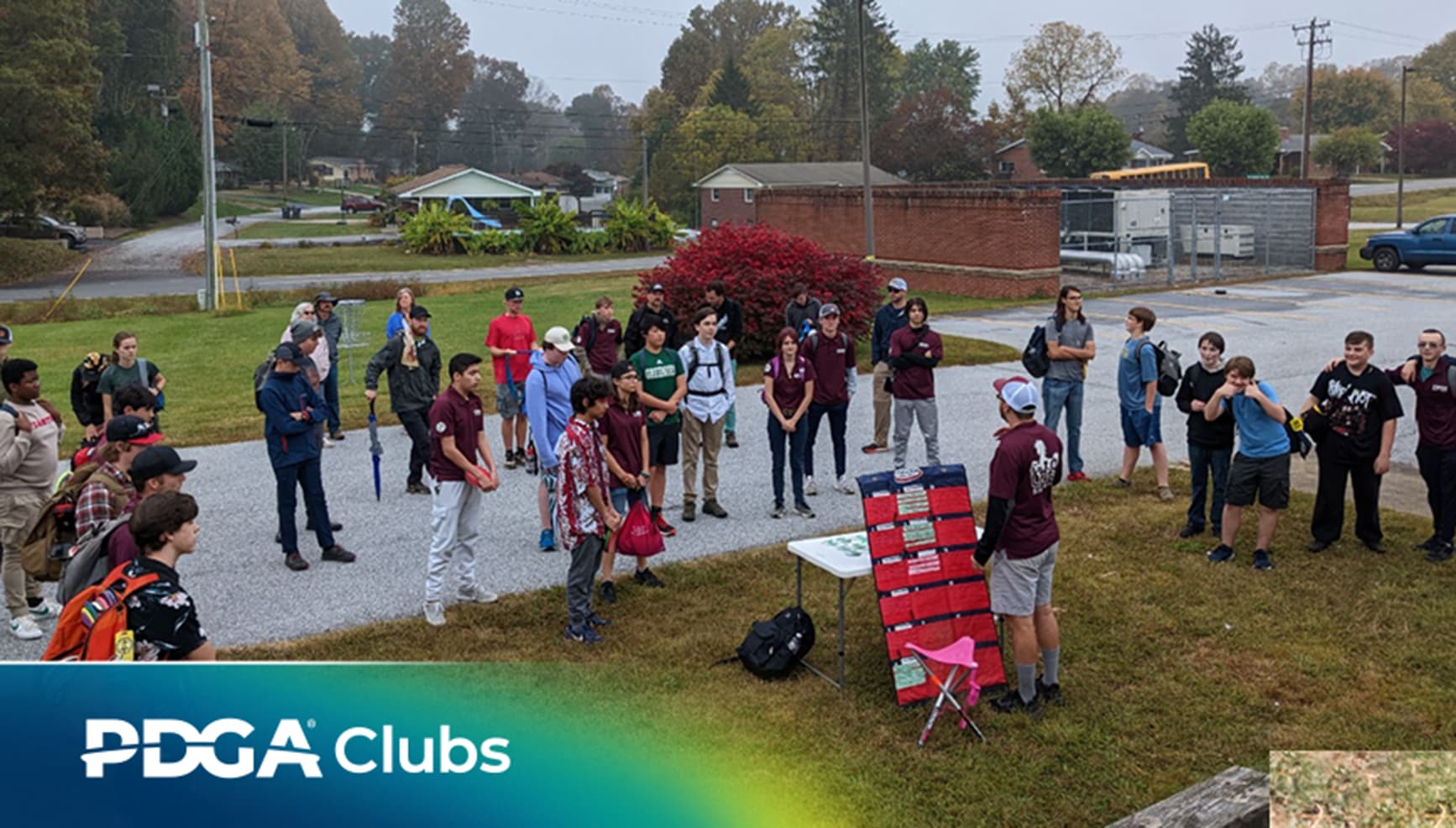
Western North Carolina High School Disc Golf has lasted because it was built like a system, not a flashpoint. The league now reaches students from 14 local schools and has served 200 student-athletes over five seasons, but its real strength is that it gives the sport a place to live inside schools, week after week, without leaning on a single generation of players.
That durability starts with a simple promise: free, PDGA-sanctioned interscholastic competition for high school players in and around Asheville and Hendersonville. The league’s stated goal is to teach, promote, and grow disc golf among high school-aged players in Western North Carolina at low to no cost, and that low-barrier model is the reason it can pull in new schools without asking families to buy into a costly travel circuit.
The volunteer backbone
The most important copy-paste lesson from Western North Carolina is the staffing model. The Western North Carolina Disc Golf Association describes itself as an all-volunteer 501(c)(3) nonprofit dedicated to fostering and improving disc golf in the region, and it says it has supported and grown the high school league since the beginning.
That matters because longevity in youth sports usually depends on adult labor more than equipment. In this case, the labor has been organized around coaches, local disc golfers, and school contacts who keep the schedule moving and the league visible. There is no single event that made the program endure. It endured because people kept doing the unglamorous work.
At the center of that work is Kyle Silva, who revived the program and now directs it while also coaching a weekly disc golf club at his own school. His own background makes the model even clearer: he started coaching a weekly disc golf club in 2019 after previously coaching ultimate and track and field, proof that school-sports mentorship can transfer directly into disc golf growth.
Silva’s recognition with the 2025 EDGE/PDGA Educational Award reflects that broader impact. His PDGA profile lists him as an amateur from Black Mountain, North Carolina, with a current rating of 938 as of February 10, 2026. The profile reinforces the same point the league itself makes: this is a community built by people who stay.
How the school pipeline was built
The league’s roots go back to fall 2011, when former Western North Carolina Disc Golf Association president Jason Urroz helped oversee installation of nine-hole courses at Owen High School, Enka High School, and North Buncombe High School. That was the infrastructure move that made everything else possible.
Those early school courses turned disc golf from an off-campus hobby into something students could encounter on familiar ground. Once a school has a course, the sport becomes easier to schedule, easier to supervise, and easier to normalize as part of campus life. That is the difference between a club that appears for a season and a program that can survive for 15 years.
The historical context also matters beyond one county. The Western North Carolina Disc Golf Association itself began informally in 2000 with a handful of disc golfers led by James Nichols to build the original Richmond Hill course in Asheville. The school league grew out of a disc golf culture that already knew how to organize locally, secure land access, and turn volunteer effort into playable space.
What another region would need to copy
The Western North Carolina model is repeatable, but only if a region copies the whole chain.
- Start with one or more school-based courses or school access to nearby courses.
- Keep participation free or nearly free so families do not need to bankroll the program.
- Put an adult coordinator in place who can connect schools, sponsors, and volunteers.
- Schedule around the school calendar so students can return every week.
- Build from school club to interscholastic league to regional pipeline.
That structure gives students a reason to keep showing up. It also creates continuity across grade levels, which is the difference between a one-year experiment and a program that keeps feeding itself.
Funding that actually reaches students
The league’s financial structure is as important as its volunteer structure. Western North Carolina Disc Golf Association’s annual youth grant has helped provide backing, while MVP Disc Sports and Throw Pink have supplied consistent annual product donations. Those donations do not just decorate the program. They lower the cost of participation and give students tangible starter gear.

One example from the WNCDGA youth-grant page shows how targeted that help can be. In 2024, one recipient received a practice basket and used it to give 16 students at a local middle school league a free starter set, which helped kick-start interest in the sport for several of them. That is the kind of small, practical investment that keeps a youth program moving when budgets are thin.
The PDGA’s own scholastic grant structure points in the same direction. Its youth-and-education mission is to create opportunities for junior disc golf, and its scholastic grant is open to school-affiliated clubs. The grant can be used for equipment, baskets, travel, events, junior memberships, and administrative support, up to $500. For a school-based league, that mix covers the exact places where programs usually stall.
Why the model fits North Carolina
Western North Carolina did not grow in a vacuum. PDGA says North Carolina’s disc golf history dates to the late 1960s and early 1970s, and the state ranked fourth nationally in active PDGA members in 2018. That kind of depth matters because school disc golf grows faster where the adult ecosystem already understands the sport.
The region’s existing culture helps explain why the high school league could turn into a durable pipeline rather than a novelty. In a state with deep disc golf roots, the schools are not introducing an alien sport. They are plugging students into a community that already has courses, volunteers, donors, and institutional memory.
The takeaway for schools and regions trying to build the same thing
Western North Carolina High School Disc Golf thrives because it solved the problems that usually kill youth sports programs: cost, staffing, access, and continuity. It has volunteer labor from WNCDGA, school-side leadership from Kyle Silva, early course access dating to 2011, and sponsor and grant support that keeps students supplied with baskets and starter sets.
The lesson is not that disc golf grows itself. It is that disc golf grows when schools treat it like a real program, local adults keep showing up, and the financial model stays simple enough for new students to walk in without friction. That is why this league has lasted, and why another region could build the same staying power if it commits to the same structure.
This article was produced by Prism’s automated news system from verified source data, official records, and press releases, then run through automated quality and moderation checks before publishing. The system is built and supervised by the people who set the standards it runs under. Read our full AI policy.
Did this article answer your question?