Why disc golf, not Frisbee golf, became the official name
Disc golf won its name when trademark law met sport-building. The label helped the game claim its own identity instead of borrowing a toy brand.
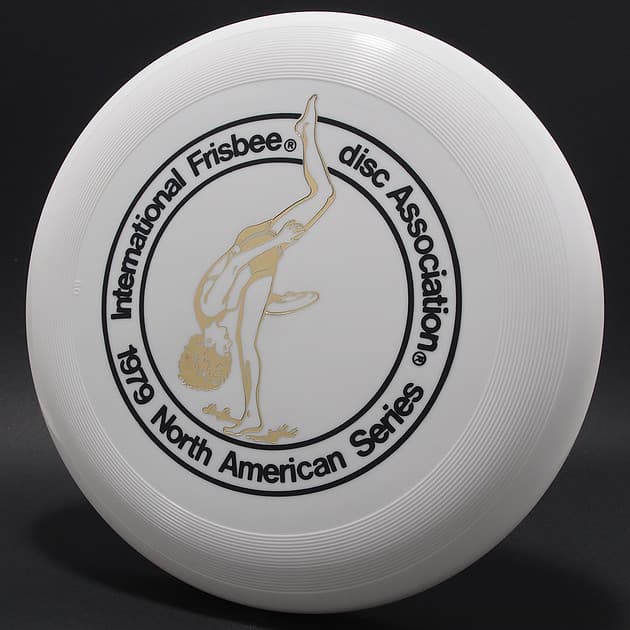
The fight over whether to say disc golf or Frisbee golf was never just about vocabulary. It was about whether the game could stand on its own, with its own rules, its own targets, and its own public identity, instead of leaning on a brand name that belonged to someone else.
Why the name mattered from the start
Wham-O has controlled the Frisbee trademark since 1959, after putting the word on products in 1957. That gave the company real leverage over how the name could be used in official references, especially when the subject was a flying disc or a disc-based game. In the United States, that meant players, media, and governing bodies had a practical reason to settle on disc golf rather than risk turning a sport into a trademark problem.
The scale of the brand made that boundary even more important. Wham-O says it has sold more than 100 million Frisbees worldwide, which helps explain why the name carried so much weight in the first place. On its brand protection page, the company still lists Frisbee Golf among its protected brand uses and warns that commercial combinations built around Frisbee can infringe the mark. Once a sport starts showing up in flyers, rulebooks, course signs, and association material, the difference between a generic term and a protected brand stops being academic.
Steady Ed Headrick made the sport look like a sport
The name shift lined up with the work of Steady Ed Headrick, the figure the PDGA calls the Father of Disc Sports and the Father of Disc Golf. Headrick spent the 1960s and 1970s at Wham-O improving the Pluto Platter into a disc that flew better and could be marketed more seriously. That matters because disc golf did not emerge as a one-off backyard game. It was being shaped by someone trying to give it structure, equipment, and a vocabulary that would survive outside the toy aisle.
In the mid-1970s, Headrick coined and trademarked the term Disc Golf while standardizing the game with the Disc Pole Hole, the first target to combine chains and a basket on a pole. The patent record identifies the underlying device as U.S. Patent 4,039,189, titled Flying disc entrapment device. That target is more than a piece of hardware. It is the object that gave the sport a repeatable, recognizable scoring system and made the word disc golf match the thing people were actually playing.
The PDGA history timeline puts the first official disc golf course at Oak Grove Park in 1975, followed by the association’s founding in 1976 and the Disc Golf Pole Hole patent in 1977. Those dates show how closely the sport’s infrastructure, language, and governing body developed. The terminology did not trail the sport. It was part of the same construction project.
The early years were organized, but still messy
The PDGA says the sport’s early history is long and blurry, with no clear answer to who first played disc golf. That ambiguity is common in new sports that begin as local variations before they become formal competitions. In disc golf’s case, the blur is especially useful, because it shows how many isolated disc games were already circulating before one name won out.
What is clear is that the organizing push came fast. The PDGA says hundreds of letters were sent in the summer of 1976 as the sport’s early community tried to connect players, courses, and rules. That kind of mail campaign sounds quaint now, but it is exactly how a niche activity starts to become an institution. By the time the PDGA was up and running, the game had already started to separate itself from casual throwing and toward a sport with defined targets and a stable identity.
Disc golf became the official language of legitimacy
Once the sport had a non-branded name, it could be written into tournament flyers, rules documents, course signage, and association materials without depending on a toy-company trademark. That was the practical step that turned a backyard activity into a recognizable sport. It also changed how the public could talk about it. Disc golf sounded like a category. Frisbee golf sounded like a product description.
That distinction still shapes the sport’s governance. The PDGA describes itself as the professional association for all disc golfers and says its online Official Rules of Disc Golf and Competition Manual are the authoritative version. Those are not the trappings of a novelty game. They are the markers of a sport that has formalized its language, codified its competition, and built a national structure around its own name.
Why Frisbee golf still survives outside the U.S.
The American insistence on disc golf makes more sense when you look beyond the United States. The World Flying Disc Federation describes itself as the international federation for flying disc sports, and that broader umbrella helps explain why different countries and organizations use different labels for the same activity. In some places, Frisbee golf remains common and accepted, even if the U.S. settled on disc golf to stay clear of trademark limits.
That variation is not a contradiction. It is the residue of a sport that grew out of a branded disc, then had to become something larger than the brand that helped inspire it. The name disc golf won because it solved two problems at once. It kept the lawyers satisfied, and it gave the game the one thing every serious sport needs first: its own identity.
This article was produced by Prism’s automated news system from verified source data, official records, and press releases, then run through automated quality and moderation checks before publishing. The system is built and supervised by the people who set the standards it runs under. Read our full AI policy.
Did this article answer your question?