Why the forehand is a must-have disc golf skill
The forehand is not a trick shot. It is the line-saving, score-saving tool that turns awkward lies, tight gaps, and windy holes into manageable plays.
Disc golf rewards players who can solve problems, not just throw far, and the forehand is one of the sport’s cleanest problem-solvers. UDisc puts it alongside backhands and putts as a basic skill every new player needs to understand, and it makes one key point early: golf discs do not fly like ordinary frisbees. That difference is why the forehand matters so much on real courses, where the shape of the fairway and the angle of the lie often decide the hole before raw power does.
Why the forehand changes the game
A forehand gives you a second throwing shape when a backhand line is blocked, pinched, or forced in the wrong direction. UDisc says the throw is especially useful for scrambling, for keeping your eyes on tight gaps during the motion, and for handling wind and slopes more strategically. That is the practical case for learning it: the shot is not decoration, it is a route to saving strokes when a hole asks for touch, angle control, or a release under pressure.
The same article calls the forehand a "powerful weapon," and that language fits the way players actually use it. When a drive kicks deep into trouble, a workable sidearm can create a clean recovery line without forcing a full-body twist around obstacles. When a fairway bends away from a player’s natural backhand shape, the forehand can turn a defensive hole into an attacking one.
Where the forehand matters most on the course
The best forehand players are not just throwing for style points. They are solving specific golf problems that show up again and again on varied courses. A scramble from the woods often demands a shot that can start on one angle and finish on another, and a forehand is often the cleanest answer when the escape window is narrow.
Tight gaps are another reason the throw has become essential. UDisc’s instruction stresses that the sidearm helps players keep their sight line through the throwing motion, which matters when the opening is small and the disc has to pass through it on a precise angle. Low ceilings and protected landing zones also make the shot valuable, because a compact forehand can stay flatter and more controllable than a big backhand swing.
Wind and slopes add another layer. A course that tilts left or right, or a hole exposed to crosswinds, can punish a one-shot player who only trusts one release. The forehand gives you another way to manage angle, height, and finish, which is often the difference between a safe par and a recovery that turns into a bogey.
Why top players treat it as standard equipment
The forehand is no longer an optional specialty at the top of the sport. The PDGA says proficiency with both forehand and backhand shots has become the standard in today’s professional game, and its sidearm instruction describes a proficient forehand as a necessity because most players can throw well from both wings. That is the modern baseline: if you want to keep pace in competitive disc golf, one shape is not enough.
Eagle McMahon is a clear example of why the shot carries weight. His PDGA player page lists him in Boulder, Colorado, United States, with a current rating of 1040, career earnings above $400,000, and 62 career wins. UDisc points to McMahon’s booming sidearm as a model for how much power the forehand can generate at the elite level, and his motion has become a reference point for players who want to see how the throw looks when it is fully developed.
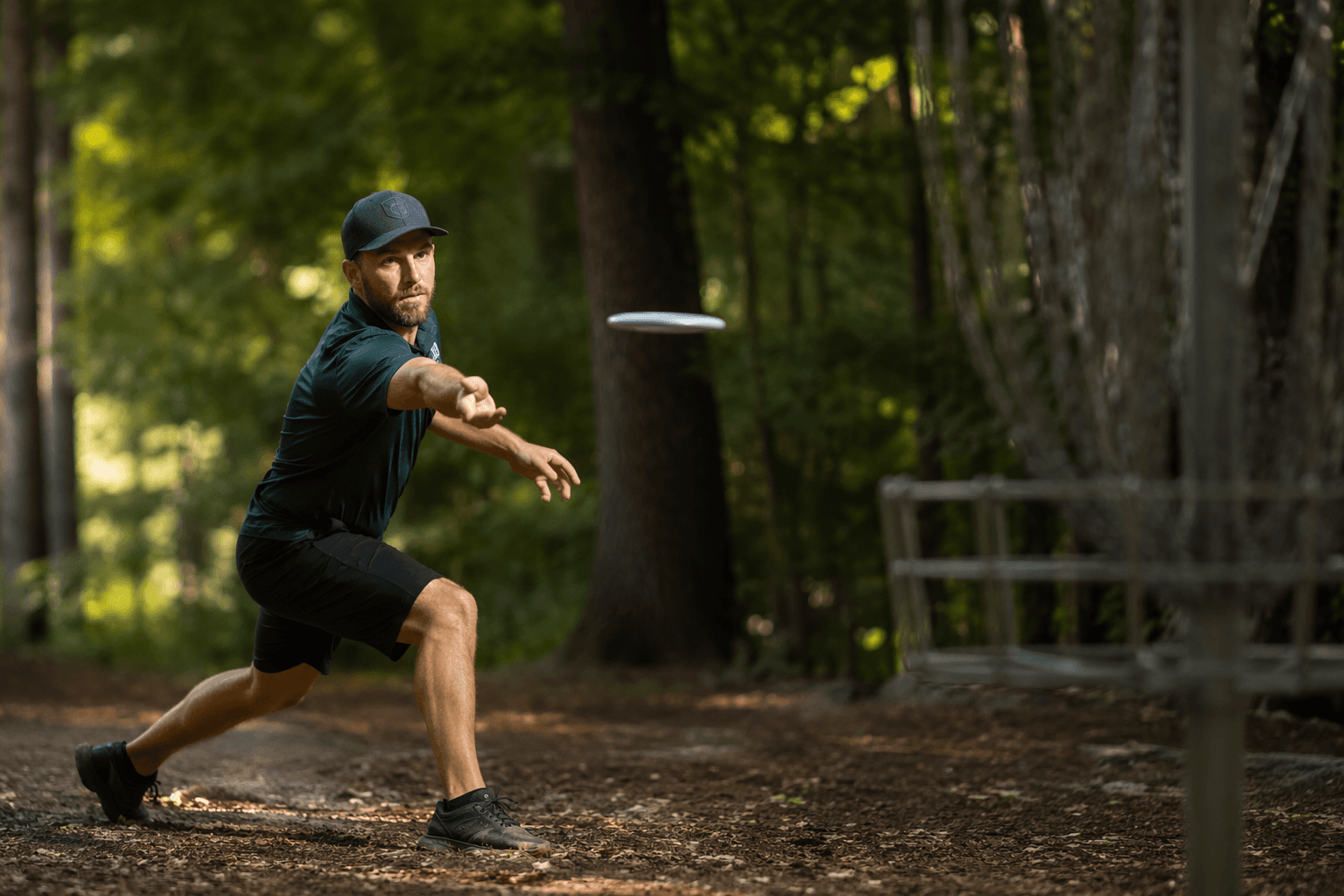
McMahon’s value in this conversation is not just that he can hit big lines. It is that his forehand shows how the shot fits into real competition: it can attack holes, rescue bad positions, and create an additional angle that forces the course to play differently. For newer players, that makes the sidearm something to learn methodically. For advanced players, it becomes another scoring tool that broadens the playbook.
What the forehand says about the sport itself
The forehand’s rise tracks with the way disc golf has matured. The PDGA was founded in 1976, and its history shows a sport that moved quickly from informal play into a codified competitive structure. The first known disc golf rules date to 1982, and the 1986 update was the first published rulebook for PDGA members. Those milestones matter because they mark the shift from loosely organized throwing to a true sport with defined technique, standards, and course strategy.
That evolution also explains why the forehand feels so central now. The PDGA says it supports more than 108,000 active members and organizes 10,000-plus competitive events worldwide, while its course directory lists more than 11,000 entries. In a sport that large, a shot becomes essential when it shows up everywhere from beginner instruction to elite tournament coverage, and the forehand has crossed that line.
The rules framework keeps sharpening that competitive edge. The PDGA says revisions to the rules are generally published effective January 1 each year, which gives the game a stable structure even as strategy, equipment, and skill trends continue to evolve. The forehand fits that modern reality: it is not a novelty, but a standard piece of shot-making that players are expected to understand and deploy.
How to think about learning it
A useful forehand is less about forcing power and more about building trust in the motion. UDisc’s beginner guide groups backhands, forehands, and putts as the core skills, which is the right way to think about development: the sidearm belongs in the foundation, not as a late add-on. Because disc golf discs do not fly like ordinary frisbees, the release angle and nose angle matter more than many new players expect.
That is why the forehand should be practiced as a scoring line, not just a distance throw. Work it into the situations where it naturally wins: tight escapes, short-range control, wind management, and fairways that turn away from a backhand. Once it becomes dependable in those spots, the forehand stops being a specialty and starts acting like insurance for the card.
The players who score best on mixed courses usually own both wings. In a game built on angles, the forehand is the shot that keeps more of the course in play, and that makes it one of disc golf’s most practical skills.
This article was produced by Prism’s automated news system from verified source data, official records, and press releases, then run through automated quality and moderation checks before publishing. The system is built and supervised by the people who set the standards it runs under. Read our full AI policy.
Did this article answer your question?