BETAFPV expands 2026 micro FPV racing lineup with new whoops
BETAFPV’s new whoops and 1S motors are built to pull more pilots into micro racing without watering down tuning for veterans.
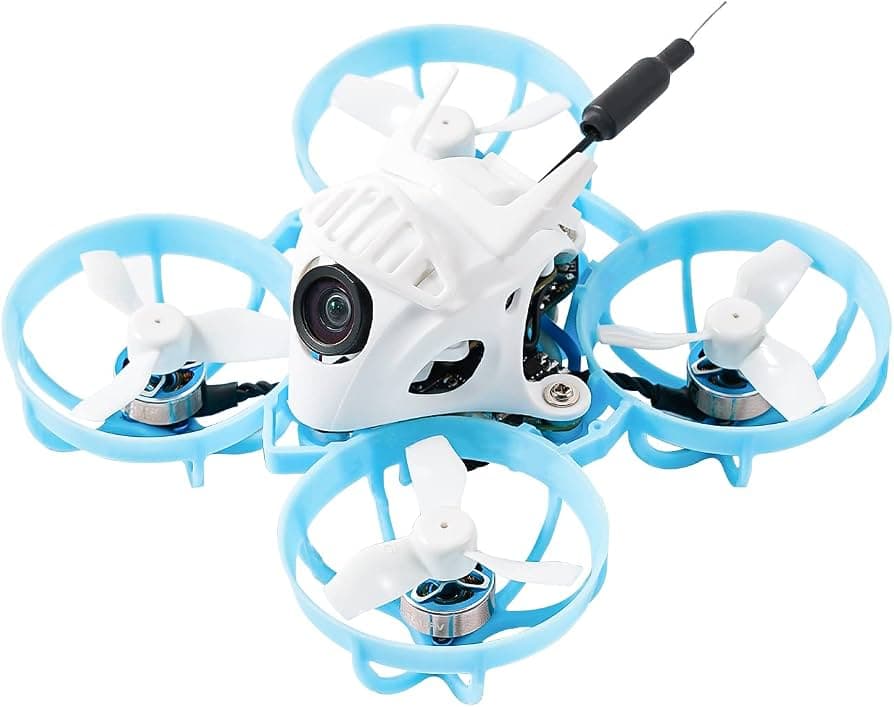
BETAFPV’s 2026 micro FPV push is bigger than a parts refresh. The homepage now puts new whoops, HD gear, controllers, flight controllers and 1S motors in the same frame, which tells you exactly where the company wants the class to go: lower the entry barrier, keep the quads durable, and still leave room for real tuning gains.
The new micro stack
The clearest story here is standardization. BETAFPV is not offering one flagship drone and a handful of accessories around it; it is building a lane for 1S racing that spans the Air65 II, Air75 II, Meteor75 Pro II O4, Meteor65 Pro II O4, P1 Air Unit HD VTX, LiteRadio controllers, VR04 goggles and the Air 1S Brushless Flight Controller. That matters because the easier it is to keep the radio link, goggles, power system and airframe inside one ecosystem, the easier it gets for a new pilot to show up, plug in and start learning race lines instead of troubleshooting mismatched gear.
The support side is stronger than it looks. The Air 1S Brushless Flight Controller uses the STM32G473CEU6, which BETAFPV says brings a 55 percent jump in computing speed over the F411, plus an ICM42688P gyro and an onboard 5.8G VTX with 25mw to 400mw output. On the transmitter side, the LiteRadio 3 Pro uses EdgeTX-ready open-source control with hall gimbals, four precision bearings and adjustable spring tension, while the LiteRadio 3 firmware update line adds simulator support for Steam, Android-based FPV simulators and Windows DJI virtual flight. That combination lowers the learning curve without making the hardware feel entry-level.
Air65 II is the cleanest beginner-league entry
If you want the most obvious first step into indoor racing, the Air65 II is the one to start with. BETAFPV gives it three distinct setups, Champion, Racing and Freestyle, each with matched motor and prop combinations, and wraps that around a Matrix 5IN1 II flight controller, a high-output 12A ESC and a reinforced frame and canopy built to absorb repeated hits. That is the kind of design that matters in a beginner league, where crashes are part of the race pace and the best setup is the one you can keep flying after a bad gate entry.
The meaningful change versus the older Air65 is not just a fresh label. The earlier Air65 Racing and Freestyle versions were tied to the Air Brushless Flight Controller 5IN1 and 0702SE II motors, while the new Air65 II moves to 0702 Brushless Motors (2026) with a 0.10mm stator core and three explicit race tunes: Champion at 36000KV, Racing at 30000KV and Freestyle at 25000KV. That gives pilots a cleaner way to match throttle feel to track layout, instead of forcing one build to cover every style of flying.
Air75 II is built for tight technical tracks
The Air75 II is the sharper tool in the lineup. Its frame cuts arm braces from six to four, uses optimized duct geometry to produce an 11 percent thrust gain, reduces frame amplitude for better PID step response and drops the weight to 4 grams, which BETAFPV says is a 10 percent reduction from Gen 1. It also adds motor fixed slots, motor screw protection, enlarged FC mounting holes and a lower duct profile, all of which point to the same goal: cleaner response when the track gets cramped and the lines get unforgiving.
That is a real upgrade over the earlier Air75, which came in at 21 grams and leaned on the Air Brushless Flight Controller 5IN1 and an optional LAVA 1S 450mAh 75C battery. The new Air75 II still lives in the same ultra-light space, but the lighter frame, stiffer duct package and 0802 Brushless Motors (2026), available in Champion, Racing and Freestyle versions at 28000KV, 25000KV and 22000KV, make it the better choice when you need to thread a narrow indoor course without wasting energy on wobble.
Meteor75 Pro II O4 raises the ceiling for 1S spec-style racing
The Meteor75 Pro II O4 is the most obvious answer for pilots who want more punch without leaving the 1S class. BETAFPV pairs it with 1102 Freestyle Motors (2026), GF 1811 3-blade props, optimized aerodynamics, a Canopy II with vibration damping and up to six minutes of flight time on a LAVA II 1S 680mAh battery. In race terms, that is a package built to carry speed through long straights and recover better from hard hits, while still keeping the whoop format intact.
Compared with the earlier Meteor75 Pro O4, which used 1102 22000KV motors, GF 45mm 3-blade props and a Matrix 1S 3IN1 HD FC, the II version is a more deliberate race build. The new 1102 motors add a reinforced shaft and upgraded 2000 series outer rotor housing material, and BETAFPV says they deliver 15 percent higher efficiency and smoother throttle response when paired with the GF 1811 props. That is exactly the kind of change that shows up in spec-style competition: less wasted throttle, more repeatable corner exits, and a setup that feels calmer when the pack compresses.
Meteor65 Pro II O4 keeps the 65mm class relevant
The Meteor65 Pro II O4 gives the smallest class a reason to exist beside the newer 75s. BETAFPV says it is purpose-built for the DJI O4 Wide Air Unit and packages that into a compact, durable frame with extended flight time, which makes it the natural option for the tightest indoor layouts, low ceilings and tracks where a 75mm whoop would simply be too much quad.
That is a notable step from the earlier Meteor65 Pro O4, which centered on a 66mm wheelbase, 0802SE 19500KV motors and GF 35mm 3-blade props. The move to the O4 Wide platform suggests BETAFPV is keeping the 65 class alive as a true micro-racing lane, not just a trainer size, and that matters for pilots who want a lighter, more compact option without abandoning HD video entirely.
The HD path is now part of the race package
The P1 Air Unit HD VTX ties the visual side together. It delivers a 1080p at 60fps live feed, roughly 60 milliseconds of latency and over 5 kilometers of range, all inside BETAFPV’s ArtLynk protocol ecosystem. For racers, that is less about cinematic range and more about dependable image quality and low delay when the first corner gets chaotic and you need to trust the frame in front of you.
BETAFPV’s goggles line backs that up with practical details instead of marketing fluff. The VR04 HD goggles are glasses-friendly, use PU face padding and a silicone nose bridge, and can run up to 3 hours on two 2600mAh batteries or up to 4 hours on the Pro version with two 3800mAh batteries, with direct power possible from 2S to 6S whoop batteries. Put together with the radios and the new whoops, the message is simple: the path into micro FPV racing is getting more coherent, and the gear is finally starting to behave like a system instead of a pile of separate buys.
This article was produced by Prism’s automated news system from verified source data, official records, and press releases, then run through automated quality and moderation checks before publishing. The system is built and supervised by the people who set the standards it runs under. Read our full AI policy.
Did this article answer your question?


