Chengdu hosts first International Drone Sports Games, draws 800 teams
More than 800 teams filled Chengdu's first World Drone Games, where racing shared the stage with basketball, fencing and archery. The sport now faces a clear identity test.

More than 800 teams turned Chengdu into the first major proving ground for whether drone sports can grow into a broader ecosystem without losing the competitive edge that made racing matter in the first place. The inaugural World Drone Games ran from April 11 to 25 across three competition zones in the city, with the main venue set inside a robot park in the Chengdu High-tech Industrial Development Zone.
The field was deep and international. Xinhua said the Games drew over 800 teams from around the world, including at least 30 overseas squads from Russia, Myanmar, Cameroon, Pakistan and Tanzania. The opening phase alone featured 443 teams from primary and secondary schools, universities and enterprises, a sign that the event was not built only for elite specialists but for a wider pipeline of pilots, engineers and commercial users.
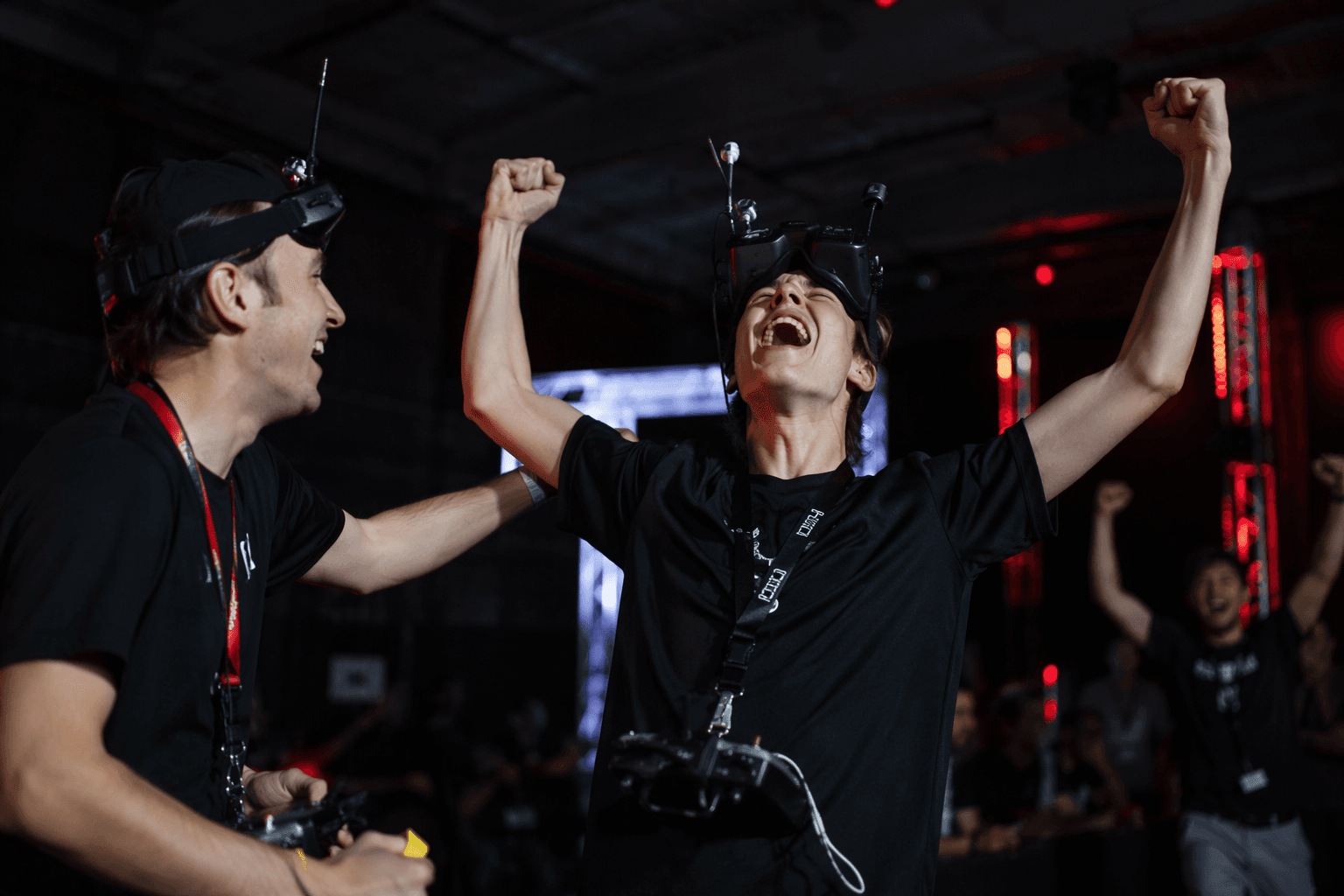
That breadth is the strongest argument for the Games as more than a racing showcase. Drone basketball, fencing, weightlifting and archery all sat alongside racing, giving organizers a program that looked less like a niche speed meet and more like an attempt to define drone sports as its own category. The novelty events carried obvious visual appeal, but racing remained the discipline with the clearest competitive logic. It is the format most directly tied to precision, control and speed, the qualities organizers kept emphasizing throughout the event.
Xinhua said the Games also highlighted the technology behind the machines, including flight control algorithms, structural testing, coordinated control, load capacity, ultra-low-latency precision control and positional accuracy. That matters because it keeps the sport anchored to measurable performance rather than spectacle alone. Basketball and fencing may widen the audience, but racing is still the benchmark that gives the whole movement competitive legitimacy.

Chengdu has been pushing in that direction for a year. The city’s government issued measures in 2025 to accelerate low-altitude flight capability and develop the low-altitude economy, including support for infrastructure, services, insurance, logistics, manufacturing and airworthiness certification. The Games fit neatly into that strategy, giving policy language a public stage and a sports wrapper.
The event was staged in multiple rounds, with later phases held on April 18 and April 25. By the end, the message was hard to miss: drone sports are widening fast, but racing still has to define whether that growth becomes a stronger competitive ecosystem or a blurrier one.
This article was produced by Prism’s automated news system from verified source data, official records, and press releases, then run through automated quality and moderation checks before publishing. The system is built and supervised by the people who set the standards it runs under. Read our full AI policy.
Did this article answer your question?