Drone Champions League Split 2 raises the stakes in FPV racing
Split 2 turns every heat into a standings fight, with DCL’s top-four path to Super Finals 2024 and the 2026 seeding race raising the pressure.

DCL billed Match Day 6 of DCL 2024 Split 2 as “the second last match day of DCL 2024 Split 2” and titled it “the penultimate showdown.” It calls Split 2 “the next chapter in drone racing excellence,” and the split format changes how the championship feels: every heat can swing the standings, every mistake carries forward, and every team has to race the calendar as much as the course.
The Split 2 page sits inside a full sports-style site with navigation for Home, Latest, League, Teams, and Game. This is a season with structure, progression, and consequence. Split 2 is the part of the year where the title race tightens and the pressure starts to separate the pilots who can repeat results from the ones who only flash speed once.
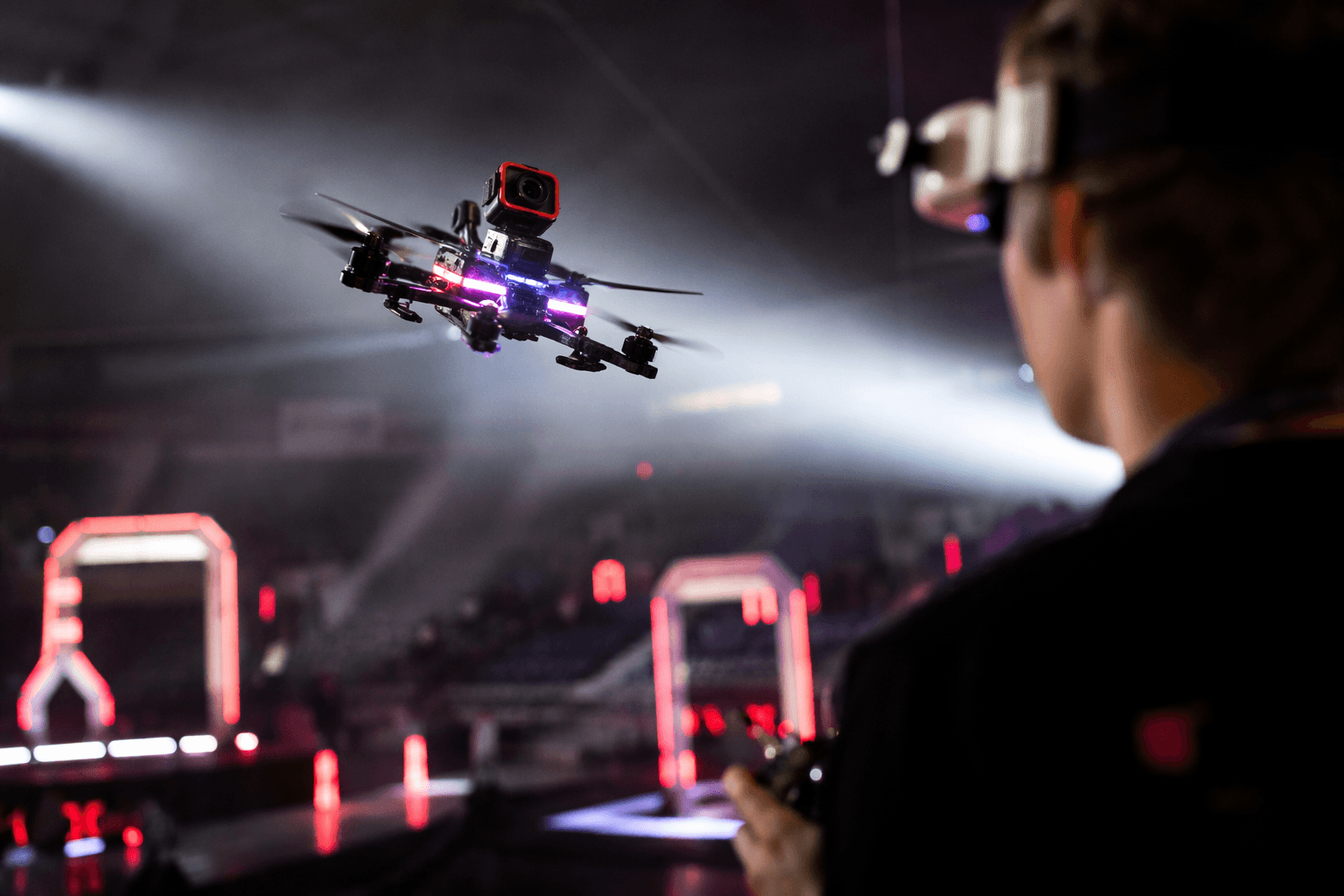
Why Split 2 changes the race
Split format racing rewards more than raw lap time. A team can be quickest on one layout and still lose ground the moment the track asks for different lines, different rhythm, or a cleaner approach through traffic. That makes Split 2 a test of adaptation: pilots have to keep their pace up while also protecting the drone, limiting contact, and making sharp decisions in packs where one bad move can wipe out an otherwise strong round.
DCL branded Match Day 3 as “another intense day of drone racing.” In FPV racing, the margin between clean execution and a reset can be a fraction of a second.
Split 2 builds momentum from one match day to the next, so form matters. If a team is sharp early in the split, that form compounds; if it keeps missing gates, losing props, or spending too much time in repair mode, the damage is cumulative.
What the format rewards
Split 2 is built for the teams that can combine speed with reliability. In drone racing, the machine is part of the athlete, so preparation, maintenance, battery management, and quick recovery after setbacks are all part of the result. The format tends to expose outfits that rely too heavily on one pilot or one kind of course, because a broader schedule asks for repeatable performance rather than one perfect lap.
Consistency can be more valuable than aggression. A pilot who attacks every section of the course without discipline may post a highlight reel, but the standings usually belong to the team that leaves fewer points on the table. In a split, conservative flying is not the same as passive flying; the smart teams know when to push and when to protect a clean run that still banks points.
DCL Split 2 Ep. 4 put Spain Drone Team in direct competition with Cyclone Racing, while Raiden Racing faced the DCL Wildcard Team. Those pairings turn the split into a sequence of pressure tests in pace, control, and composure. A wildcard entry can change the balance when a new lineup enters the mix.
Qualification is the real battlefield
Split 2 also changes the title race because qualification is no longer just about showing up fast. Super Finals 2024 are set to feature the season’s top four teams, a format that makes the standings a weekly scoreboard and a season-long gatekeeper. When only four teams reach the final stage, every point in the split becomes part of the math for who gets to keep racing for the biggest prize.
After Falcon Cup Qualifiers Part 2, the standings had shifted. One good run can improve seeding; one bad round can push a contender into a more dangerous lane.
The road to DCL 2026 begins with a seeding race on 19 January, making qualification part of a wider competitive structure where results affect future placement and future pressure.
Which teams fit the split model best
The best-positioned teams in a split are the ones with depth, not just star power. If a roster can handle different layouts, keep drones intact through contact, and stay calm when the pack tightens, it can survive the kind of week-to-week churn Split 2 creates. That profile matters more than ever when the standings are tight and the final stage only admits the top four teams.
The most exposed teams are the ones that depend on one dominant flying style. Raw speed is still a weapon, but the split format punishes predictability. If a team cannot adapt to changing track features or loses its edge once racing gets messy, the standings will catch up to it fast.
This article was produced by Prism’s automated news system from verified source data, official records, and press releases, then run through automated quality and moderation checks before publishing. The system is built and supervised by the people who set the standards it runs under. Read our full AI policy.
Did this article answer your question?


