Drone racing’s rules split between spec racing and open class
Spec racing makes drone racing about piloting, not the wallet. Open class keeps the engineering arms race alive, and that split shapes who can win and how fans watch.
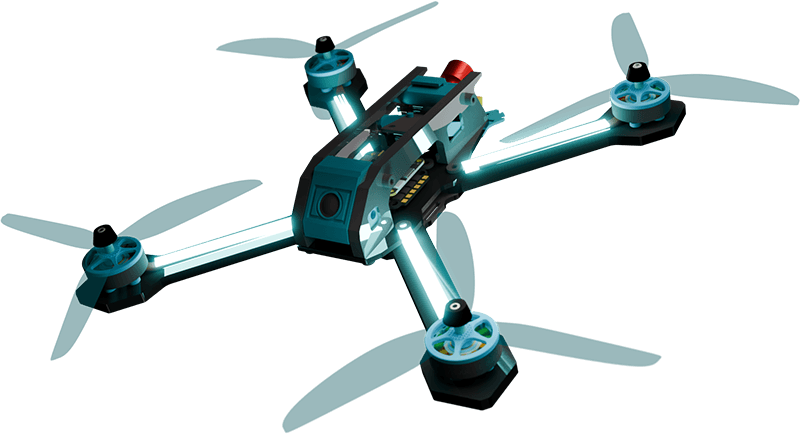
In MultiGP Drone Racing League’s Pro Spec class, every pilot flies the same 7-inch spec drone. In open class, teams can chase speed through parts and software; in spec racing, the field is compressed so the result is decided more by line choice, reflexes, and consistency. That split determines who can contend and what kind of race the crowd actually sees.
The rulebook that defines the class
The Fédération Aéronautique Internationale formalized that structure in the FAI Sporting Code Section 4, Volume F9 Drone Sport 2024 edition, which is effective 1 January 2024. In that code, F9U is the provisional class for RC multi-rotor drone racing, while F9A is the provisional class for drone soccer. The 2024 FAI World Drone Racing Championship sporting rules are based on the F9U class rules.
The FAI Volume F9 Drone Sport 2019 edition took effect on 1 January 2019, and the 2022 edition became effective on 1 March 2022. By 2024, the same framework had been refined again rather than replaced. For international events, access is not only about hardware either: FAI Drone Permission is required for pilots in FAI-sanctioned category 2 drone events unless they already hold an FAI Sporting Licence from a national member.
Open class rewards the workshop as much as the pilot
Open racing gives teams wide latitude to build for speed. Pilots can choose their own frames, motors, batteries, propellers, cameras, radios, and video systems, then keep tuning for the best balance of weight, thrust, durability, and latency. That freedom creates technical variety, but it also creates a cost ladder, because the teams with deeper budgets can test more setups and replace broken parts faster.
Open class often looks like an engineering contest before it looks like a straight race. A pilot with a better battery choice or a cleaner video link can gain an edge before the first gate, and a team that can afford more spares can recover faster after a crash. The upside is innovation. The downside is that hardware advantage can start to overshadow racecraft.
Spec racing pulls the fight back onto equal ground
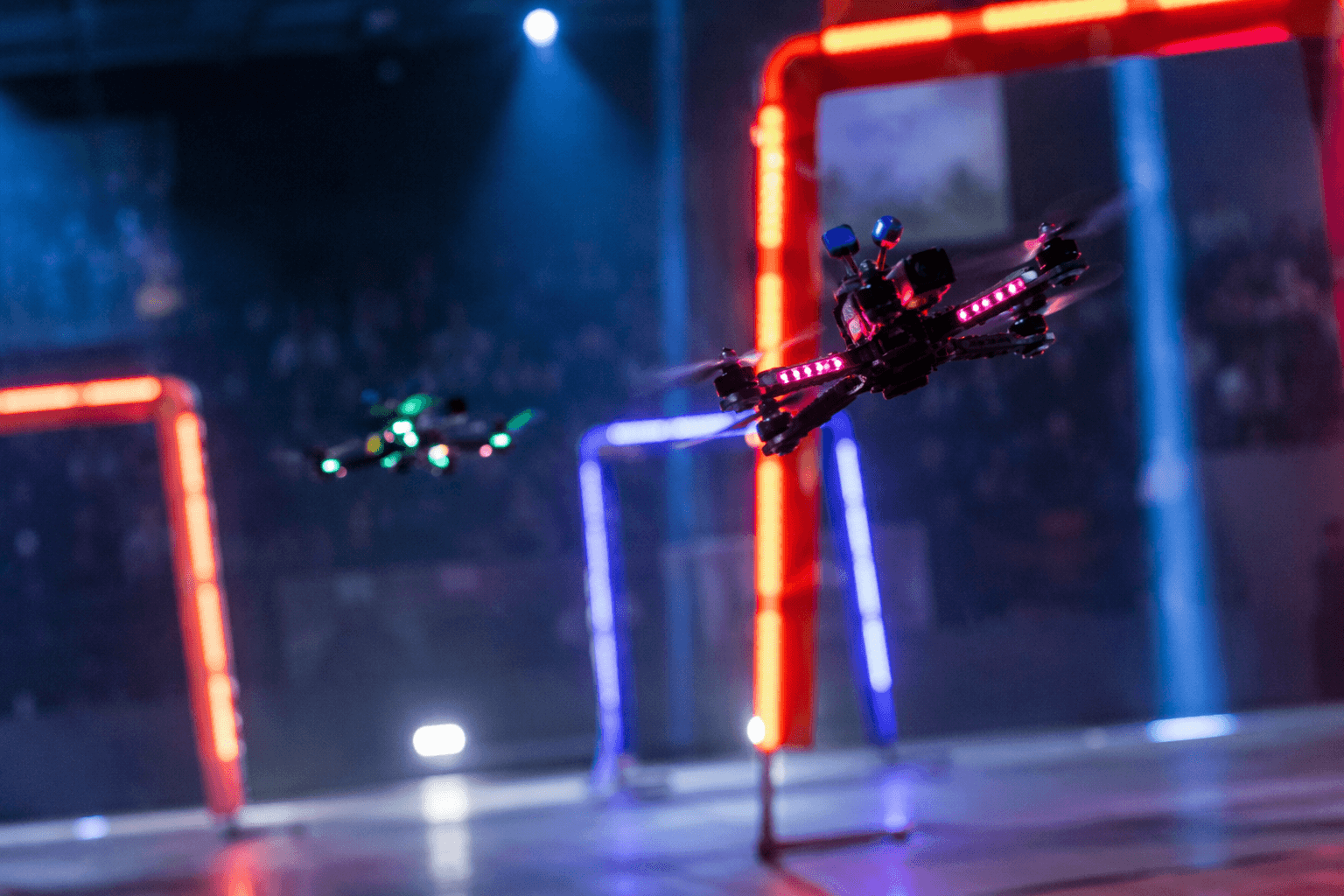
Spec racing is the counterweight. By narrowing the allowed equipment, it tries to make the field more comparable at the start line so the winner is determined by cornering, race management, and pressure handling rather than by who brought the most exotic build. A spec class defines the drone specification so pilots can compete on a more level playing field.
MultiGP Drone Racing League pushes that logic into practice with Pro Spec, its standardized racing class. Street League Drone Racing takes the same concept further with fixed equipment constraints that include weight, props, battery, frame, LEDs, motors, and software. Its published spec rules also list a 1280g AUW limit, Gemfan 7043 and HQ 7x4x3 prop options, and a 5s 2200mah battery requirement.
In open class, the story is often which build survives the heat and which team found the best tune. In spec racing, the story is the gap through a gate, the decision to attack the inside line, and whether a pilot can hold pace under equal hardware.
- Open class is where setup advantage can create separation before the race starts.
- Spec racing is where drone handling, braking points, and consistency become the real separator.
- Standard parts make it easier to compare pilots across heats, not just compare builds in the pits.
Why clubs, schools, and new pilots lean spec
Spec racing lowers the cost of entry because the class rules limit how much a newcomer has to buy and how much a team has to diagnose. It also simplifies tech support, which matters in clubs and scholastic programs where the goal is to get more pilots flying, not to build a lab full of spares. Ohio State University Extension’s fact sheet, Tech Recipe: Starting A Scholastic Drone Racing Team, centers on building a scholastic program with equipment and rules straightforward enough to manage.
In open class, a new pilot not only has to learn the course, but also how to evaluate frames, motors, batteries, cameras, radios, and video systems. In spec racing, the machine is already defined, so the learning curve is tighter and the feedback is cleaner. If the lap time is off, the reason is more likely to be in the pilot’s hands than in a parts mismatch.
With equalized hardware, a newcomer can measure progress against experienced pilots without wondering whether the gap came from gear. For leagues and schools, that makes the race more legible.
How the sport’s early organizations fit into the split
The International Drone Racing Association was founded on 3 April 2015 by Justin Haggerty and Charles Zablan, with headquarters in Belleville, Michigan.
This article was produced by Prism’s automated news system from verified source data, official records, and press releases, then run through automated quality and moderation checks before publishing. The system is built and supervised by the people who set the standards it runs under. Read our full AI policy.
Did this article answer your question?


