FPV Drone Racing Surges Into Mainstream, Reaching 120 mph Speeds
FPV racing really does hit 120 mph, but mainstream status still depends on crowds, sponsors, venues, and stars scaling up with it.

What 120 mph really means
FPV drone racing is no longer a garage trick with racing stripes. On a purpose-built course, competitive quads are already running in the 80 to 120 mph range, which is fast enough to turn a clean lap into a reflex test and a mistake into a crash. The headline speed matters because it shows the sport has crossed into real performance territory, not just novelty.
That said, the ceiling is much higher than the race track. Drone Racing League’s RacerX hit 163.5 mph in 2017, Guinness World Records now lists a battery-powered remote-controlled quadcopter at 408.60 mph in Cape Town on December 11, 2025, and it lists an RC micro drone quadcopter at 222.6 mph in Tianjin on December 28, 2025. Those records are proof of what the hardware can do, but they are not the day-to-day pace of actual FPV racing. The important distinction is simple: race drones are quick, custom speed machines are another species entirely.
How FPV racing works
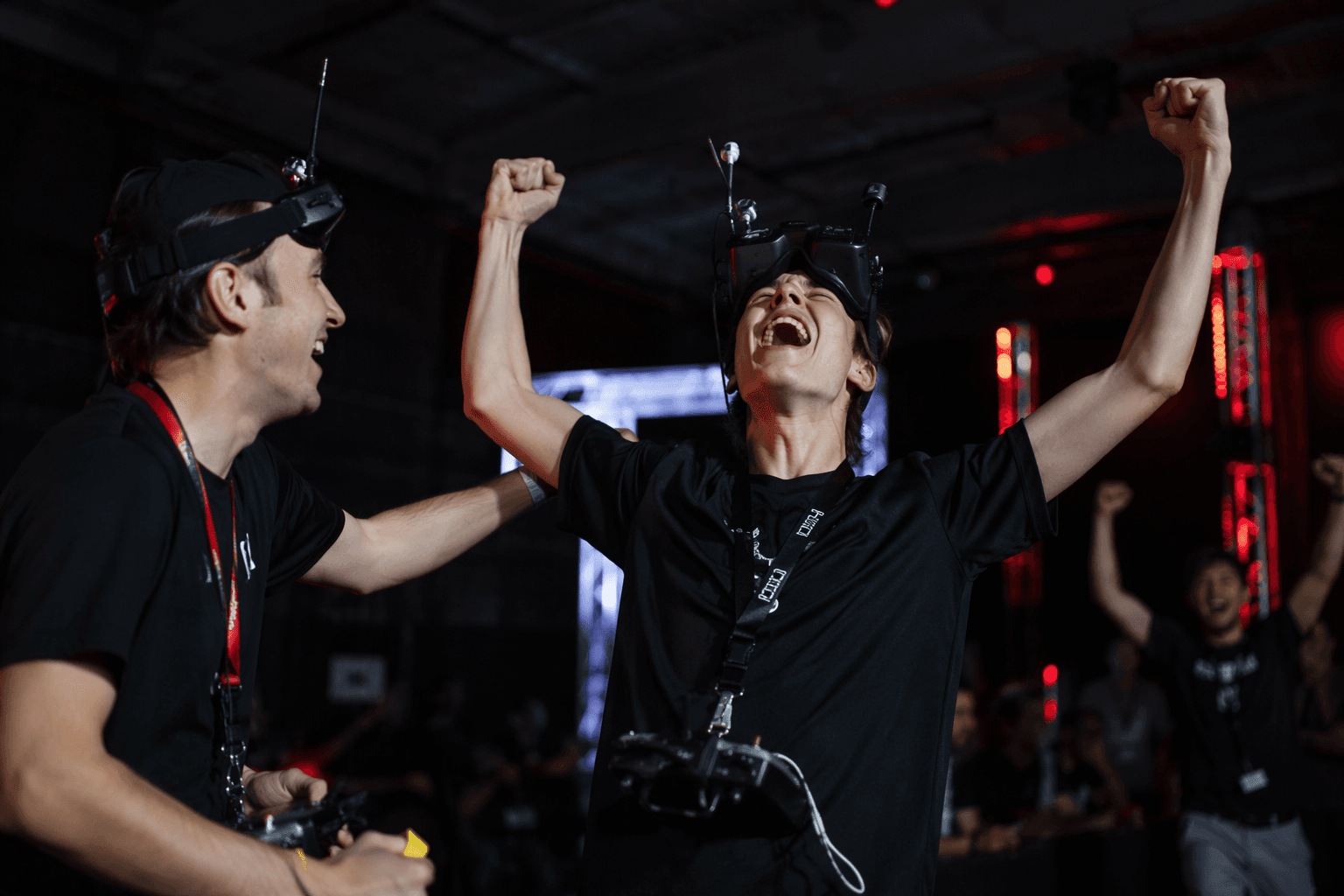
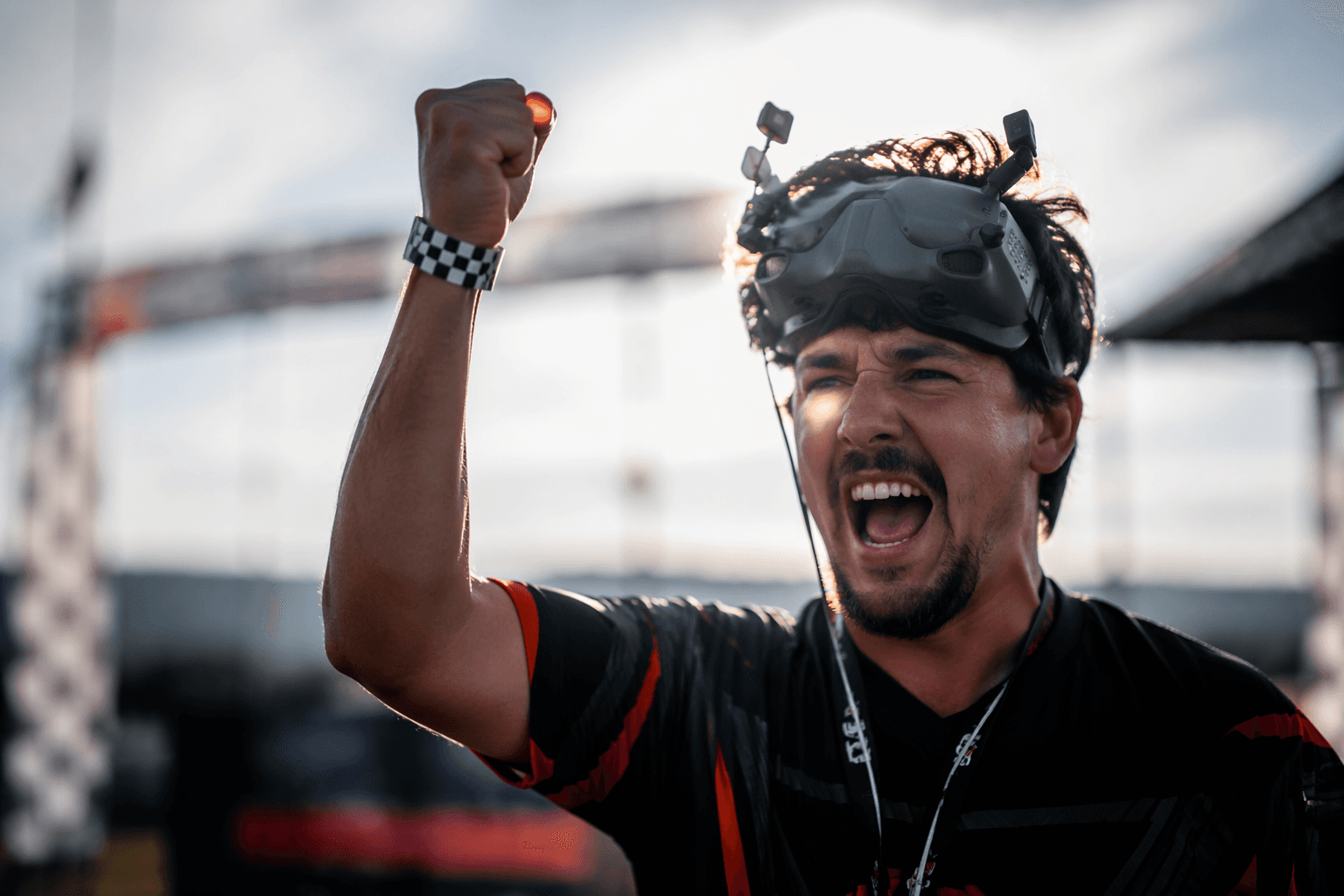
The first thing that makes FPV different is the view. The pilot wears goggles that show a live feed from the drone’s camera, so the race is flown from the drone’s perspective instead of from a controller screen or line-of-sight view. That first-person feed is the whole appeal. It turns a small carbon-fiber machine into something that feels closer to a cockpit than a toy.
That setup is also why the sport has drawn a younger, gaming-native audience. Mehar Singh’s path says plenty about the pipeline: Guinness says he discovered FPV drone racing in eighth grade and later set the fastest 100-meter ascent by a quadcopter in New Delhi on July 7, 2024. The sport speaks the language of fast feedback, clean inputs, and split-second correction, which is exactly why it keeps pulling in pilots who grew up on simulators and esports.
The gear that actually matters
The standard entry point in FPV racing is the 5-inch propeller class, because it gives the best blend of speed, agility, and power. The important parts are not glamorous, but they are decisive: carbon-fiber frames for strength and weight savings, Betaflight-based flight controllers for tuning, ESCs for power delivery, brushless motors in the 2207 to 2306 size range, low-latency cameras, and video transmitters that keep the feed usable when the drone is ripping through a gate at full throttle.
Video system choice is still a real fork in the road. Analog and digital FPV systems remain widely used in 2026, with DJI and HDZero digital setups offering better image quality at a higher price. Even goggles show how layered the sport is financially: entry-level box goggles can start around 80 to 150 dollars, while compact premium-style goggles cost much more. That price spread is one reason the sport can look accessible from the outside while still rewarding pilots who understand setup, latency, and tuning.
Where the sport has actually scaled
If you want evidence that FPV racing has moved beyond hobby status, look at the league structure. MultiGP says it is the largest drone racing league and FPV community in the world, with hundreds of chapters internationally, more than 30,000 registered pilots, and 500 active chapters worldwide on its 2026 pages. That is not a fringe meetup scene. That is a distributed racing network with actual depth.
The Fédération Aéronautique Internationale has also helped formalize the sport’s competitive ladder. It says the Drone Racing World Cup is a series of open international events, it introduced a Masters Series in 2019, and it launched the first FAI E-Drone Racing World Cup series in 2024 to pull in newcomers and gamers. The scale is real enough that drone racing appeared at The World Games 2025 in Chengdu, China, which is the kind of stage that matters when a sport is trying to be taken seriously beyond its core audience.
The international calendar backs that up. FAI says 12 World Cup events from 11 countries counted toward the 2024 ranking, and 12 events from 11 countries were effectively considered for the 2025 ranking after postponements and cancellations. That is a functioning global circuit, not a one-off exhibition.
Why mainstream is still the wrong finish line
The headline claim that FPV racing has gone mainstream needs a harder standard than speed alone. Audience size is one test, sponsorship depth is another, venue infrastructure is the third, and recognizable stars are the fourth. On infrastructure, the sport has made clear progress through MultiGP’s chapter network, DRL’s professional format, and FAI’s global event calendar. On stars, it has names and records, but not yet the kind of household recognition that motorsports, stick-and-ball leagues, or even top esports titles can claim.
That is the honest read. DRL, publicly launched in 2016, built the sport to be spectator-friendly with speed, lights, and the goggles-forward presentation that translates better on screen than a standard drone demo ever could. But a sport does not become mainstream just because the machines are fast and the league looks polished. It becomes mainstream when the crowds are large, the sponsors are obvious, the venues are repeatable, and the stars are recognizable outside the niche. FPV racing has checked the first boxes far better than it did five years ago. It has not fully cleared the last ones.
What would make the mainstream case real
The next stage is not more hype. It is more proof. FPV racing would need bigger live audiences, stronger sponsor anchors, and more venues built or adapted for repeatable, broadcast-friendly competition. It would also need a few pilots to become names casual sports fans know without being told why they matter.
The sport already has the speed. It already has the leagues. It already has the global structure. What it still has to earn is the kind of scale that makes a 120 mph headline feel less like a breakthrough and more like an expectation.
This article was produced by Prism’s automated news system from verified source data, official records, and press releases, then run through automated quality and moderation checks before publishing. The system is built and supervised by the people who set the standards it runs under. Read our full AI policy.
Did this article answer your question?