Gemfan propellers earn EU conformity verification for FPV racing
Gemfan cleared five propeller lines under EU machinery rules, a step that could make race-day spares easier to source and trust in Europe.
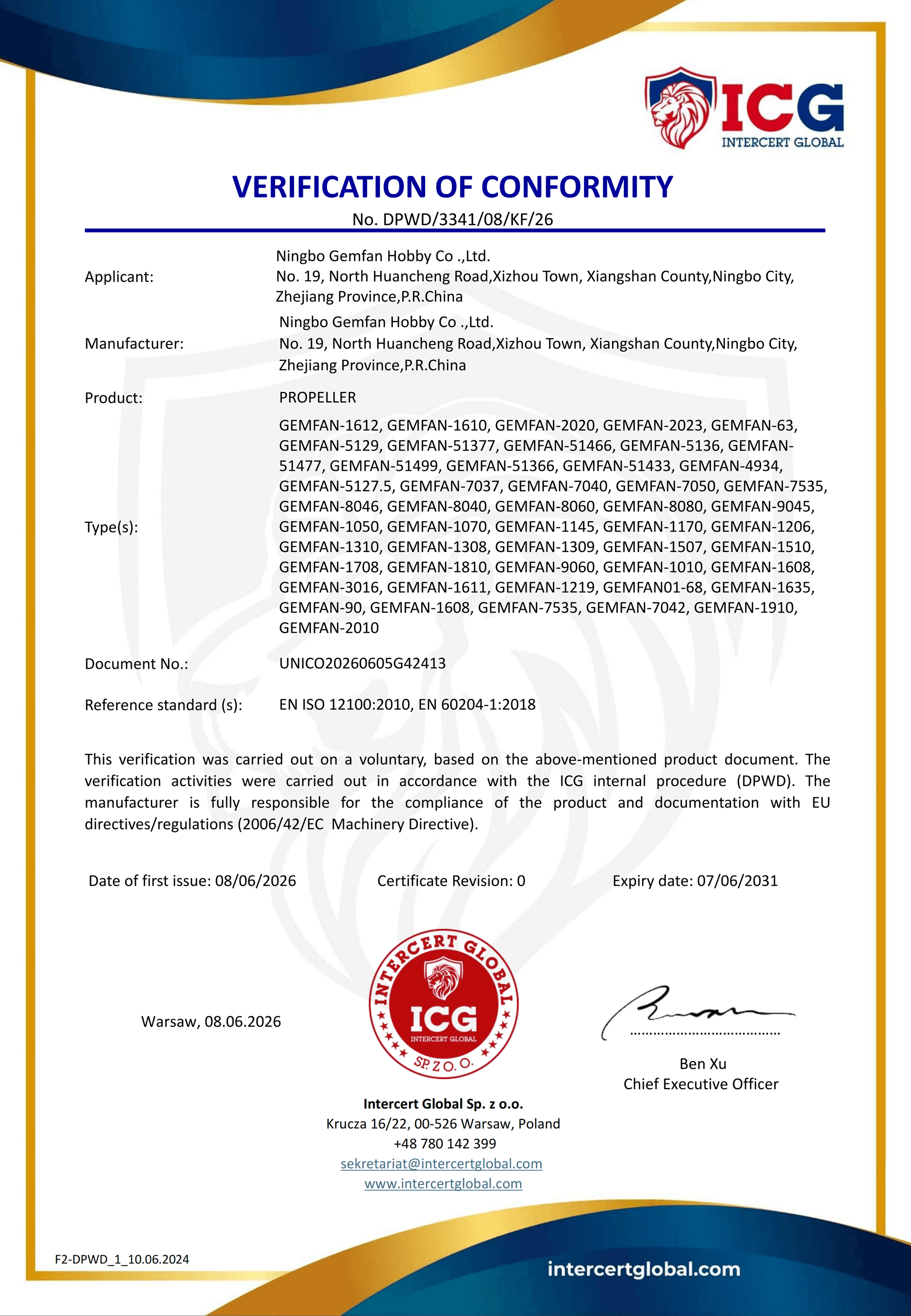
Gemfan said it had received a Verification of Conformity under EU Machinery Directive 2006/42/EC for five propeller families, including 1610, 7037, 8046, 1050 and 1708. For FPV racers, that is the kind of back-end certification that can matter at the track: the same props that go into a race build now carry an added layer of European compliance, which can influence how teams stock spares, source replacements and standardize setups across events.
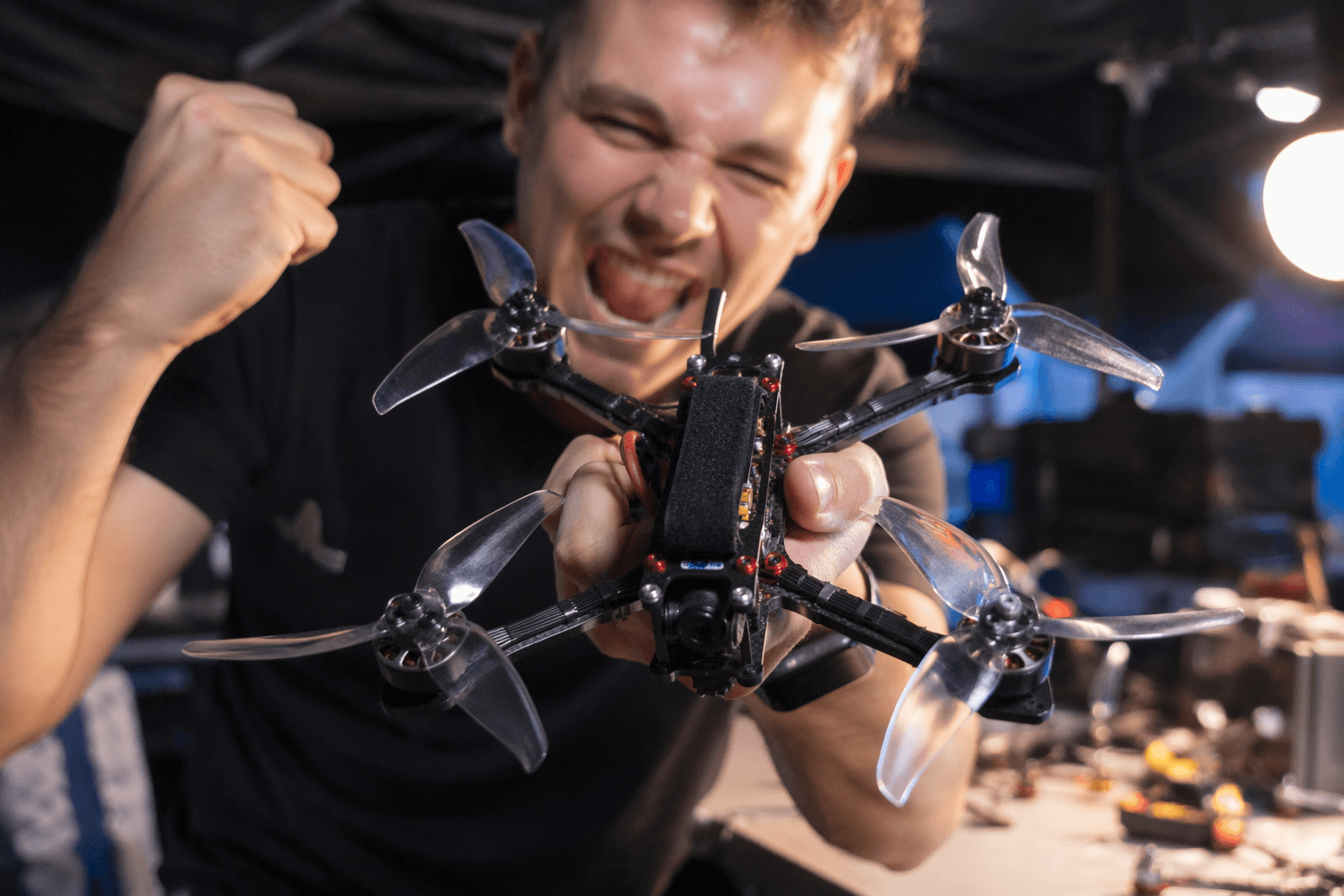
Gemfan Hobby Co., Ltd., the Ningbo, Zhejiang manufacturer behind the brand, said its business spans R&D, design, production and marketing, and its company profile says it was established in 2007. The company also puts its propeller line in a wider portfolio that includes FPV racing, freestyle flying, cinematic aerial filming and industrial UAV applications. In practical terms, that breadth matters because race pilots do not buy props in a vacuum. They buy them for repeatable performance, and they want the same shape, stiffness and feel every time they open a new pack.
The certification cites EN ISO 12100:2010, the machinery standard centered on hazard analysis and risk assessment, and EN 60204-1:2018, which covers electrical equipment of machines. Gemfan says the verification reinforces structural integrity, material engineering and manufacturing consistency in propellers built for high-speed maneuvers and aggressive loading. That is not a small point in FPV, where a prop strike or fatigue failure can end a heat in seconds. Research on multirotor UAVs has shown that propeller failure can lead to loss of control, crashes, property damage or personal injury.
The timing also fits a tightening European rulebook. The European Union Aviation Safety Agency says drone manufacturers must identify applicable Union harmonisation laws, including the Machinery Directive and the Radio Equipment Directive, and show compliance through the proper procedures. EASA also says FPV racing and other open-category operations require an unmanned-aircraft observer alongside the pilot. And the EU’s Machinery Regulation 2023/1230 will replace the directive, with mandatory application beginning in January 2027, so Gemfan’s verification lands in a transition period when machine-safety expectations are only getting firmer.
That matters beyond a single parts label. FAI introduced an annual e-Drone Racing World Cup in 2024, and its 2026 calendar includes 15 sanctioned events. The June 21, 2026 Ningbo e-Drone Racing World Cup added another marker for a city that is already a hub for competitive drone activity, while MultiGP continues to describe itself as the world’s largest drone-racing league with chapters in Europe. For racers and teams, the practical question is simple: if the props are easier to clear, easier to replace and more consistent from pack to pack, the whole build becomes less of a gamble before the first gate.
This article was produced by Prism’s automated news system from verified source data, official records, and press releases, then run through automated quality and moderation checks before publishing. The system is built and supervised by the people who set the standards it runs under. Read our full AI policy.
Know something we missed? Have a correction or additional information?
Submit a Tip