Ghana adds drone racing to Air Sports Months, seeks regulatory framework
Ghana put drone racing inside its Air Sports Months push, but the real test is whether regulation, venues and youth pathways can turn a May showcase into a lasting league.
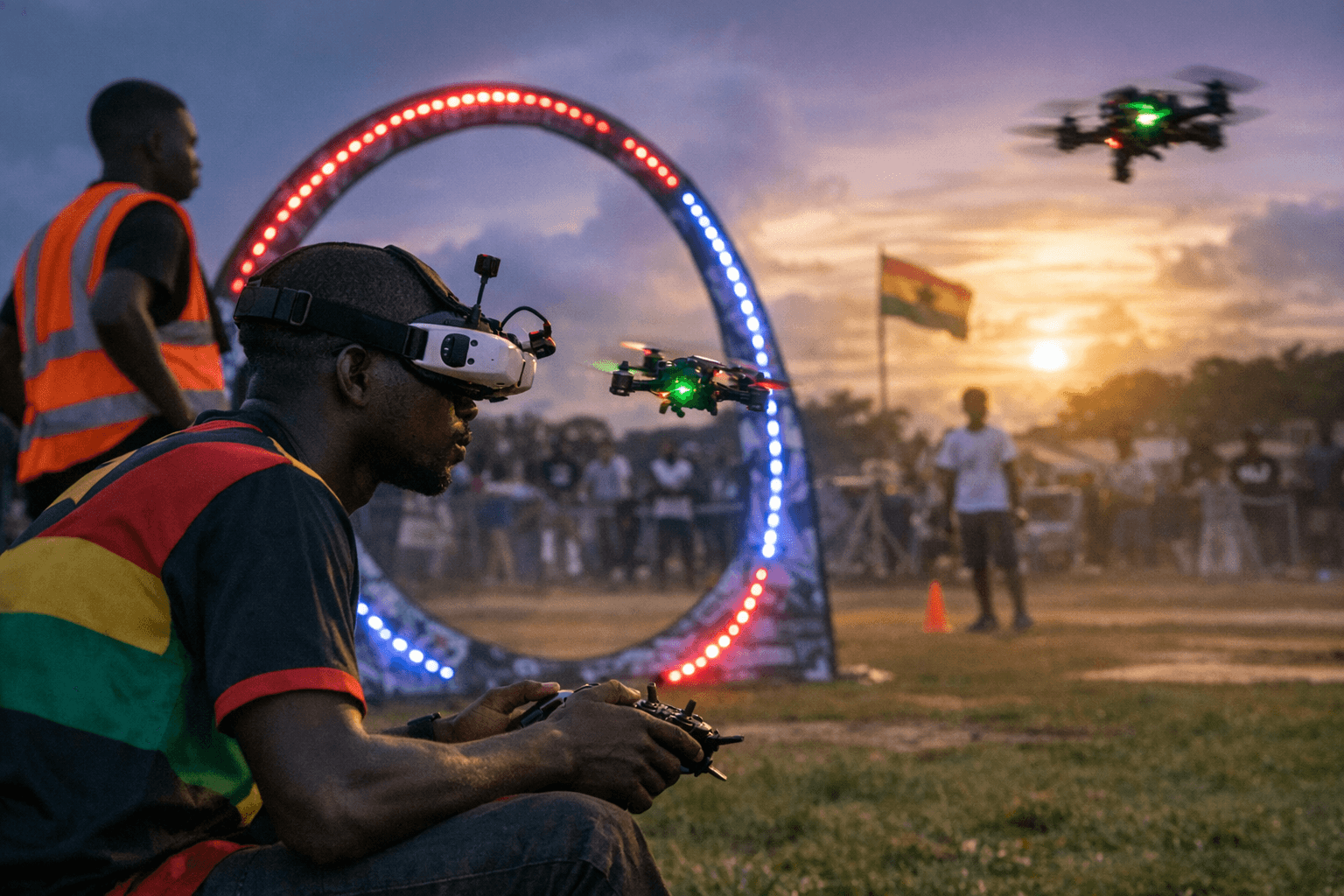
Ghana has moved drone racing from the margins of hobby culture into a national air-sports plan, slotting it into May alongside hot air balloon rides, skydiving events and drone soccer tournaments. The campaign, led by Ghana Airsports Federation president Isaac Nana Vanderpuije, is built around the idea that aerial sports should be organized as a pipeline, not staged as one-off spectacles.
April is already set up as the launch pad. The month opens with a paragliding festival backed by the Ministry of Tourism, Culture and Creative Arts, plus public flying experiences in selected mountainous locations. That calendar lines up with the 2026 Kwahu Easter Paragliding Festival, scheduled for April 3 to 6 at the Odweanoma Mountains in the Kwahu enclave of the Eastern Region under the patronage of President John Dramani Mahama and with support from Tourism Minister Abla Dzifa Gomashie. The festival is expected to include tandem flights, aerial displays, safety demonstrations, tourism exhibitions and curated visitor experiences, giving Ghana a month in which air sports are no longer hidden from the public but placed in front of thousands of visitors.
For drone racing, the most important detail is not the announcement itself but the regulatory scaffolding around it. The Ghana Civil Aviation Authority already has a Remotely Piloted Aircraft Systems directive dated November 2018 that covers registration, permits, safety management, licensing and competencies, RPAS operations, detect-and-avoid requirements, command-and-control links, aerodrome use and foreign operators. In June 2025, the authority signed a Letter of Intent with South Korea’s Korea Transportation Safety Authority to develop a comprehensive roadmap for the sector, and the Drone Sector Roadmap and Candidate Projects Formulation initiative was scheduled to begin in 2025 and run for eight months. That is the kind of structure drone racers need if events are going to be safe, repeatable and scalable.
Ghana is also not starting from zero. In 2020, the GCAA licensed five commercial drone operators, including Zipline International, and said 977 RPAS were registered in the country, owned by 607 individuals and companies. Zipline later marked five years in Ghana by reporting a 67% reduction in wasted blood products, a 60% drop in vaccine stockouts and a 44% reduction in missed vaccination opportunities, while the Local Government, Decentralisation and Rural Development Ministry handed over 19 drones to 17 metropolitan and municipal assemblies in Greater Accra in 2024. That history matters because it shows drones already have users, regulators and public value before racing even enters the frame.
The sporting side now has to catch up. Drone Racing League GH calls itself Ghana’s premier FPV drone racing league and says it was created to grow the sport in Ghana and expand it across West Africa. The federation’s plan to build national air sports leagues, identify local talent and expand into Greater Accra, Eastern and Volta, with Volta positioned as a hub because of its terrain, is the real growth-pipeline question. If the partnerships with resorts, training institutions and venue operators come through, Ghana’s air sports months could become more than a seasonal showcase and start producing pilots, events and a recognizable racing calendar.
This article was produced by Prism’s automated news system from verified source data, official records, and press releases, then run through automated quality and moderation checks before publishing. The system is built and supervised by the people who set the standards it runs under. Read our full AI policy.
Did this article answer your question?