How drone racing lap times are tracked with hidden timing systems
Behind every clean drone-race result is a timing stack that listens for 5.8 GHz signals or transponders, then turns RF chaos into official laps.
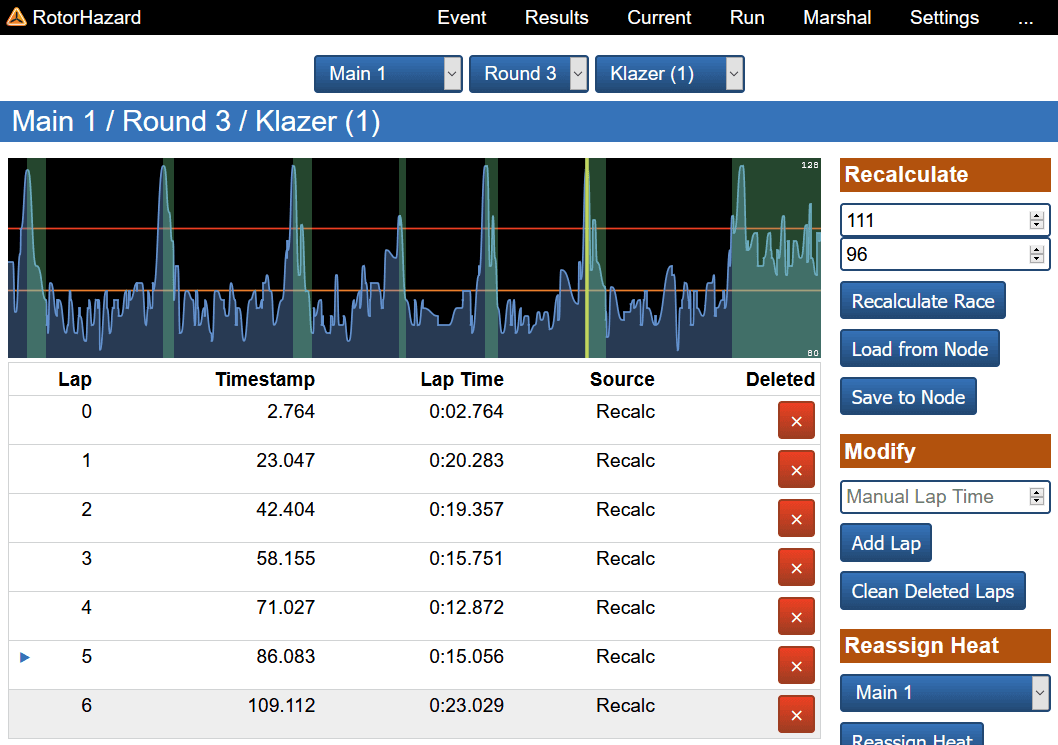
RotorHazard uses 5.8 GHz video signals broadcast by the drones to trigger lap times. The race may feel decided by who threads gates fastest or grabs the holeshot, but the official result comes from timing hardware and software deciding which crossing counts, which lap was missed, and when a disputed result needs to be corrected.
The timing line is where the race becomes official
RotorHazard is built for that exact job. It is an open-source, multi-node radio-frequency race timing system for FPV drone racing with event management built in. Each timing node listens on a chosen frequency, sends the result to a server running on a Raspberry Pi, and presents the data through a web interface that any device on the same network can open.
The scorer has to see the pass, log it instantly, and keep the race readable when several quads are crossing near-simultaneously. A clean holeshot still has to be translated into a lap record, and the system has to do it without mistaking one drone’s video signal for another or losing the trigger in the noise of a crowded course.
How RotorHazard turns RF noise into results
RotorHazard’s appeal is that it folds timing and race management into one system. The software can manage pilots, heats, classes, and race formats, while also sending realtime lap data for live timing plus LED and audio support at staging and race events. For organizers, that means the scorer’s table is part of the race infrastructure, shaping how heats are built, how starts are staged, and how quickly results can be posted.
The system can recover laps by reviewing RSSI history. A drone can fly through interference, clip a gate, or generate a weak signal at the exact wrong moment. If a lap looks missing on first pass, the RSSI record gives officials a second look at the radio footprint, which can be the difference between a fair result and a protest that drags on after the final heat.
RotorHazard also supports full manual control of results. Drone racing is fast enough that no timing system should be treated as infallible, and manual control gives race directors a way to correct obvious errors, adjudicate edge cases, and keep the standings aligned with what actually happened on the course.
Why transponder systems change the picture
RotorHazard’s RF approach is only one way to time a race. MYLAPS takes a different route with transponder-based timing for RC and drone events. Its RC4 Timing System tracks lap times, monitors connected voltage, and measures ambient car temperature, while the RC4 decoder determines the exact time each transponder passes the detection loops before sending the data to the timekeeper’s computer.
Those detection loops are embedded at the start and finish line and at intermediate timing points. MYLAPS says the RC4 system has timing resolution down to 0.001 second and supports speeds up to 120 km/h. In a field where multiple drones may hit a line in the same breath, a thousandth of a second can matter for seeding, ranking, and dispute resolution.
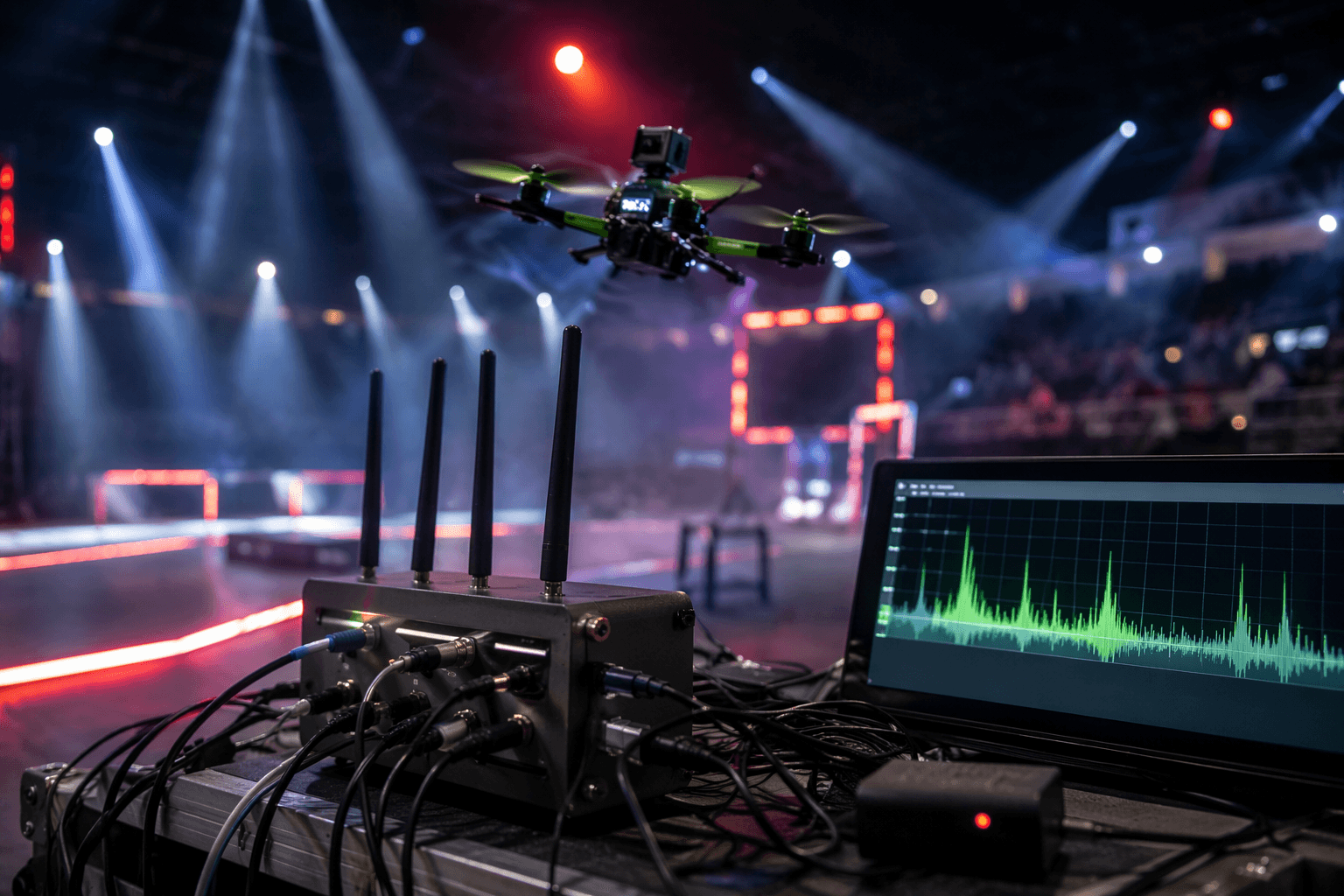
MYLAPS has also introduced the DR5 drone transponder. It is rigid and lightweight, with a unique number so each drone can be identified by the system. The company says the DR5 solves the video-signal collision problem by allowing unlimited transponders in a race because each transponder sends a different signal. For organizers, that changes event design: the race is no longer limited by how many cameras or video channels can coexist cleanly in the air.
When timing accuracy is challenged
Every timing system has failure points, and drone racing exposes them fast. RotorHazard’s reliance on 5.8 GHz video signals means the system has to sort through crowded RF conditions, especially when many quads are on the same course. A missed lap can come from weak signal, congestion, or interference, which is why RSSI review and manual result control are built into the workflow.
MYLAPS takes a hardware-centered approach, but it has its own operating requirements. The DR5 transponder works with an RC4 decoder only if the decoder is on firmware 4.5 or newer, and users can switch between RC and drone timing on the decoder with a few simple clicks. In a race-control room, that means the timing gear has to be configured correctly before the first gate is ever flown. If the wrong mode is selected, the wrong class can end up on the clock.
A race director’s timing architecture decides how safely a field can be stacked, how many drones can be sent together, and how quickly officials can settle a close call when two quads look tied from the pilot’s camera feed but not from the line sensor.
RF discipline is part of race fairness
Drone timing does not live in isolation from the rest of the spectrum. FAI drone-sport technical guidance recommends that organizers provide an RF spectrum analyzer at events to monitor external interference and identify malfunctioning competitor equipment. It also recommends restricting video transmitters outside the racing circuit to reduce interference risk.
The sport’s growth has made timing more important, not less
FAI records show drone racing was accommodated as a category 2 event in 2017. Its first Drone Racing World Cup in 2016 drew 229 competitors from 17 countries, and the 2017 edition expanded to 434 competitors from 37 countries. Younger pilots rose from 18 in 2016 to 75 in 2017.
FAI records also show the first FAI E-Drone Racing World Cup series launched in 2024, and drone racing was featured at The World Games 2025 in Chengdu, China.
This article was produced by Prism’s automated news system from verified source data, official records, and press releases, then run through automated quality and moderation checks before publishing. The system is built and supervised by the people who set the standards it runs under. Read our full AI policy.
Did this article answer your question?


