McGee says FPV rookies should start with a controller and simulator
McGee’s message is simple: buy the controller first, log sim laps, and save yourself a costly crash cycle before your first real flight.
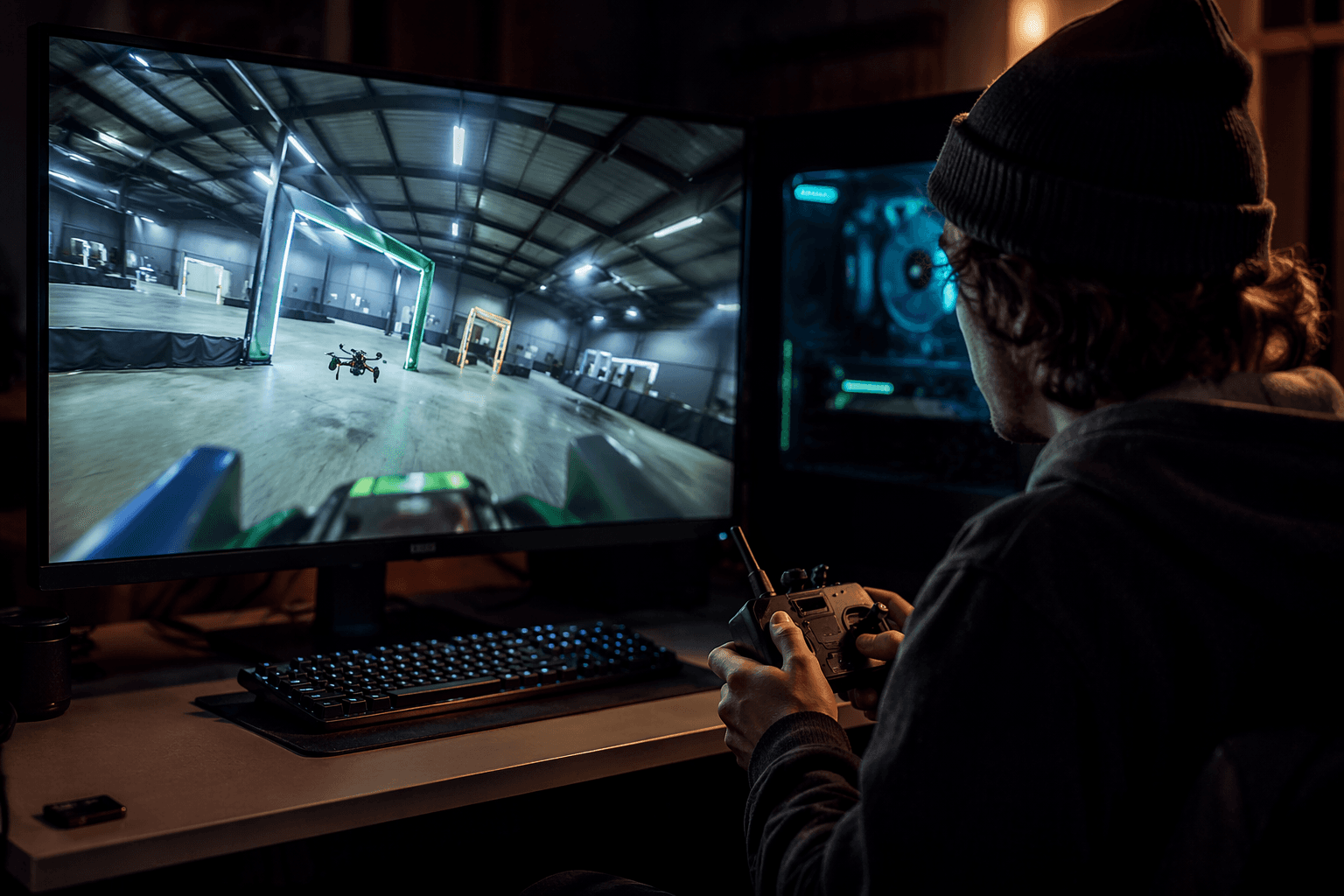
The smartest first buy in FPV is not the drone, it is the controller. Danny McGee’s advice cuts straight against the urge to chase hardware on day one: build muscle memory in a simulator, learn throttle control and line choice, and let the early crashes happen in software instead of on expensive carbon fiber.
Why the controller comes first
McGee’s logic is practical. The controller is where the skill lives, because every clean lap starts with the hands, not the frame. A newcomer can spend hours learning the feel of pitch, roll, yaw, and throttle without spending a dollar on broken props or a bent arm, and McGee says the simulator is where the real skill is born.
He puts a number on that learning curve too. His guidance is to log at least 20 hours in a sim such as FPV Freerider Unleashed before thinking about a first serious flight. That is not about delaying progress for the sake of it. It is about making the first real flights count, so the pilot is chasing lines instead of recovering from panic.
What a sensible starter stack looks like
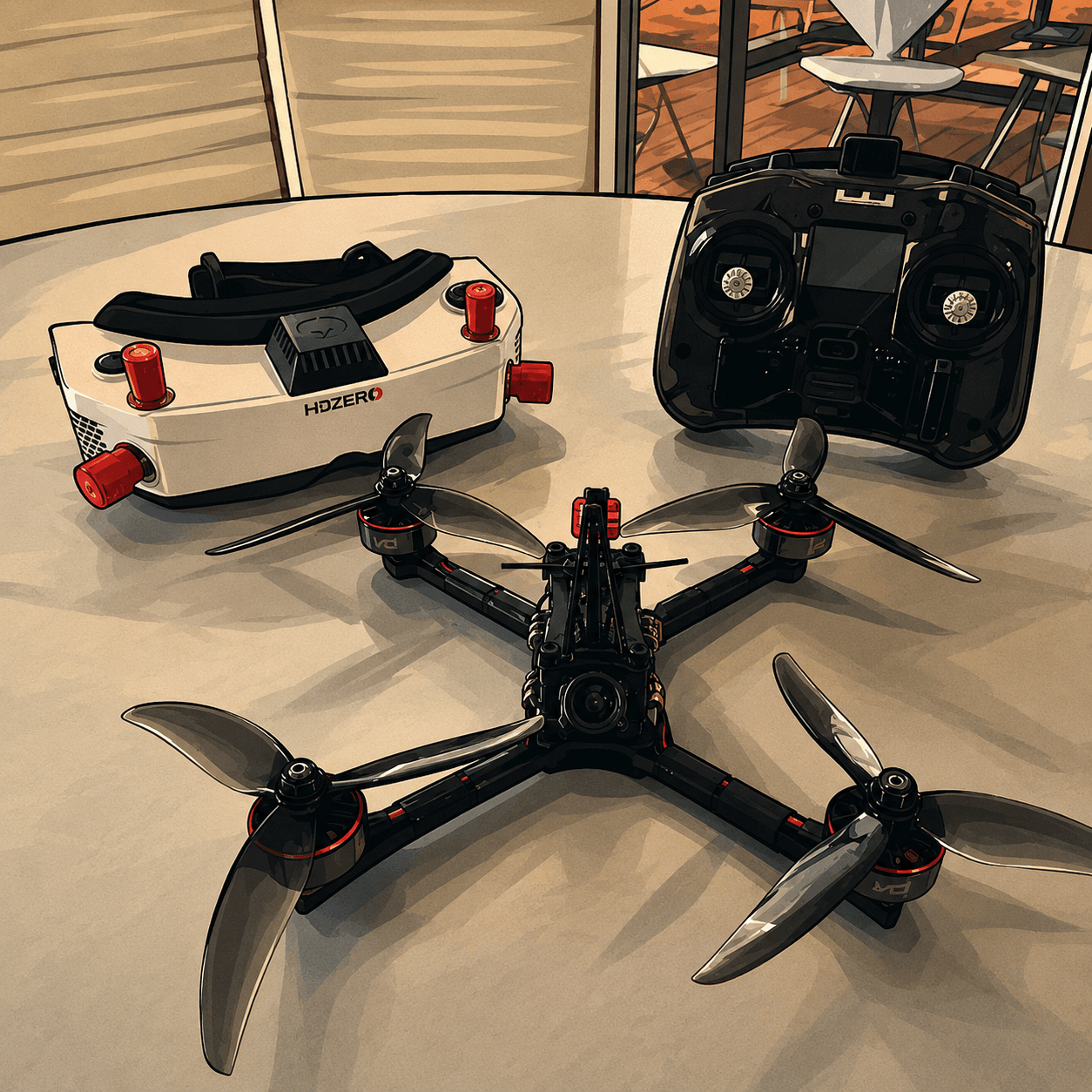
If you want to do this the right way, the order matters. Start with a controller, then add simulator time, then move into goggles and a drone once the basics feel automatic. McGee recommends the DJI FPV Remote Controller 3 as a streamlined entry point, and he leans toward DJI’s digital ecosystem because it gives beginners a cleaner picture and a lower-friction learning curve.
The money story is just as convincing as the skill story. DJI says the FPV Remote Controller 3 retails for $199, while the Avata 2 Fly More Combo with three batteries costs $1,199. That is a $1,000 gap, and it is the clearest argument for patience: you can enter the sport for one-sixth the price of jumping straight to a full starter bundle.
A practical first shopping list looks like this:
- DJI FPV Remote Controller 3, $199
- Simulator access, such as FPV Freerider Unleashed or VelociDrone
- DJI Goggles 3, if you are building around the digital DJI setup
- DJI Avata 2 only after the controller work and sim laps are already paying off
DJI says Goggles 3 include adjustable diopters, two micro-OLED screens, a 10-bit enhanced display, and up to 100 Hz refresh rate. Those are not just spec-sheet bragging rights. For a new pilot, a crisp image with low-latency feel makes it easier to read gates, hold altitude, and stay calm when the pace picks up.
Why the simulator is the real training ground
MultiGP is saying the same thing in plainer language. On its homepage, the organization tells newcomers to learn FPV from zero using a simulator and calls it the best way to practice with no risks and little cost. That is the kind of advice that only looks conservative until you compare it to the alternative, which is spending real money to learn lessons you could have gotten for free.
The scale of MultiGP’s community makes that advice even more important. The organization says it has more than 30,000 registered pilots and more than 500 active chapters worldwide, which shows that the beginner pipeline is not a lonely hobby route. It is the front end of a serious racing network.
VelociDrone is a big part of that path. MultiGP identifies it as the official simulator for the 2026 eSport season, and VelociDrone says it is widely regarded as having the best physics of any FPV simulator on the market and is the racing simulator of choice for MultiGP. Third-party training material backs up that approach too, noting that racing and acro can take a few dozen hours or more of simulator work before they feel natural.
That is why McGee’s advice lands so hard. The simulator is not a side quest. It is the cheapest way to stack repetitions, and repetitions are what turn a shaky beginner into someone who can actually race.
From practice laps to real air
McGee does not pitch a soft, padded version of FPV. He is still talking about racing, which means speed, discipline, and the ability to recover from mistakes without freezing. His advice is to start in open grass fields, keep altitude on your side, and repeat the same controlled movements until the sticks feel boringly familiar.
That is where the DJI Avata 2 fits. DJI launched it on April 11, 2024, and its beginner-friendly design gives new pilots a cushion that a raw race quad cannot. The drone includes integrated propeller guards, Easy ACRO, and improvements in imaging, safety, and battery life, which makes it a more forgiving bridge from simulator to sky.
The point is not to stay on training wheels forever. The point is to earn the first real flight in a machine that can survive a few missteps while you are still converting sim reflexes into real-world control. Once that happens, the focus shifts from protecting the drone to refining the line.
The rules that shape the path
The FAA is another reason the controller-first approach makes sense. Recreational flyers must keep drones within visual line of sight, and they must pass the TRUST safety test. If you move into non-recreational or race-related flying under Part 107, you need a Remote Pilot Certificate, which means the learning curve is not just about stick time, it is also about compliance.
The Remote ID picture matters too. FAA enforcement discretion for noncompliance ended on March 16, 2024, so the days of treating identification rules as optional are gone. The agency also points recreational flyers toward community-based organizations like the Academy of Model Aeronautics, which reinforces the same message McGee is pushing: learn with structure, not chaos.
That broader structure is visible at the top of the sport as well. The World Air Sports Federation says the Drone Racing World Cup is an open international series, and it says 30 athletes were qualified for the Drone Racing event at The World Games 2025 in Chengdu, China, held from August 13 to 16, 2025. FPV is no longer a niche collection of gadgets and backyard crashes. It is a genuine racing ladder.
McGee’s own workshop in Iceland in September fits that same trend. The sport is becoming more formal, more coached, and more connected to a clear development path. For rookies, the winning move is not to buy the loudest drone on the shelf. It is to buy the controller, build the muscle memory, and arrive at the first real flight already thinking like a racer.
This article was produced by Prism’s automated news system from verified source data, official records, and press releases, then run through automated quality and moderation checks before publishing. The system is built and supervised by the people who set the standards it runs under. Read our full AI policy.
Know something we missed? Have a correction or additional information?
Submit a Tip