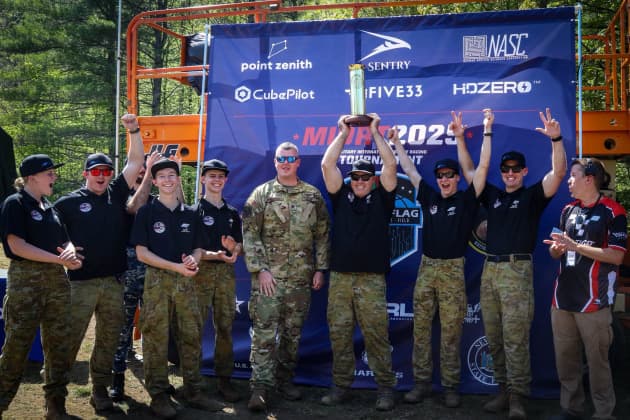
Skycutter shocks U.S. rivals, wins attack-drone contest at Fort Benning
Skycutter, a British-Ukrainian team with Atlanta manufacturing, beat California's Neros 99.3 to 87.5 in Fort Benning's first attack-drone fly-off.

Skycutter did more than win the first Gauntlet fly-off at Fort Benning, Georgia. The small British company with Ukrainian battlefield ties beat a U.S. rival on U.S. soil, finishing with 99.3 points to California startup Neros’ 87.5 in a result that instantly reframed the attack-drone contest as a global measuring stick.
The victory matters because it came inside a U.S. Army effort that launched in February 2026 to identify advanced attack-drone capabilities. Fort Benning, one of the Army’s major training sites, has become the stage for that search, and this first public leaderboard showed that the most convincing package was not necessarily American. Skycutter’s win, combined with its manufacturing footprint in Atlanta, Georgia, underscored how quickly drone development has become a cross-border race in which battlefield experience, production access and software discipline can matter as much as pure engineering ambition.
For FPV racers, the scoreline tells a familiar story in a different lane. A 99.3 against an 87.5 does not look like a fluke; it looks like consistency. Attack-drone competition rewards the same instincts that separate elite race pilots from the field: clean lines, fast recovery after instability, and the ability to keep the video link usable when the airframe is under stress. The difference is that this format punishes mistakes in a more strategic way, where a single wobble can cost not just seconds but the whole run’s value.
Skycutter’s edge also speaks to the direction of the sport and the industry around it. The team’s Ukrainian experience suggests a build-and-fly culture shaped by frontline lessons, while its Atlanta presence shows that this is no longer a contest confined to one country’s labs or one style of pilot. The United States may have launched the competition, but the first fly-off showed that the best answer to the modern drone problem can come from anywhere.
That is what made the upset so sharp at Fort Benning. The Army wanted a test of killer-drone capability, and it got one. It also got a reminder that elite drone competition is moving toward a new standard, where the winning entry is the one that blends hardware, tactics and execution under pressure.
This article was produced by Prism’s automated news system from verified source data, official records, and press releases, then run through automated quality and moderation checks before publishing. The system is built and supervised by the people who set the standards it runs under. Read our full AI policy.
Did this article answer your question?