Study finds expert drone racers choose better racing lines
Elite drone racers win by cutting cleaner lines, not just throttling harder. A real-track study of five pros and five beginners shows how trajectory choice turns into race-winning tenths.
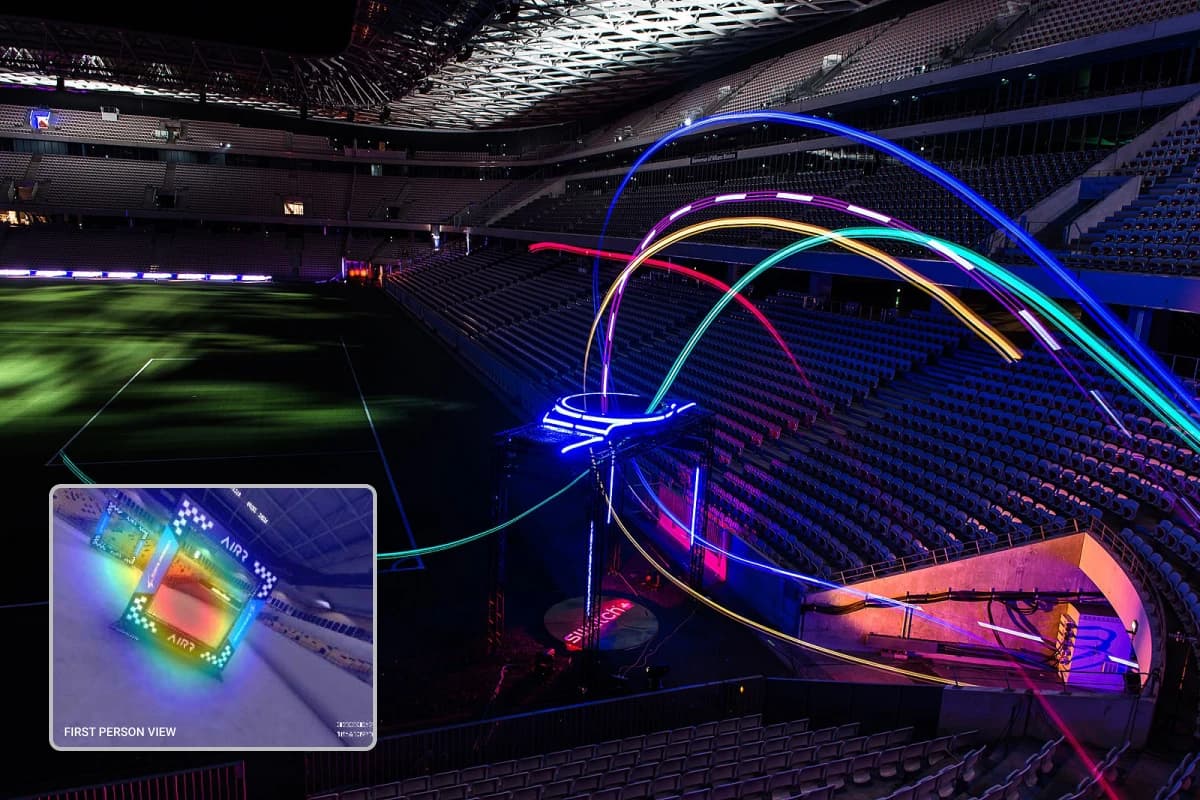
On a real racing track, Christian Pfeiffer and Davide Scaramuzza used trajectory analysis to show that expert drone pilots separated themselves from beginners by choosing better racing lines. They were not simply pushing more speed through the course, but wasting less motion between gates and carrying speed more efficiently.
Drone racing is never just a straight sprint. Gates sit at different heights, the course unfolds in three dimensions, and every turn forces a pilot to manage momentum, yaw, roll, and pitch while keeping the next obstacle in view. The difference between a clean lap and a messy one often comes down to whether the drone is pointed at the right angle before the turn even starts.
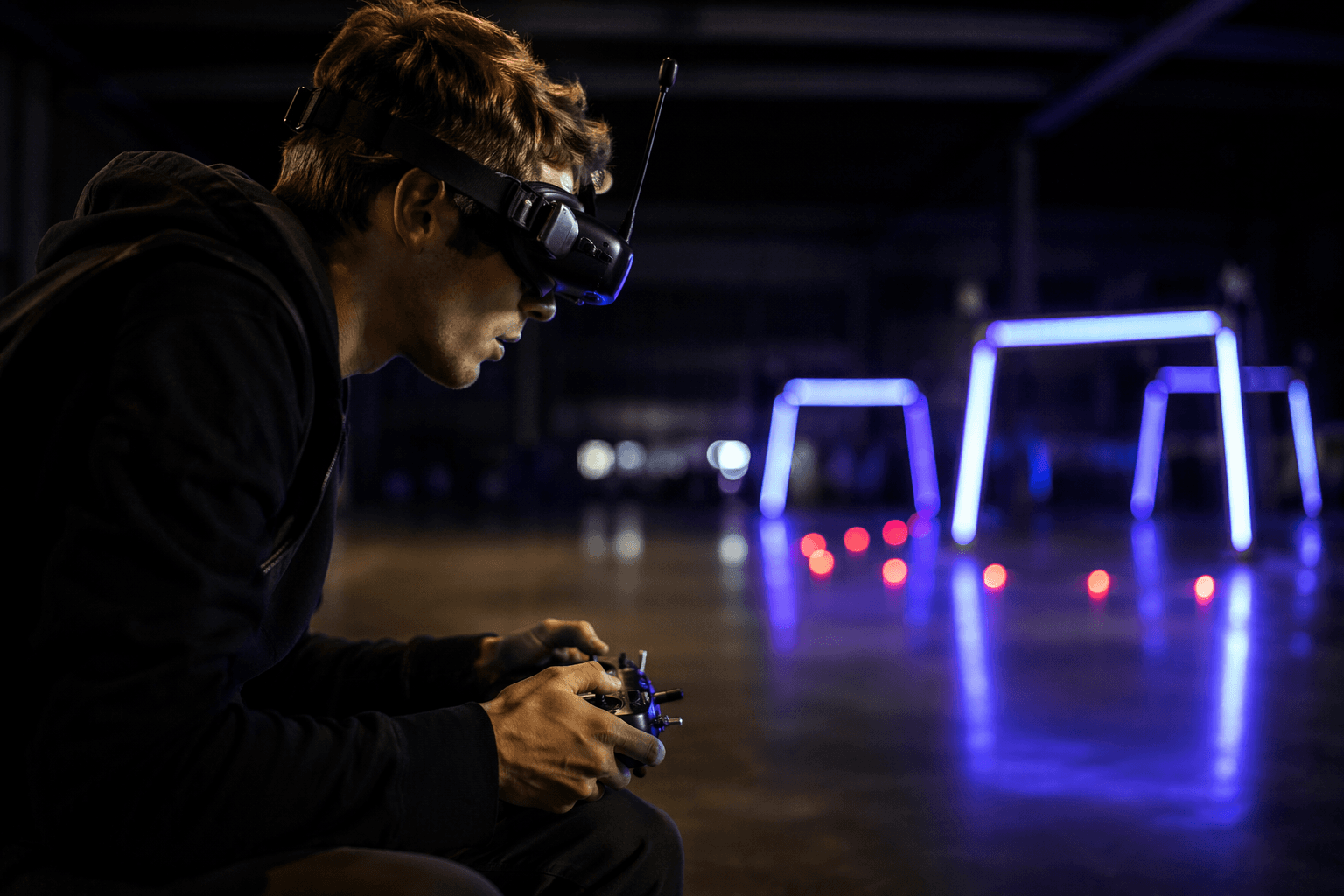
What the experts actually did differently
A pilot who enters a turn at the right angle can stay smooth through the obstacle, avoid over-correcting, and leave the drone in a better position for the next gate. A pilot who enters too hot or too shallow has to spend precious time fixing the line, and in a sport where fractions of a second matter, those corrections are the race.
The comparison used five professional pilots and five beginner pilots. It tracked what the drones actually did on a real racing track, not from abstract simulation or gut instinct.
Where the tenths come from in a heat
The edge shows up in the places where the course forces a decision. On a gate approach, the best line is rarely the most aggressive-looking one; it is the one that lets the drone keep speed without snapping into extra correction. That means the pilot is shaping the entry early, then threading the gate with the least possible disturbance to the flight path.
In a 3D course, that choice becomes even more important because the next gate may be higher, lower, or offset in a way that punishes a bad exit. If a pilot blasts through one gate with too much roll or yaw, the drone may arrive at the next obstacle off-line and need a reset. The expert edge is often seen in how smoothly one gate connects to the next, with each movement setting up the following move instead of fighting it.
Drone racing rewards consistency as much as peak pace. A racer who chooses the better line lap after lap is less likely to oscillate between heroics and mistakes. That steadiness matters in heats, where a single crash or a single wide correction can erase an otherwise competitive run.
For overtaking, the same logic applies. A pilot looking for a pass cannot simply charge at the back of another drone and hope raw speed creates a gap. The smarter move is to take a line that preserves exit speed, keeps the drone stable through the gate sequence, and leaves a cleaner setup for the next opening. In a tight heat, the overtake is usually built before it is made.
The visible speed of a drone is not always the real speed that matters. A pilot can look aggressive and still be slower if the line forces unnecessary corrections.
Why robotics researchers care about race lines
The paper connects human drone racing to autonomous flight research by showing how top pilots solve a live optimization problem at speed. Understanding how experts choose trajectories can inform path planning and control algorithms for autonomous multirotor drones.
For the sport, it explains why skillful pilots look deceptively smooth while they are actually extracting speed from better decisions. For robotics, it provides a real-world model of how a drone should move when the goal is not just to survive a course, but to move through it with minimal wasted motion.
Position tracking records the actual flight path and compares how pilots of different skill levels move through the same space, rather than relying on impressionistic claims about reflexes or gamer-style instincts.
This article was produced by Prism’s automated news system from verified source data, official records, and press releases, then run through automated quality and moderation checks before publishing. The system is built and supervised by the people who set the standards it runs under. Read our full AI policy.
Did this article answer your question?


