49 FCS players to know entering the 2026 season
Montana State’s title core and a loaded quarterback tier define the FCS’s 49th season. The names below point straight to the conference races and playoff path.

1. Justin Lamson.
Montana State’s quarterback is the clearest face of the defending champions after Brent Vigen’s team beat Illinois State 35-34 in overtime for the 2025 title. NCAA.com had the Bobcats No. 1 in its February way-too-early top 25, which makes Lamson the first name tied to the repeat chase.
2. Taco Dowler.
Dowler gives Lamson the kind of vertical threat that can turn one possession into a conference edge. In a subdivision where one extra score can decide seeding, that kind of playmaker travels.
3. Keali'i Ah Yat.
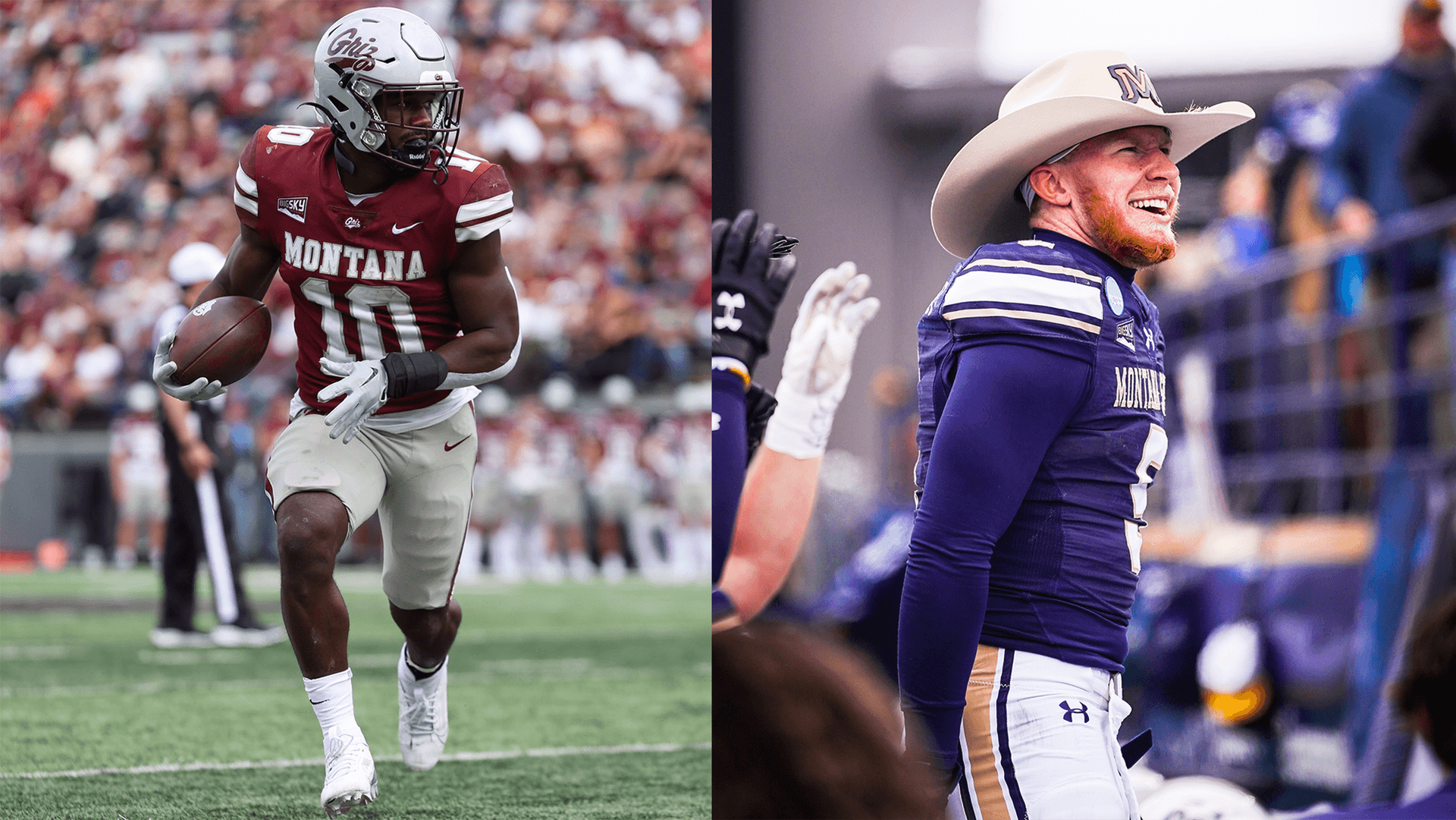
Montana’s passer finished with 4,070 yards, the top total in NCAA.com’s FCS passing chart through Jan. 5. That production keeps the Grizzlies in the same national conversation as the champions across the border.
4. Devin Farrell.
Rhode Island’s quarterback was second nationally with 3,745 passing yards, a number that signals more than volume. When a team has that kind of passing pace, every October conference race gets tighter.
5. Braden Atkinson.
Mercer’s quarterback threw for 3,596 yards and pushed the Bears into the group of offenses nobody wants to see on a short week. His numbers make Mercer a real threat in a playoff field that punishes one-dimensional teams.
6. Tommy Rittenhouse.
Illinois State’s quarterback finished with 3,568 yards and took the Redbirds all the way to the title game in Nashville, Tenn. The overtime loss to Montana State leaves him as one of the clearest returning signals in the bracket picture.
7. Taron Dickens.
Western Carolina’s quarterback put up 3,508 passing yards and gave the Catamounts the kind of offense that can break a league race open early. In the SoCon, that matters because a fast start can reshape seeding before November.
8. Stone Earle.
Abilene Christian’s quarterback also landed on the national passing radar, which is why the Wildcats belong in every conversation about upset danger. A quarterback who can extend drives and steal one road win changes how a playoff chase looks.
9. Adam Jones.
Jones is part of the Montana State core that turned last season’s championship run into something repeatable rather than magical. With Lamson and Dowler ahead of him in the spotlight, he still sits in the middle of the Bobcats’ margin for error.
10. Caden Dowler.
Another Montana State name to know, Dowler helps show why the Bobcats stayed the preseason benchmark after the title. Depth around the stars is what separates a contender from a one-off.
11. Montana State’s returning core.
The Bobcats opened the 2026 talk as the team everyone else is chasing, and that starts with the group coming back around Lamson. When the defending champion also sits at No. 1 in the way-too-early ranking, the rest of the field has a clear target.
12. Montana’s passing attack.
Ah Yat’s 4,070-yard season makes the Grizzlies dangerous any week they need to win through the air. That keeps Montana from being just a rivalry threat and makes it a national bracket problem.
13. Rhode Island’s passing attack.
Farrell’s 3,745 yards tell you Rhode Island can score fast enough to survive ugly road games. That is the profile that usually survives into December.
14. Mercer’s passing attack.
Atkinson’s 3,596 yards put Mercer firmly in the class of offenses that can outscore league opponents when the defense slips. In FCS football, that kind of balance often turns into a playoff berth.
15. Illinois State’s passing attack.
Rittenhouse’s production kept the Redbirds on the biggest stage of all, then left them a step short in overtime. That combination of proven quarterback play and title-game experience keeps Illinois State near the front of the line.
16. Western Carolina’s passing attack.
Dickens’ 3,508-yard season gives the Catamounts a pace no defense can ignore. Teams that can create that kind of tempo are exactly why conference races get messy in October.
17. Abilene Christian’s passing attack.
Earle makes the Wildcats one of the more dangerous nonconference opponents on the board because they can force a favorite into a shootout. That is how a September game becomes a playoff argument.
18. The early No. 1 label.
NCAA.com put Montana State at the top of its February way-too-early top 25, and that matters because the preseason hierarchy shapes every other conversation. Once a reigning champion starts there, the race becomes about who can prove it wrong.
19. The first overtime title game.
Montana State’s 35-34 win over Illinois State was the first FCS championship game ever decided in overtime. That detail is why the 2025 finale still hangs over the new season as a reminder that the margin at the top is razor thin.
20. The 13-conference preseason spread.
Stats Perform’s 2026 preseason All-America team included players from all 13 conferences, 53 schools and 101 players. That spread shows why the FCS is never just one league story.
21. The 53-school footprint.
The preseason honors pool reaching 53 schools tells you how many programs can produce headline names. That is a warning to anyone trying to build a title picture around one or two powers.
22. The 101-player honors pool.
A 101-player preseason All-America group is a reminder that FCS star power is wide, not concentrated. That matters when the playoff field starts sorting out who can actually survive a four-week run.
23. The 129-program base.
The NCAA lists 129 institutions that sponsor FCS football, which is the size of the talent ecosystem behind the subdivision. That volume is why one list of 49 names can still feel like a national map.
24. The 123-program championship gate.
Only 123 of those 129 schools are eligible for the national championship, so the playoff race always has a built-in filter. Eligibility is part of the pressure around every ranked team.
25. The approximately 13,000-player workforce.
Those 129 programs support about 13,000 football student-athletes, which explains why the FCS can keep generating new stars every year. The pipeline is big enough to refresh itself quickly.
26. The 35-34 championship margin.
Montana State beat Illinois State by one point, and that score is the clearest shorthand for the whole subdivision. The top end is close enough that one quarterback mistake can end a season.
27. Brent Vigen’s standard.
Vigen coached the Bobcats through the title and into the preseason No. 1 discussion, so his team enters 2026 with the burden of proof shifted outward. Programs with that kind of standard are the ones everybody else measures against.
28. Nashville, Tenn.
The title game site keeps the 2025 championship in a recognizable football setting, but the bigger point is how far the Bobcats had to travel to finish the job. That kind of road-tested win usually carries into the next season.
29. The championship replay factor.
Montana State’s title-game replay lives as a reference point for the entire offseason, because the final seconds showed how little separates the best teams. That is why Lamson and the rest of the returning core matter so much.
30. The 49th season itself.
The 2026 campaign is the 49th season of FCS football, which gives this player list a little more weight than a normal preseason roll call. It is the last stop before the subdivision’s 50th year, and the race to get there starts now.
31. The top nonconference slate.
NCAA.com’s July 16 feature on the 25 best nonconference games put a spotlight on the matchups that can define a team before conference play even begins. Stars in those games do more than win once, they shape the national pecking order.
32. The FBS upset board.
A July 23 NCAA.com feature identified 12 potential FCS-over-FBS upsets for 2026, which is another way of saying the subdivision has real week-to-week punch. Quarterbacks are usually the reason those games swing.
33. The August-to-January runway.
The preseason conversation is already running from late July into the playoff bracket because the important names are tied to every stop on the schedule. That is what makes this list more than a set of player blurbs.
34. The Walter Payton Award race.
Preseason honors begin turning player performance into national currency almost immediately, and the Walter Payton Award watch list is one of the first places that happens. The quarterbacks above are the names most likely to live there all fall.
35. The Buck Buchanan Award race.
The defensive side gets its own spotlight through the Buck Buchanan Award watch list, and that is where the best game-changers can force their way into the title picture. In a one-bad-quarterback-leads-to-elimination playoff format, those defenders matter.
36. The BCU National Player of the Year watch list.
The July 29 watch list date gives defenders another lane into the awards conversation before the season starts. For teams built on pressure and turnovers, that visibility can become a recruiting and branding asset.
37. July 13.
That was the preseason All-America reveal date on the honors calendar, and it set the tone for how quickly the national conversation turns to stars. The season starts with recognition, then moves to production.
38. July 14.
The next day brought the Walter Payton and Buck Buchanan watch lists, which is a fast way to show how stacked the preseason calendar is. The players who land there become the names that anchor weekly coverage.
39. July 29.
The BCU National Player of the Year watch list lands at the end of the month and keeps the spotlight on defensive value before kickoff. By then, the field already knows who the first tier is.
40. The spring-model precedent.
NCAA.com noted in September 2020 that the Division I Council’s spring championship model used a 16-team bracket, which shows the playoff structure has already handled disruption before. That background matters because postseason access always shapes the value of every star.
41. April 18 through May 15.
That was the spring championship window in the 2020 model, a reminder that the FCS has operated under a range of calendar pressures. The best players are the ones who can still produce when the schedule gets strange.
42. The 16-team bracket.
The spring model’s 16-team field is a useful reference point for how narrow the path can be once the postseason starts. Every player on this list is trying to make sure his team is one of those survivors.
43. The conference-race layer.
The FCS is spread across 13 conferences, so stars are not just fighting for wins, they are fighting for a league title first. That is why one quarterback can swing a whole playoff path.
44. The transfer-era pressure.
Even with so much roster movement around college football, the FCS still rewards teams that keep their core together. Montana State’s repeat angle is built on that continuity.
45. The returning-star advantage.
Montana State, Montana, Rhode Island and Mercer all have the kind of returning names that keep them in the early bracket conversation. The teams with continuity at quarterback usually control the opening month.
46. The breakout-candidate lane.
A player like Stone Earle can go from useful starter to national talking point in one September upset or one league statement game. That is the speed at which FCS stars become unavoidable.
47. The marquee-game lane.
The July 16 nonconference slate exists because one high-level matchup can change how people read a team’s whole season. That is where players earn the credibility that sticks through November.
48. The national-radar lane.
NCAA.com’s July 23 upset list makes it clear that the subdivision is entering the year with genuine national stakes. The players who can beat an FBS opponent are the ones who turn a good season into a remembered one.
49. The bracket-shaping core.
If 2025 taught anything, it is that the championship still comes down to a handful of quarterbacks, skill players and defensive anchors who can hold up under pressure. Lamson, Ah Yat, Farrell, Atkinson, Rittenhouse, Dickens and Earle are the names that already sit closest to that center of gravity.
This article was produced by Prism’s automated news system from verified source data, official records, and press releases, then run through automated quality and moderation checks before publishing. The system is built and supervised by the people who set the standards it runs under. Read our full AI policy.
Did this article answer your question?