Carter Henderson brings storytelling mindset to Cal Poly athletics leadership
Carter Henderson is betting Cal Poly can win with identity as much as inventory. The real test is whether that story reaches Big Sky football before the momentum cools.

The hire is bigger than a title
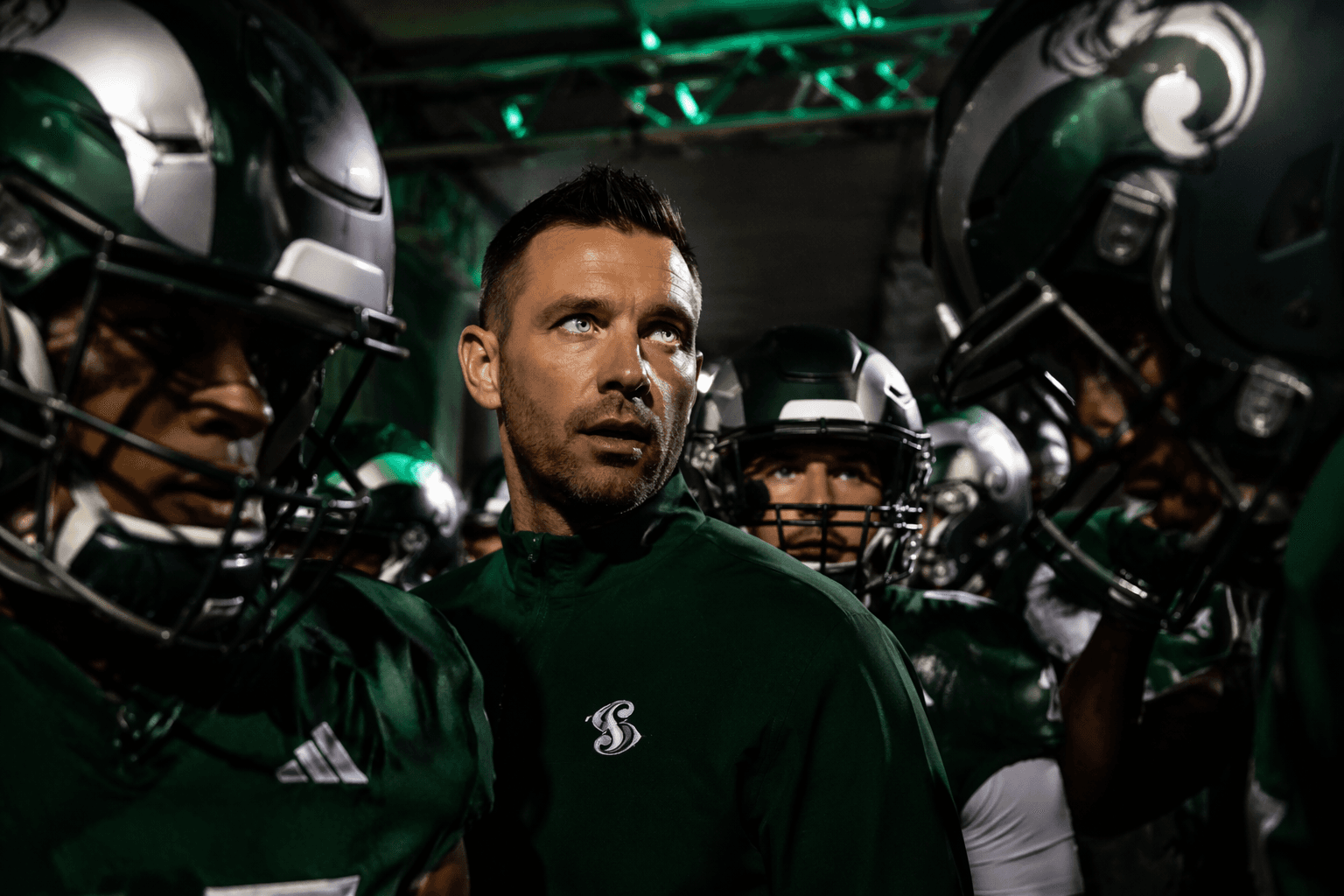
Carter Henderson did not walk into San Luis Obispo as a cookie-cutter athletic director. Cal Poly chose a former Stanford and Washington administrator who built his career around the idea that athletics is really about people, identity, and the stories a campus tells about itself. Henderson has said he is not really in the sports business so much as the human development business, and that matters because Cal Poly is asking him to do more than manage a department. It is asking him to shape the next version of its brand.
That is the central question hanging over this move: can a storytelling-first AD make Cal Poly matter more in the Big Sky race, not just on a campus brochure? The school says it has about 20 NCAA teams and nearly 50 conference championships overall, and that gives Henderson a base to work from. But the job is not to restate the past. It is to turn that history into recruiting leverage, donor confidence, and a sharper case for why Cal Poly should feel like a place where FCS football can climb again.
Why football is the stress test
If Henderson’s philosophy is going to mean anything beyond speeches and branding language, football will expose it first. Cal Poly plays in the Big Sky Conference at Alex G. Spanos Stadium, a 11,075-seat home that gives the program a real FCS footprint but also a clear ceiling if the wins do not follow. The Mustangs’ all-time record of 525-468-19 says this is not a startup project; it is a program with history that has drifted away from consistent relevance.
That is why the timing matters. Tim Skipper became head coach in December 2025, which means Henderson inherited a new football leader at the same time he was being asked to define the department’s next identity. In a league where playoff margins are thin and perception can matter almost as much as one extra win in November, the athletic director and coach have to move in sync. Henderson’s story-driven approach can help, but it will not carry the offseason by itself. Big Sky football punishes teams that are interesting and average.
What the story can actually sell
Cal Poly does have tangible ammunition, and Henderson’s best work will come from turning those facts into a compelling pitch. The university says athletics and recreation is home to 21 NCAA Division I teams and has captured almost 50 conference championships. The department also claimed its first-ever Big West Dennis Farrell Commissioner’s Cup in 2023-24, finishing with a record 149.4 points. That is the kind of number that tells recruits, donors, and alumni that the place is not drifting backward.
The academic side strengthens the pitch even more. Cal Poly athletics reported a 93% graduation rate and a 3.25 cumulative GPA in spring 2025. Those numbers matter because Henderson’s whole framework is built around fit, development, and long-term identity. At a time when so many athletic departments chase quick fixes, Cal Poly can sell something sturdier: a school that has shown it can win, graduate, and keep its standards intact.
That is also where Henderson’s background helps. He spent nearly five years at Stanford and a decade at Washington before that, after earlier work at Jacksonville University. He was not hired because he needed a first major job. He was hired because he had options, and he chose a place where the academic and athletic mission could be aligned instead of negotiated every day. That gives him credibility when he talks about Cal Poly as a place where something special can be built.
Don Oberhelman left a real platform, not a blank canvas
Henderson is not starting from scratch, and that is important because the strongest athletic directors know how to build on momentum without pretending they created it. Don Oberhelman retired in June 2025 after 15 years as Cal Poly’s athletic director, and his tenure produced 54 team conference championships, including 51 in Big West-sponsored sports. Cal Poly also said the department’s Graduation Success Rate rose from 71% in 2011 to 93% under his watch.
That legacy gives Henderson both permission and pressure. He is inheriting a department that has already proven it can organize, support, and improve. The next step is not simply preserving that standard. It is pushing the brand into places where Cal Poly has room to grow, especially in football, where the Big Sky race is less forgiving than the Big West. The department’s upward arc under Oberhelman means Henderson will be measured against continuity first and innovation second. He has to do both.
The football message has to reach recruits, donors, and fans at once
This is where the storytelling lens becomes practical instead of philosophical. Recruiting pull starts with a believable identity. Cal Poly has to convince prospects that San Luis Obispo is not just a scenic stop, but a place where the football program has a plan, a coach, an administrative vision, and the backing to make that vision real. Henderson’s narrative-first style can help frame that pitch, but the story has to be reinforced with action in facilities, staffing, and fundraising.
Donor buy-in is the other piece. Administrators can talk all they want about culture, but money follows confidence, and confidence follows clarity. If Henderson can connect Cal Poly’s graduation rates, conference titles, and recent award success to a football-specific vision, he gives donors something more concrete than nostalgia. He gives them a reason to believe the department can turn support into measurable movement in the Big Sky standings.
Fan re-engagement is the final piece, and it is not a small one. A school that has won nearly 50 conference championships has no shortage of history to market, but history alone does not fill a stadium. Fans want to see a program that reflects the larger university momentum. That is why Henderson’s branding mindset matters most when it becomes a football story people can track from August to November, not just a slogan on a homepage.
The best proof point is already visible in another sport
Cal Poly’s men’s basketball program offers a useful example of what Henderson can point to when selling the department’s direction. The 2024-25 team finished 16-19 overall and 8-12 in Big West play, good for a tie for seventh, and those eight conference wins were the program’s most since 2013. Mike DeGeorge’s first two seasons produced 30 total wins, Cal Poly’s best two-season run in 13 years, and the Mustangs also beat Stanford in 2024-25 for a Power Four win in each of DeGeorge’s first two seasons.
That matters because it shows the department can translate leadership, recruiting, and coaching alignment into real results. Henderson does not need every team to become a champion at once. He needs enough programs, starting with football, to look like they are moving in the same direction. In the FCS world, that kind of institutional coherence can separate a school that feels stuck from one that looks ready to climb.
The branding vision will only matter if it becomes wins quickly enough to be believed. Cal Poly has the academic profile, the facilities footprint, the conference history, and now a director who thinks like a storyteller. The next step is proving that the story is not just well told, but finally good enough to change the Big Sky conversation.
This article was produced by Prism’s automated news system from verified source data, official records, and press releases, then run through automated quality and moderation checks before publishing. The system is built and supervised by the people who set the standards it runs under. Read our full AI policy.
Know something we missed? Have a correction or additional information?
Submit a Tip