Cooper Kupp's 2015 FCS Performance Against Oregon Still Previewed NFL Greatness
Kupp averaged 149.3 receiving yards per game in 2015 and nearly single-handedly upset Oregon, foreshadowing an NFL career that redefined the receiver position.
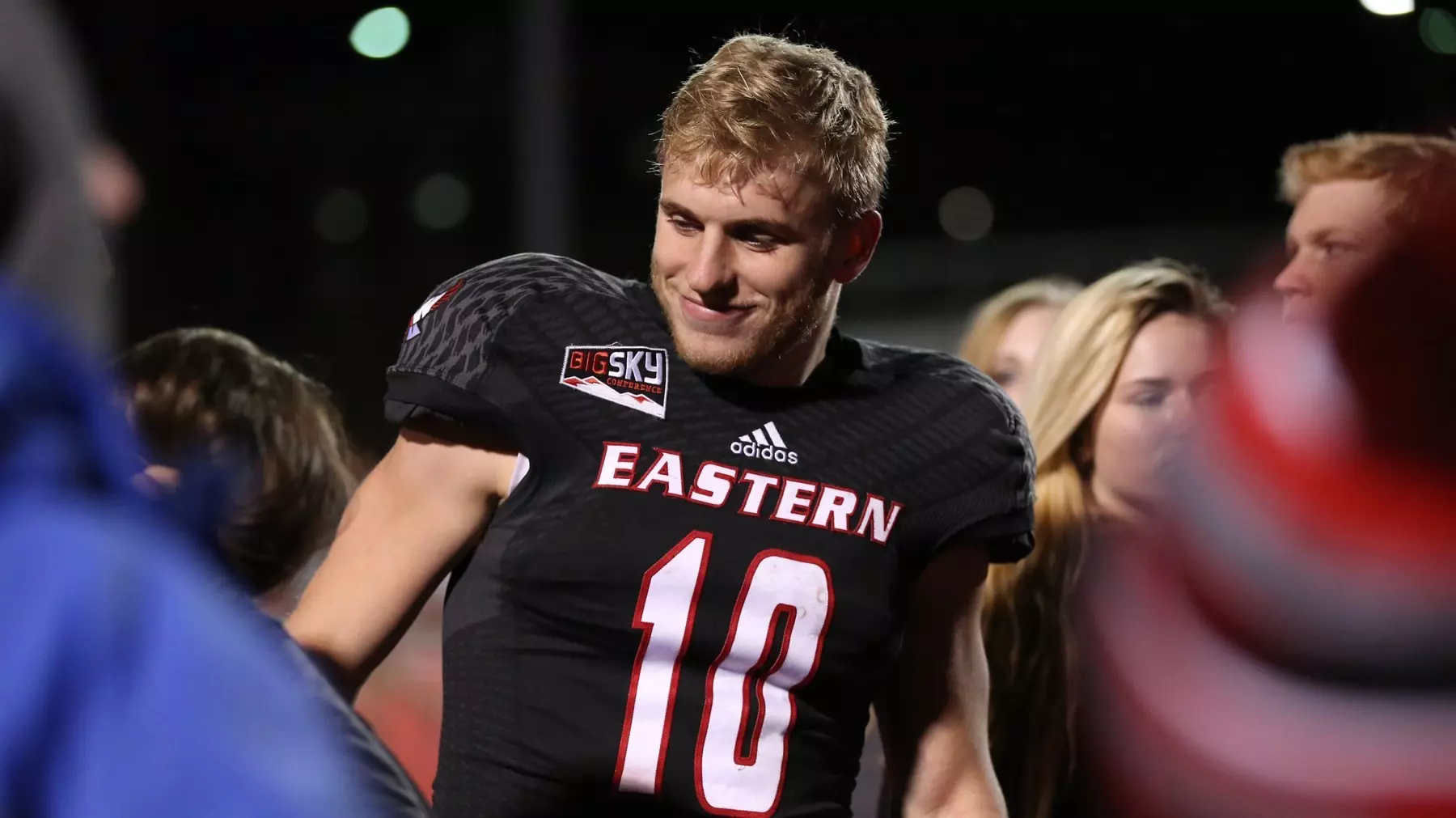
Before Cooper Kupp was catching passes in Super Bowls, he was torching defenses on Eastern Washington's red turf in Cheney, Washington, turning the FCS into a proving ground that Power Five programs consistently underestimated. That underestimation cost the Oregon Ducks more than their pride on one early fall afternoon in 2015, and the football world has been catching up to what EWU fans already knew ever since.
Yahoo Sports' FCS Throwbacks series revisited that story in a March 13, 2026 feature, making the case that Kupp's production at the FCS level was not just impressive in context but genuinely predictive of the kind of NFL career that earns a player a permanent place in the sport's conversation. The feature frames the Oregon game as the moment that crystallized what Kupp was capable of, even against competition from a different tier of college football entirely.
The Player Oregon Paid to Host
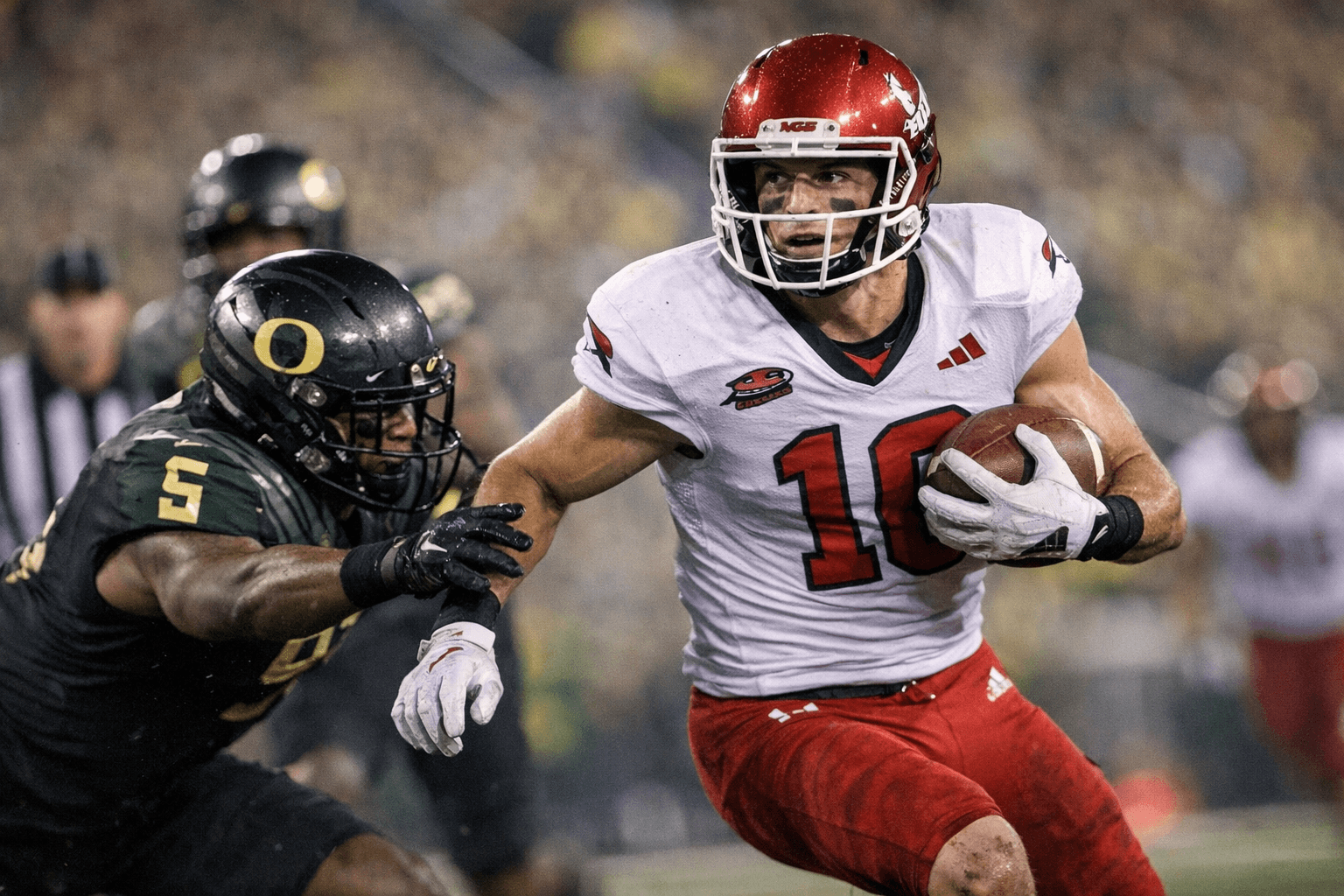
Oregon brought Eastern Washington to Eugene to open the 2015 season the way programs schedule guarantee games: expecting to collect a comfortable nonconference win before conference play begins. What happened instead was something closer to an education. "Oregon paid Eastern Washington to come into Eugene to kick off the 2015 season and, because of essentially Kupp alone, nearly regretted that decision in a big way," the Yahoo Sports feature notes.
The Ducks did ultimately escape with the win. But the margin of comfort was not what anyone in the Oregon program anticipated when they wrote a check to bring an FCS program into Autzen Stadium. Kupp, wearing number 10 for the Eagles, operated against a Pac-12 defense with the same efficiency that had been dismantling Big Sky opponents for years. "Not often does a team like Oregon get left so completely dumbfounded by an individual player, let alone an FCS one," the piece observes.
The FCS Throwbacks feature captures the dynamic precisely: "Although they still came out with the win, the Ducks learned on that early fall afternoon what those around the FCS already knew at the time; Kupp was cut from a different cloth."
What the 2015 Season Actually Looked Like
The Oregon game was not an outlier. It was, as the Yahoo Sports feature describes it, "the genesis of a season no FCS wide receiver had seen before or since." The full-season numbers make that claim difficult to dispute.
Kupp caught 114 passes for 1,642 yards and 19 touchdowns across the 2015 season. He averaged 149.3 receiving yards per game, a figure that strains credulity even within the context of FCS production. Remarkably, at least one single-game performance that season surpassed whatever he posted against Oregon, though the feature does not specify which game or by how much.
The cruelest footnote to all of it: Eastern Washington did not qualify for the playoffs in 2015. A receiver producing at a historically unprecedented rate, against competition that included a Pac-12 program in its own stadium, and the team still finished outside the FCS postseason picture. "Perhaps the most perplexing of all of it, however, was the fact that Eastern didn't even qualify for the playoffs that year," the feature notes, with appropriate bewilderment.
Four Years That Redefined the FCS Standard
The Oregon game sits within a much larger body of work. Kupp spent four seasons lighting up the red turf in Cheney and established records that have not been touched since. He remains the last pass catcher to win the coveted Walter Payton Award, which stands as the FCS equivalent of the Heisman Trophy, and he still holds the subdivision's records for career receptions, career receiving yards, and career receiving touchdowns, along with several other marks.
"He was something to watch during his heyday with the Eagles and several teams fell victim to the one-man highlight reel that was Cooper Kupp," the Yahoo Sports feature writes. "Even some of college football's big boys got more than they bargained for with #10." Oregon was the most prominent example, but the broader point is that Kupp was not just an elite FCS receiver; he was an elite receiver by any standard that could be applied to a college player.
Why the FCS Numbers Translated
The skepticism that follows FCS prospects into the NFL draft is well-documented and not entirely unreasonable. Competition levels differ, and statistics accumulated against smaller programs do not always carry over to a league where every defender is a professional. Kupp's case has become one of the most frequently cited counterarguments to that skepticism.
The Yahoo Sports FCS Throwbacks piece frames his EWU career as a direct preview of his NFL success, and the evidence supports that framing. A receiver who averaged nearly 150 yards per game in college, who made a Power Five defense look confused in that team's own building, and who broke every career record the FCS kept for his position was always going to be more than a developmental project. The production at EWU was not a product of weak competition alone; it was a product of a player whose route running, hands, and feel for the game were operating at a level that competition level could not fully explain.
From Cheney to the NFL
Kupp went on to become a two-time Super Bowl champion, first with the Los Angeles Rams before a later move to the Seattle Seahawks, and by the time the Yahoo Sports feature ran in March 2026, he had wrapped up his ninth NFL season. That career arc, from the red turf in Cheney to a Super Bowl ring, has made him arguably the most prominent FCS success story in the modern era of the sport.
"There aren't many people out there these days who don't know about Cooper Kupp," the feature opens. That is precisely the point. He has made himself a household name in a sport that rarely confers that status on players who did not come up through the Power Five system. The 2015 season, and the Oregon game in particular, was the clearest early signal of where he was headed. The Ducks saw it up close. The rest of the country spent the next decade catching up.
This article was produced by Prism’s automated news system from verified source data, official records, and press releases, then run through automated quality and moderation checks before publishing. The system is built and supervised by the people who set the standards it runs under. Read our full AI policy.
Did this article answer your question?