FCS offensive tackles keep producing NFL starters and draft picks
FCS tackles are still turning into NFL starters, and the 2027 class could decide whether that pipeline keeps its edge.
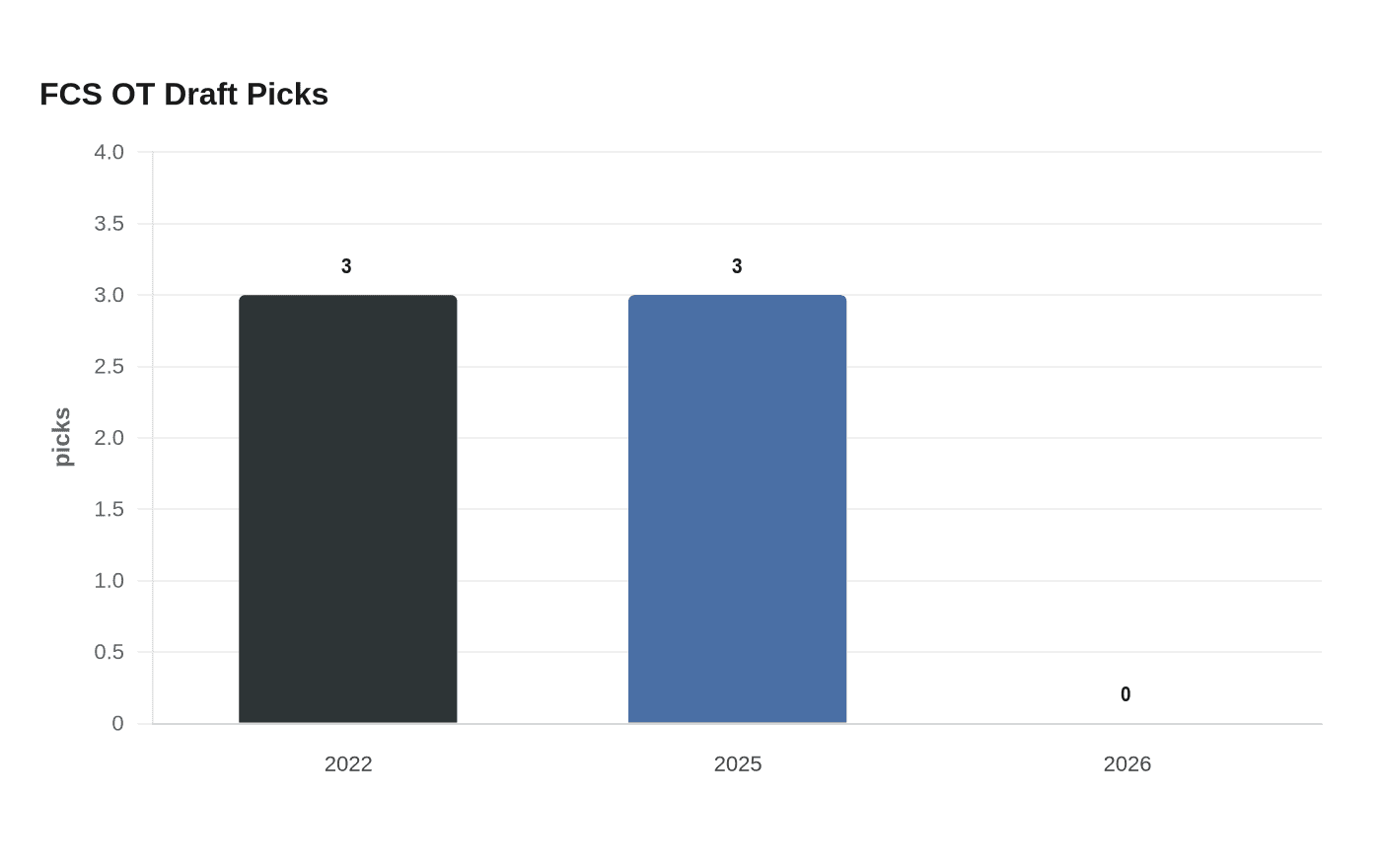
FCS offensive tackle play has become one of the subdivision’s most reliable paths to the NFL, and the latest scouting picture makes that case with hard numbers. Since 2020, 10 FCS offensive tackles have been drafted, and the position has produced three picks in both 2025 and 2022, the most in any single draft during that span. The odd break in the trend came in 2026, when no FCS offensive tackles were selected at all, a reminder that the line pipeline can look deep one year and thin the next.
The track record is built on real NFL starters
The best evidence that FCS tackle production matters is not just draft capital, but staying power. Spencer Brown, out of Northern Iowa, has started 69 games for Buffalo and remains an active NFL player, which is the kind of long-term return every subdivision wants from a developmental program. Braxton Jones, from Southern Utah, has already built a starter’s résumé in Chicago, while Trevor Penning, another Northern Iowa product and a first-round pick in 2022, has started more than 30 games for New Orleans and remains active.
That matters because it changes how NFL teams evaluate FCS linemen. These are not merely prospects who make a roster as depth pieces. Brown, Jones, and Penning show that a tackle coming out of the subdivision can move from small-school anonymity to weekly snaps against elite edge rushers, and that shift is exactly what keeps FCS line development relevant well beyond draft weekend.
Grey Zabel raised the ceiling in 2025
The 2025 draft gave the subdivision a premier showcase when North Dakota State offensive lineman Grey Zabel went No. 18 overall to Seattle. That selection made him the first FCS first-round pick since 2022 and the highest-drafted offensive lineman in FCS history. It also helped reinforce a broader point: the FCS is still capable of producing premium trench talent that can sit near the top of the board, not just in the later rounds.
That year also mattered because 15 FCS players were selected overall in the draft, which gave the subdivision a strong all-around showing even beyond the tackle spot. Zabel’s rise sits at the intersection of two trends that shape FCS football every season: programs that can develop NFL bodies and an NFL that keeps finding value in players who have already been hardened by a heavy workload and constant evaluation.
Why the 2026 blank matters
The fact that no FCS offensive tackles were drafted in 2026 is important precisely because the position had been so productive. One quiet year does not erase the recent run, but it does create pressure on the next wave of prospects to restore the position’s draft presence. For NFL evaluators, that kind of gap is a reminder that tackle production from the subdivision is cyclical, not guaranteed.
For the FCS, the 2026 result also sharpens the stakes for the programs that have traditionally supplied these linemen. The league’s credibility at tackle is built school by school, and when the draft comes up empty at one of its best positions, the burden shifts to the next class to prove the line factory is still running. That is especially true for programs that have built reputations around blue-chip line development and playoff relevance at the same time.
The 2027 class comes from a wide map of programs
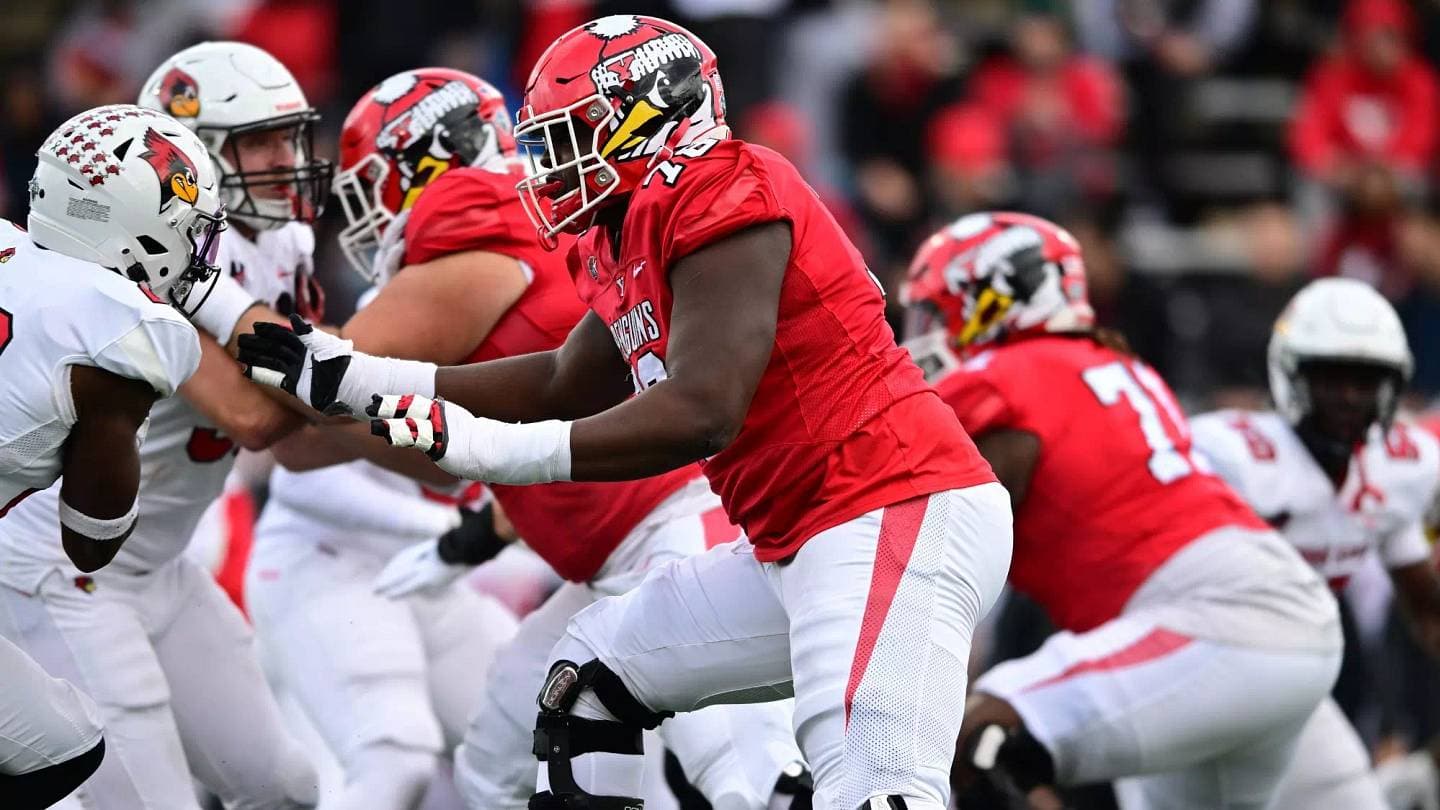
That is why the 2027 tackle group already carries real weight. The scouting focus includes prospects from Youngstown State, North Dakota, Austin Peay, South Dakota State, Princeton, and Harvard, a spread that shows how broadly tackle development is distributed across the subdivision. This is not just one conference carrying the load. It is a mix of power programs and academically elite schools, which says something about how varied the FCS development model has become.
That school mix matters for more than draft projections. Youngstown State, North Dakota, Austin Peay, and South Dakota State bring different conference identities and different weekly demands, while Princeton and Harvard show that high-end line play is also being cultivated in the Ivy League. Put together, the list gives a useful map of where strong trench play is still being built, and it hints at which programs could become talking points again once the season turns toward playoff position and pro scouting.
The broader FCS scouting lens is getting wider
This tackle preview is part of a larger early look at the 2027 class, with FCS coverage also breaking down quarterbacks and running backs. That matters because it shows the subdivision is being treated as a legitimate draft pipeline long before the actual draft cycle starts to heat up. It is also a sign that the FCS conversation is moving beyond isolated stars and toward a more complete evaluation of where the league can supply NFL talent.
For fans tracking the subdivision week to week, the lesson is straightforward. A strong FCS tackle season can lift a program’s playoff profile, improve a conference’s draft résumé, and put players on a path from regional relevance to national visibility. The 2025 Zabel pick proved the ceiling is still high; the 2026 dry spell made the next class more important; and the 2027 group now carries the chance to show that the FCS remains one of the NFL’s most dependable trench pipelines.
This article was produced by Prism’s automated news system from verified source data, official records, and press releases, then run through automated quality and moderation checks before publishing. The system is built and supervised by the people who set the standards it runs under. Read our full AI policy.
Did this article answer your question?