FCS passing leaders since 2016 highlight evolution of elite quarterbacks
Briscoe, Hodges, Lance and Ward turned FCS passing charts into an award map, showing a move toward explosive, quarterback-driven offenses.
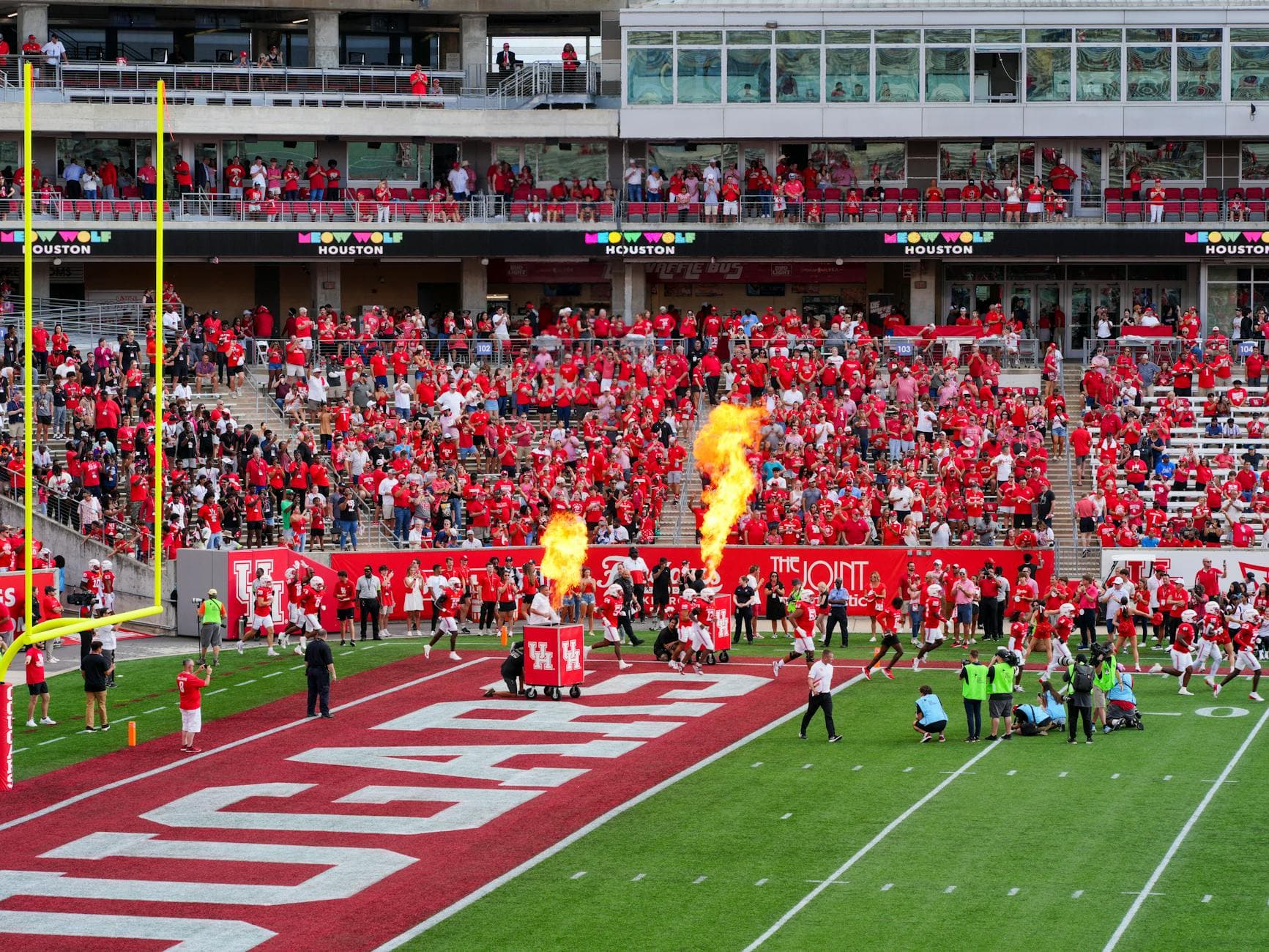
The chart is really a map of how the FCS offense changed
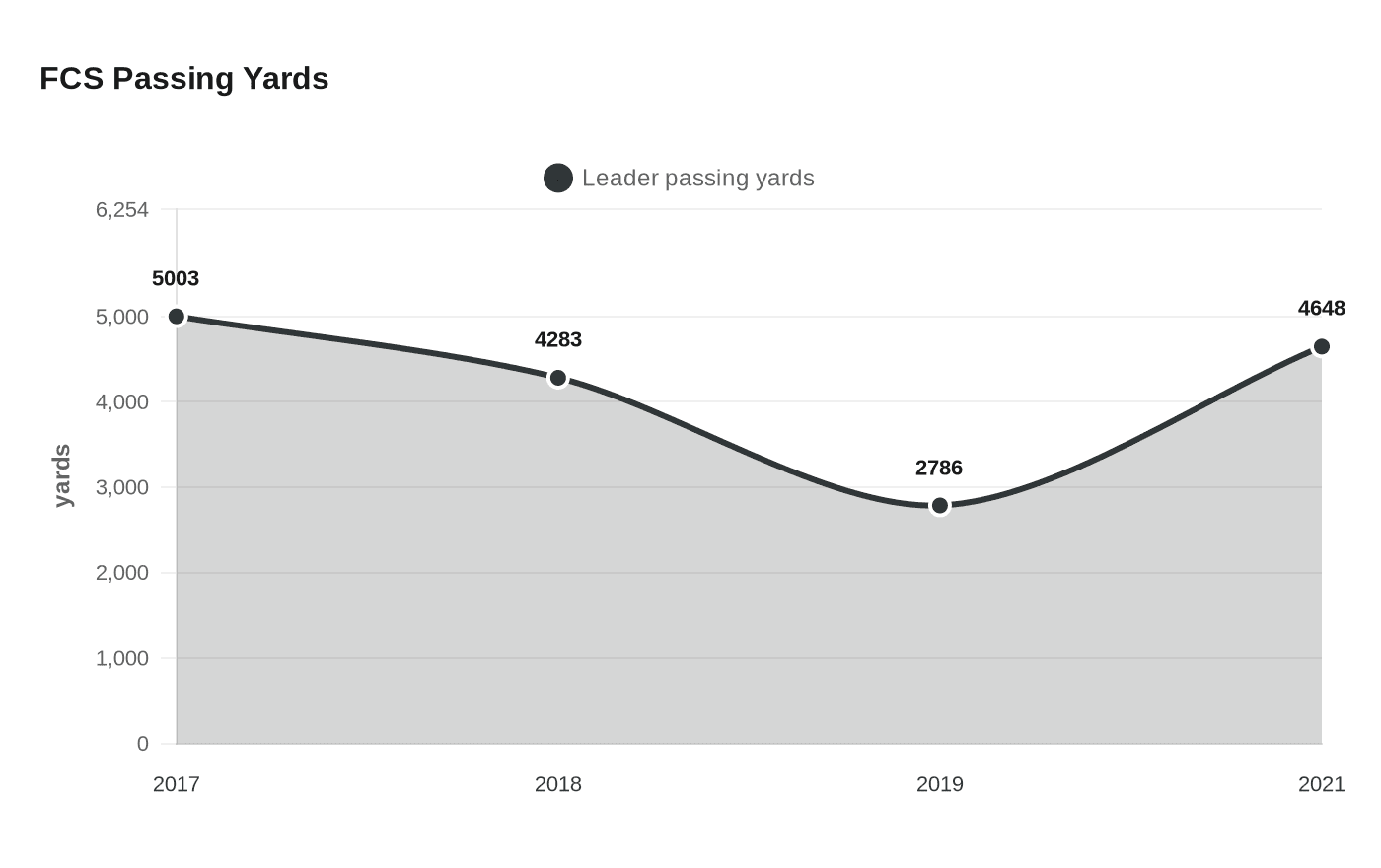
The yearly passing leaders chart from FCS Football Central, which starts in 2016, does more than list big numbers. It shows how the subdivision’s best offenses have shifted toward quarterbacks who can carry entire game plans, and how that production has become central to the Walter Payton Award race. That award, first presented in 1987 and reserved since 1995 for the FCS’s top offensive player, is decided by a national panel of more than 150 sports information directors, broadcasters, writers and other dignitaries based on regular-season performance before the playoffs begin.
That matters because the chart tracks the kind of production voters cannot ignore. The leaders are not just piling up yards in garbage time or stretching seasons with extra games. They are setting the tone for offenses that ask quarterbacks to throw early, throw often and, in several cases, do it efficiently enough to make the numbers feel inevitable.
Jeremiah Briscoe made the ceiling feel reachable
Jeremiah Briscoe’s 2017 season at Sam Houston State is still one of the clearest examples of volume turning into hardware. He won the Walter Payton Award, threw for a nation-best 5,003 yards and 45 touchdowns, and missed the FCS single-season passing record by just 73 yards. That is the kind of year that does not simply lead a chart, it changes the standard for what a dominant FCS passer looks like.
Briscoe also joined rare company. He became only the second two-time Walter Payton Award winner, alongside Armanti Edwards, which tells you how unusual it is to sustain that level across multiple seasons. His profile also shows why the award has become so intertwined with quarterback play: if a passer controls the best offense in the subdivision, the trophy often follows the stat line.
Devlin Hodges pushed the record book and the conversation
If Briscoe represented the high-end volume game, Devlin Hodges showed that the leaderboard could also be a record-book story. In 2018 at Samford, he led the FCS with 4,283 passing yards and 32 passing touchdowns. He also passed Steve McNair for the career passing yards record, finishing with 14,584 yards.
That combination mattered because it made Hodges more than a single-season leader. He became the player through whom fans and voters could measure how quickly elite FCS passing had accelerated, and how much room a quarterback could have in a modern offense to pile up both weekly production and career totals. The chart captures that shift clearly: by 2018, the top passer was not just winning games, he was rewriting the historical baseline for the subdivision.
Trey Lance showed efficiency could rival sheer volume
North Dakota State’s Trey Lance added a different layer to the story in 2019. He completed 192 of 287 passes for 2,786 yards, 28 touchdowns and zero interceptions, a stat line that looks less like a pure volume race and more like a model of control. The message was not that every elite FCS quarterback had to throw for 5,000 yards. It was that precision, efficiency and mistake-free football could also define a top-tier season.
That season fit North Dakota State’s broader identity. The Bison have won an FCS-record 10 national championships as of the 2024 season, and their championship run has repeatedly overlapped with nationally notable quarterbacks. North Dakota State beat James Madison 28-20 in the 2020 FCS championship game to finish the 2019 season, a reminder that the quarterback conversation in this subdivision is never separate from the program conversation. In Fargo, quarterback play has often been the engine behind the standard everyone else is chasing.
Cam Ward marked the rise of the transfer-era star
By 2021, the chart was also reflecting a new reality: elite FCS quarterbacks were not staying in one place for the full arc of their college careers. Cam Ward threw for 4,648 yards and 47 touchdowns at Incarnate Word, and his path later took him to Washington State and Miami. His numbers at UIW were not just eye-catching, they were a sign of how system fit, pace and mobility could produce explosive passing totals in the subdivision.
Ward’s profile points to one of the biggest changes since 2016. The top passers are no longer always the same kind of player or tied to the same kind of career arc. Some are program anchors, some are transfer success stories, and some are both. The common thread is that the modern FCS offense has become more willing to build around quarterbacks who can stress defenses with tempo, arm talent and the ability to keep drives alive when the first option is gone.
Max Brosmer’s 2023 lead shows the numbers are still evolving
Max Brosmer leading the FCS in passing yards per game in 2023, according to NCAA.com, reinforces the point that the passing race is no longer about one clean statistical category. Per-game production matters because style, conference strength and quarterback mobility all shape the final totals. A quarterback can lead the subdivision in efficiency one year, raw yardage the next, and still fit the same larger pattern: offenses are trusting the pass game more than they did a decade ago.
That is why the chart remains relevant even without a single year producing an identical profile to the last. Some seasons belong to record chasers like Briscoe and Hodges. Others belong to precision passers like Lance or to transfer-era stars like Ward. The leaders are less uniform now, but they are more revealing.
What fans should expect from the next wave
The biggest takeaway from the passing leaders since 2016 is that the FCS has become a quarterback-first showcase without becoming one-dimensional. The best teams still need defense and run-game balance, but the path to national relevance increasingly runs through a passer who can carry a high-volume offense, survive pressure and, in the right system, turn efficiency into awards.
That is the lens to keep for 2026. Expect more aggressive offenses, more quarterbacks who enter the conversation through transfer movement or system acceleration, and more statistical races shaped by regular-season production rather than playoff volume. The next leader may look like Briscoe, Hodges, Lance or Ward, but the larger story is already set: in the FCS, elite quarterback play now defines the sport’s ceiling as much as its style.
This article was produced by Prism’s automated news system from verified source data, official records, and press releases, then run through automated quality and moderation checks before publishing. The system is built and supervised by the people who set the standards it runs under. Read our full AI policy.
Did this article answer your question?