FCS Players' Path to NFL: Game Production, Pro Days, Showcases
FCS prospects reach the NFL by stacking game production, consistent tape, measured testing and standout showcase showings into a single, scout-ready narrative.

1. Game production: the foundation scouts start with
FCS prospects begin their NFL story with measurable production in games, tackles, sacks, completions, touchdowns and situational play that show repeatable performance against FCS competition. Scouts use those box-score numbers to identify candidates for closer review, but production alone won’t carry a player; it must translate to tape that shows play recognition, technique, and consistency across multiple weeks. In short, high-level game production opens doors to the next steps in the evaluation pipeline and is the baseline metric teams use to prioritize which FCS players merit pro-day invites or showcase offers.
2. Consistent tape: turning single games into a reliable profile
Consistent tape, not one highlight reel, is the second critical pillar. NFL personnel want to see the same tendencies, processing speed and execution on film from week to week, across different opponents and game scripts. For FCS prospects, that means converting statistical spikes into repeatable film traits (for example, the same pass-rush moves working against multiple offensive schemes or quarterback reads that produce completions under pressure). Consistent tape is what turns a box-score performer into a viable pro prospect, because it provides evaluators the sample size they need to project a player’s NFL floor and ceiling.
3. Pro days and measurable athletic testing: the verification stage
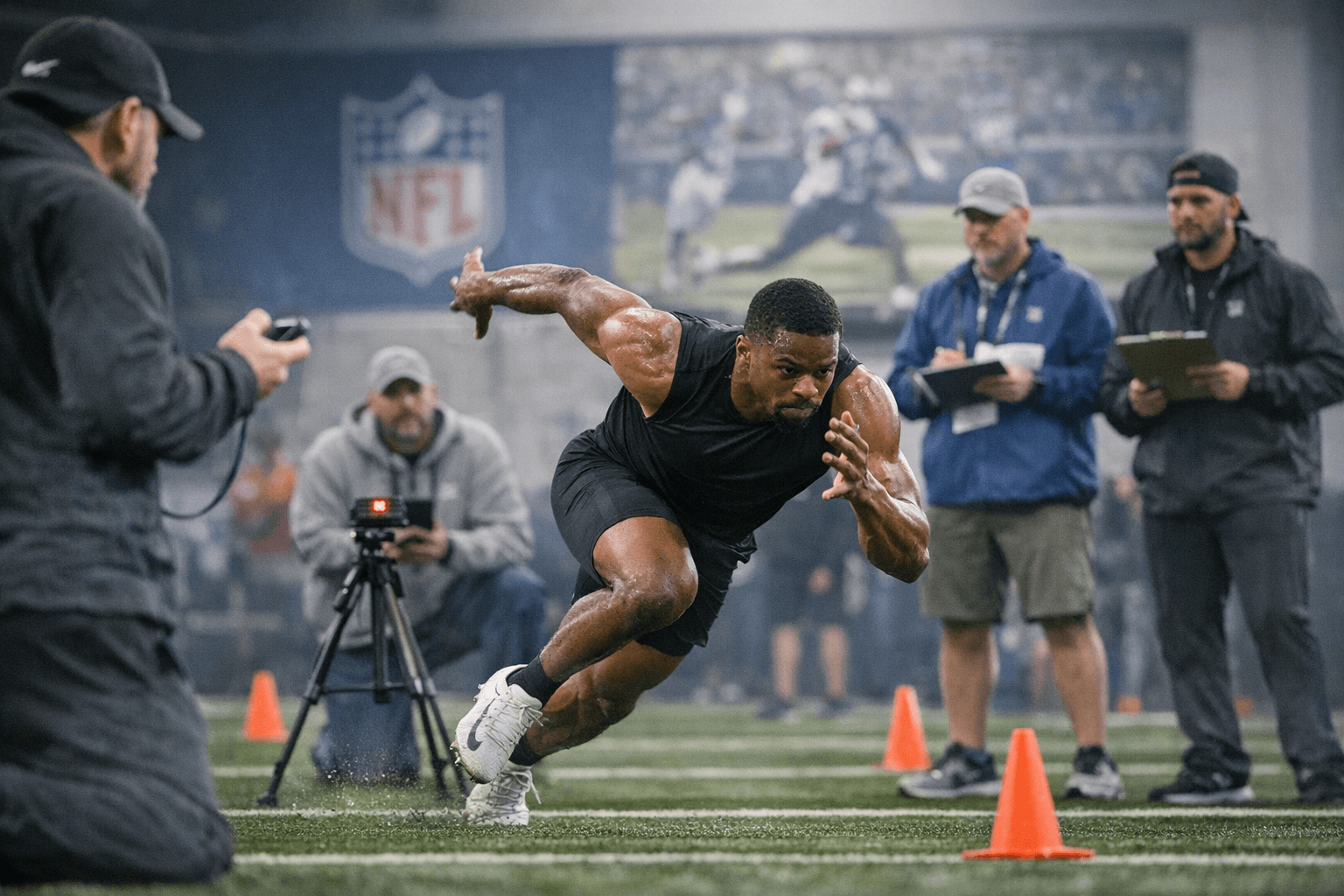
Measurable athletic testing, conducted primarily at pro days, serves as verification for what tape suggests. Pro days let FCS prospects record official metrics that answer direct questions scouts have after reviewing film: does this cornerback have the burst in the 40 to stick in zone? Can this edge rusher reproduce his explosion in a controlled test? While game production and consistent tape establish the narrative, pro-day numbers quantify it and can move a prospect up or down boards. Pro days also give medical checks and position-on-position work, letting teams combine measurable testing with up-close evaluations in the same session.
4. Showcases and all-star games: turning attention into opportunity
Standout performances in showcases, including regional combines and all-star games, are the moments when FCS players can force a recalibration of their draft profile. These events concentrate scouts, coaches and decision-makers into a short window where a single tape-worthy performance or an impressive testing sequence can convert long-shot prospects into priority free-agent targets or late-round considerations. For FCS prospects who lack Power Five name recognition, a showcase showing that confirms both the measurable testing and game traits on film is often the clearest path to receiving team interviews and private workouts.
5. Sequencing the evaluation pipeline: how the stages connect
The typical evaluation pipeline for FCS prospects follows a sequence: production in games creates the initial interest; consistent tape broadens and sustains it; pro days provide measurable verification; and showcases/all-star games deliver concentrated opportunities to change perception. Each stage builds on the last, a player without game production will rarely get a pro day; a strong pro day without film will prompt caution; and a show-stealing performance can only carry weight if scouts can reconcile it with prior tape and testing. Understanding that pipeline lets prospects and their schools plan timelines and allocate exposure strategically.
- Log and highlight consistent game traits: create film packages that spotlight repeatable technique, situational awareness and production trends rather than isolated highlights.
- Time pro-day preparation to follow a body of tape that scouts can cross-reference with testing metrics. Pro days should be used to verify tape, not replace it.
- Target the right showcases and all-star games where NFL personnel are known to attend, and be ready to back up any standout drills with prior game film.
6. Practical steps FCS prospects should take now
Each of these steps is about aligning narrative (production and tape) with verification (testing) and exposure (showcases), so NFL evaluators can connect the dots without invented claims.
7. How programs and coaches can amplify prospects
College programs that want to move FCS players toward the NFL should prioritize generating consistent, scoutable tape across seasons and ensure pro-day protocols that replicate the athlete’s game traits. Schools can coordinate medical files, standardized testing protocols, and film packages that let scouts validate a prospect quickly. When programs treat the player’s profile as a single-story document, production, tape, measurable results, and showcase film, they increase the likelihood that NFL scouts will engage the prospect in the evaluation pipeline.
8. Final takeaway: build a single, verifiable narrative
The route from FCS to the NFL is rarely linear, but it is coherent: production in games creates opportunity; consistent tape builds trust; measurable testing at pro days verifies athletic claims; and standout showcase performances turn attention into concrete chances. For FCS prospects and the programs that support them, the imperative is to make every stage feed the next so evaluators can draw one clear conclusion about a player’s pro potential. The players who control that narrative, and can prove it across film and testing, are the ones who convert FCS success into NFL opportunities.
This article was produced by Prism’s automated news system from verified source data, official records, and press releases, then run through automated quality and moderation checks before publishing. The system is built and supervised by the people who set the standards it runs under. Read our full AI policy.
Did this article answer your question?