FCS Pro Day standouts, Morgan State’s Erick Hunter and Wofford’s Maximus Pulley shine
Erick Hunter and Maximus Pulley turned Pro Day into a rebuttal of small-school skepticism, while other FCS standouts sharpened their draft cases with hard numbers.
Pro Day is where the small-school argument gets a final hearing
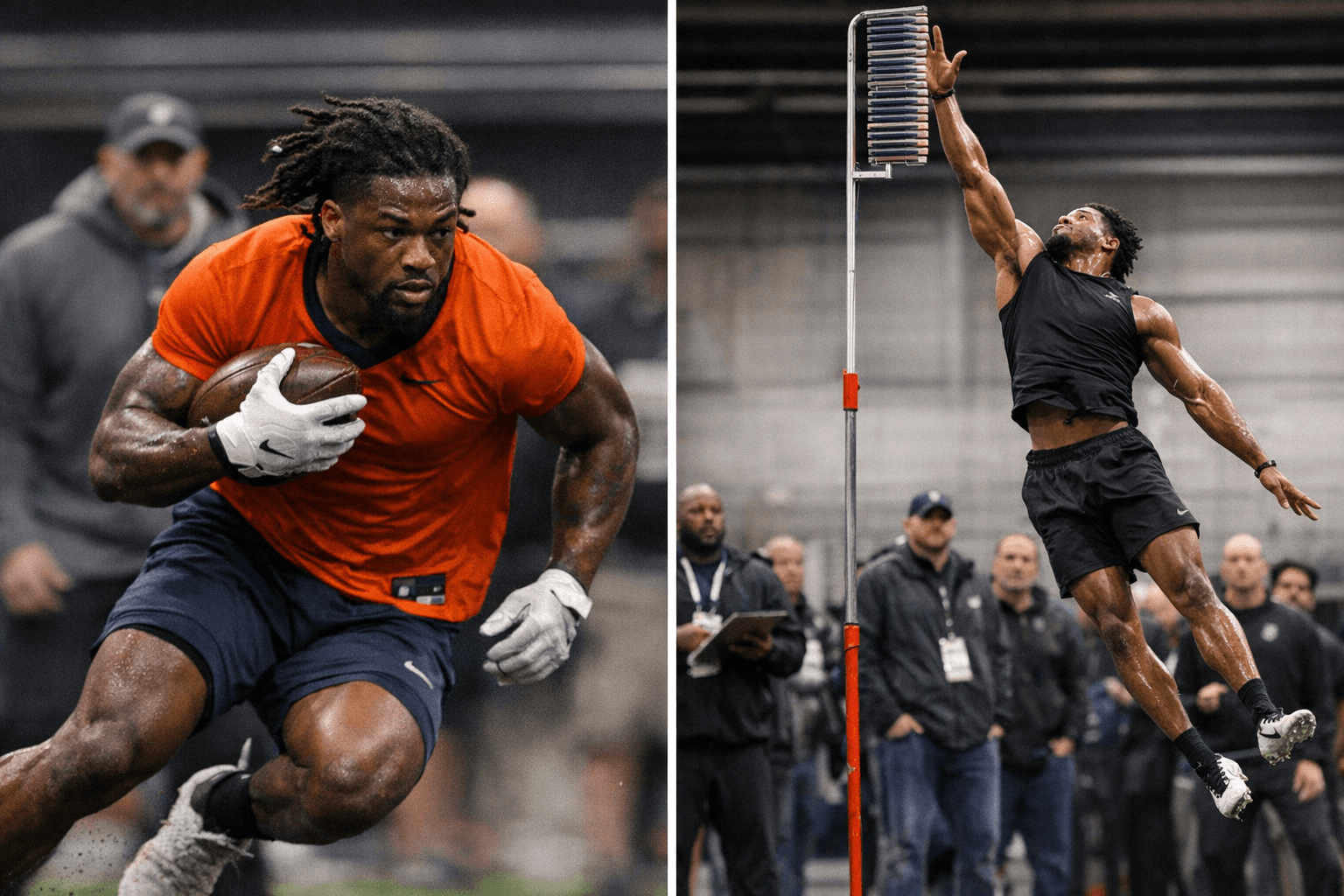
The Combine sets the floor, but it does not end the debate for FCS prospects. At the HBCU Showcase and International Player Pathway Pro Day at the Washington Commanders’ practice facility in Ashburn, Virginia, draft-eligible players spent three days putting numbers on traits that scouts sometimes question until they see them in person. That is the real leverage point for players from Morgan State, Wofford, Dartmouth, Illinois State and Rhode Island: one measured workout can move them from background name to draftable conversation.
The list of standouts mattered because it was not built on flash alone. Each player had to answer a different scouting question, whether that meant linebacker range, safety explosiveness, interior-line quickness, receiver production or the kind of All-America résumé that tells teams the tape already supports the hype. In a spring cycle where small-school prospects are constantly asked to prove they belong in the same sentence as bigger-program athletes, the right number can change the entire tone of a meeting room.
Erick Hunter gave scouts the full linebacker profile
Morgan State linebacker Erick Hunter produced the most complete workout of the group, and the details mattered at every stop. He timed between 4.48 and 4.50 in the forty, posted a 1.58 10-yard split, added a 2.66 split, ran a 4.21 short shuttle, hit 37 inches in the vertical, jumped 10 feet 10 inches in the broad, bench pressed 16 reps and finished the three-cone in 7.40.
For a linebacker, that is not just a good day, it is a direct answer to the skepticism that follows small-school defenders into the spring. The 1.58 split tells scouts about the first step, the 4.21 shuttle and 7.40 cone speak to direction changes, and the 37-inch vertical plus 10-10 broad show enough lower-body explosion to project range and closing ability. Hunter did not merely show athleticism; he showed the kind of movement profile that makes his 298 career tackles at Morgan State harder to dismiss as a product of competition level alone.
That production already had weight. Morgan State said Hunter finished second on the program’s all-time tackles list, and that context matters because scouts are not grading him on a workout in isolation. The testing simply gives teams a better way to connect the dots between a long track record of stops and the ability to translate that production to the NFL level.
Maximus Pulley answered the most important question with burst, not hype
Wofford safety Maximus Pulley also left a strong impression because his numbers backed up the idea that he can drive a draft conversation, not just enter one. His reported workout included a 4.45 to 4.52 forty, a 1.52 10-yard split, a 38.5-inch vertical, a 10-foot-3 broad jump, 16 bench reps and a 7.27 three-cone. A Raiders-focused report also said he drew NFL meeting interest and ran in the high 4.4s, while initially misstating his vertical at 41.5 inches before correcting it to 38.5.
That correction matters because the exact number is still strong enough to validate the underlying point. A 38.5-inch vertical is an explosive mark for a safety, and paired with a 1.52 split it gives evaluators a cleaner read on acceleration than a broad, inflated label like “athletic.” The 10-3 broad and 7.27 cone add to the picture, showing a player who can pop, redirect and stay relevant in drills that more closely mirror how defensive backs actually win on Sundays.
Delby Lemieux’s quickness changed how the interior label looks
Dartmouth interior lineman Delby Lemieux used his pro day to strengthen a different kind of case. He ran a 5.02 forty, posted a 4.69 shuttle, jumped 26 inches in the vertical, reached 8 feet 6 inches in the broad and put up 25 bench reps. For an interior player, the forty is part of the story, but the shuttle and bench are where the projection starts to sharpen.
That is why Lemieux’s day matters more than a generic “good athlete” tag. Twenty-five bench reps tell teams he has the functional upper-body strength to survive inside, while the 4.69 shuttle shows the ability to redirect in short space, which is far more relevant to guard and center play than straight-line speed. Dartmouth’s pro day also sat inside a broader New England workout circuit that included Boston College’s Lewis Bond, Logan Taylor, Jude Bowry and Jeremiah Franklin, and that regional context helped explain why a school like Dartmouth still drew meaningful scout attention in March and April.
Sobkowicz kept production at the center of his draft case
Illinois State wide receiver Daniel Sobkowicz did not need a mythical workout to stay in the conversation because his body of work already reads like a draft argument. He entered the spring sixth in Redbirds history in career receiving yards with 2,418 and tied for fourth in career receiving touchdowns with 22. His 2025 season was even louder: 83 catches, 1,141 yards and 19 touchdowns.
Those numbers matter because they tell scouts what kind of receiver they are evaluating before the stopwatch ever gets involved. A player who posts 19 touchdowns in a season is not just accumulating volume, he is repeatedly finishing drives, winning in scoring areas and proving he can carry an offense against focused coverage. Sobkowicz’s pro day served as the capstone to a résumé built on consistency and production, the kind that forces NFL evaluators to separate measurable questions from actual football value.
A.J. Pena brought the kind of résumé that travels
Rhode Island linebacker A.J. Pena entered the spring with a profile that already belonged on draft boards. He was a 2024 Associated Press First Team All-American, a 2024 Stats Perform First Team All-American and a 2024 Buck Buchanan Award finalist, and Rhode Island noted that Pena and Marquis Buchanan gave the Rams multiple AP First Team All-Americans for the first time since 1985.
That combination of honors is the number scouts cannot ignore. For Pena, the conversation is not whether he dominated at the FCS level, it is how his proven production and recognition translate against NFL competition. In a draft process that often overweights size, conference label or school branding, awards like those are the evidence that the player already forced the national conversation to bend his way.
Why these workouts matter now
The larger lesson from this pro day circuit is simple: FCS prospects still have a path to change their draft slot after the Combine has given teams an early baseline. Hunter’s tackling pedigree, Pulley’s corrected explosiveness, Lemieux’s interior quickness, Sobkowicz’s production and Pena’s All-America résumé all show how one specific metric or credential can reset the room.
That is the value of this stage in the spring. It is not about broad athletic hype or generic upside. It is about giving scouts one more hard number, one more drill, one more verified proof point that can move a player from overlooked to seriously considered before the 2026 draft board locks in.
This article was produced by Prism’s automated news system from verified source data, official records, and press releases, then run through automated quality and moderation checks before publishing. The system is built and supervised by the people who set the standards it runs under. Read our full AI policy.
Did this article answer your question?