FCS prospects eye Day 2, Day 3 breakthrough in 2026 NFL Draft
The FCS class lacked first-round noise, but it had real middle-round value. Bryce Lance, Charles Demmings and Kaleb Proctor were the names that could move the board.
Day 2 and Day 3 were the real test
The FCS question was never whether this class would flood the first night. It was which players could survive the squeeze and turn into real Day 2 and Day 3 names, because that is where the subdivision had its best shot to matter in Pittsburgh.
That framed the entire 2026 NFL Draft, held April 23-25 in Pittsburgh, Pennsylvania. Sports Illustrated pegged the class at roughly 10 FCS prospects with potential draft value, and only three of them made the Panini Senior Bowl stage. For a subdivision that is often judged by volume as much as headline power, that was the first clue that the 2026 group would be defined by timing, fit and patience more than by first-round hype.
The names that carried the board
Bryce Lance
North Dakota State wide receiver Bryce Lance was the cleanest watch point because he offered something NFL teams always make room for: speed with size. NFL.com listed him at 6-foot-3 3/8 and 204 pounds, with a 4.34-second 40-yard dash and a 41.5-inch vertical jump, a combination that made him look like a true vertical outside receiver rather than a specialty depth piece.
That athletic profile matched the way he was discussed before the draft. Lance had first-round family pedigree, enough explosiveness to interest teams looking for a field stretcher, and a draft prospect grade of 6.17 from NFL.com, which labeled him a “good backup with the potential to develop into starter.” The New Orleans Saints eventually took him at No. 136 overall, a reminder that in this class, the payoff was more likely to come in the fourth and fifth rounds than in any early splash.
Charles Demmings
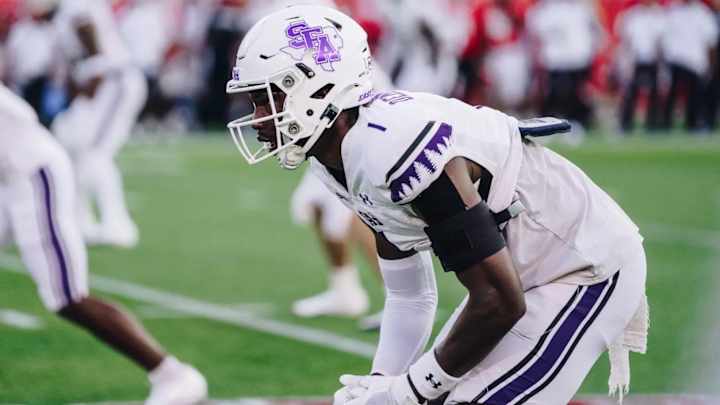
Stephen F. Austin cornerback Charles Demmings was the kind of player who could climb during the pre-draft process without needing a viral testing performance. His appeal came from length, movement skills and the look of a long, athletic cover corner, traits that tend to matter most when teams start hunting for depth and scheme fit after the premium rounds are gone.
His stock was said to have risen through a strong pre-draft process, and that mattered because the FCS cornerback path is often about convincing a team that the frame and foot speed will hold up against better receivers. Demmings fit the profile of a player whose best case was not built on buzz but on a general manager or defensive back coach seeing a role, then seeing it clearly enough to spend a pick on it.
Kaleb Proctor
Southeastern Louisiana defensive tackle Kaleb Proctor became the class’s first major answer, and NCAA.com identified him as the first FCS player selected in the 2026 NFL Draft when he went No. 104 overall. That made him the subdivision’s first name off the board and a clean marker for how NFL clubs were valuing interior disruption in this class.
Proctor’s appeal came from the combination of athleticism and tape. He was framed as an interior penetrator, the kind of defensive tackle who can disrupt a pocket rather than simply occupy space, and that is a trait that travels well when teams are looking for rotational help inside. For the Southland Conference, his rise mattered because it showed that one strong interior defender could still force his way into the fourth round even in a thin FCS year.
Cole Payton
Cole Payton was the most polarizing player in the class, and that alone made him a useful draft-night barometer. Opinion on him stretched from Day 2 all the way to the tail end of Day 3, which is exactly the kind of range that tells you a player’s future may depend as much on team fit and positional value as on any consensus ranking.
That kind of split usually means the league sees a player with enough traits to matter, but not enough agreement on how to use them. Payton eventually heard his name called, which lined up with the broader sense that this FCS class would not be sorted by a single clean tier; it would be sorted by which teams were willing to gamble on upside once the board started thinning out.
What a strong FCS showing really looked like
For this subdivision, a strong draft did not mean multiple early picks. It meant getting names into the middle rounds and proving that NFL teams still trusted FCS players to step into real roles, even in a class that was described as unusually thin by FCS standards.
The final totals showed that clearly. NCAA.com said four FCS players were selected in the 2026 NFL Draft, while HERO Sports pointed out that 15 FCS players were taken in 2025. That drop-off tells the story better than any abstract debate about depth: the 2026 group had fewer players with draftable grades, fewer Senior Bowl invitations, and fewer true Day 2 cases, so every pick carried more weight.
Bryce Lance at No. 136 and Kaleb Proctor at No. 104 showed the path forward. Proctor arrived first and Lance followed in the middle rounds, which reinforced the central idea of the class: the subdivision’s value was not in first-night theater, but in making teams wait until the board had already started to settle before they were willing to spend.
That is why the draft guide centered on ceiling outcomes by team fit instead of on a simple ranking. With only about 10 prospects carrying real draft value and just three FCS players getting Senior Bowl exposure, every athletic trait, every role projection and every scheme match had a chance to move a player several rounds. In a year like this, the FCS win was not volume for volume’s sake; it was forcing NFL decision-makers to keep calling back when the picks got cheaper and the board got thinner.
The 2026 draft confirmed that pattern. The FCS class did not own Thursday night, but it did claim the middle of the board, where teams are still hunting for traits, value and developmental starters. That is where this subdivision made its case, and that is where the names from North Dakota State, Stephen F. Austin and Southeastern Louisiana finally turned into picks.
This article was produced by Prism’s automated news system from verified source data, official records, and press releases, then run through automated quality and moderation checks before publishing. The system is built and supervised by the people who set the standards it runs under. Read our full AI policy.
Did this article answer your question?