FCS vs. FBS Matchups Bring Money, Recruiting Boosts, and Upset Potential
FCS football is Division I, just like FBS — the difference is scale, not skill, and those cross-division matchups carry real stakes for money, recruiting, and upsets.
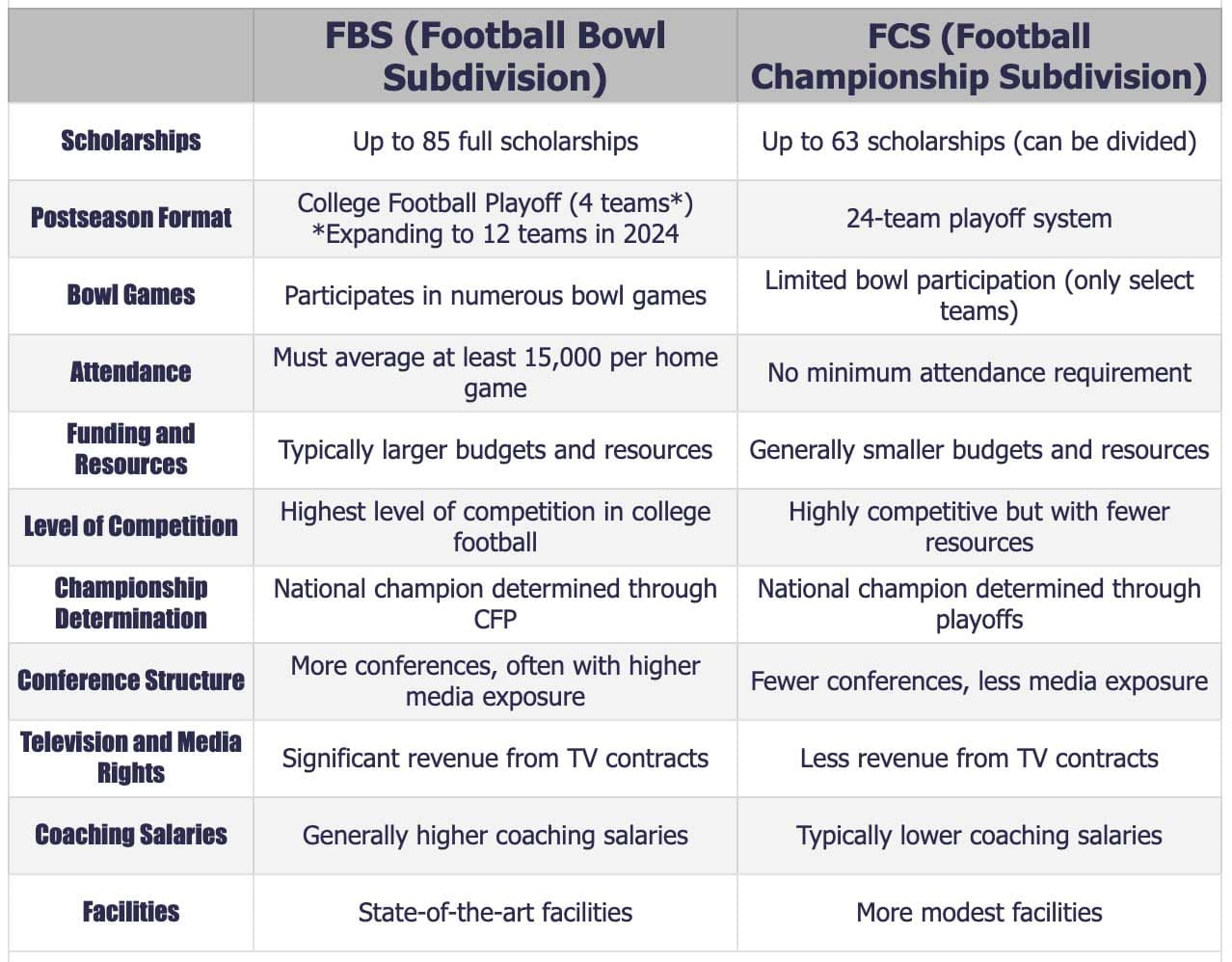
FCS stands for Football Championship Subdivision, and these programs offer something FBS doesn't: a true playoff system to determine the champion." That single structural distinction — a genuine, bracket-style path to a national title rather than a committee of polls and prestige — shapes everything about how these programs recruit, spend, and compete when they line up against their FBS counterparts.
Don't let the name fool you. FCS football is still Division I, the same as FBS. The players are talented, the games are competitive, and the passion runs deep. The main difference is scale, not skill. That framing matters when you're trying to understand why FCS-versus-FBS matchups carry weight far beyond the final score.
What Separates FCS from FBS
The divisions share the same NCAA football rulebook. Overtime rules, clock management, and gameplay are identical. Whether watching Alabama or North Dakota State, you're seeing the same sport played at an elite level. What differs is the infrastructure around that sport: budget size, stadium capacity, and the machinery used to crown a champion.
FBS programs decide their playoff field through the AP Poll, the Coaches Poll, and CFP rankings, a system that rewards brand recognition and strength of schedule as interpreted by voters and a selection committee. FCS takes a different approach: it uses polls combined with a playoff committee that explicitly weighs titles and strength of schedule, feeding into a bracket where every team has a genuine shot. The result is that every FCS program enters the season with a clear path to a national championship through winning playoff games. No amount of poll politics changes that.
On the facilities side, FCS schools typically run smaller stadiums, ranging from 10,000 to 30,000 seats, and operate on more modest budgets. What they might lack in size, they make up for in competitive balance and exciting playoff action.
The Programs That Defined the Level
Schools like North Dakota State, South Dakota State, Montana, and James Madison have dominated FCS football. These programs have built identities around winning at the highest level their subdivision offers, and they have done it with rosters that often include players who could have fought for time at FBS programs but chose a different trajectory. That choice speaks directly to the recruiting calculus that makes FCS-versus-FBS matchups more than just a novelty scheduling decision.
What the Matchup Means for Recruiting
The recruiting angle is where these cross-division games carry their longest-lasting consequences. For a prospect weighing an FBS offer against an FCS scholarship, the pitch breaks down along a few clear lines.
At the FBS level, a player gets more national exposure and NFL visibility, elite facilities, and a program operating at the sport's highest commercial scale. The tradeoff is a tough fight for playing time, especially at programs loaded with five-star talent at every position.
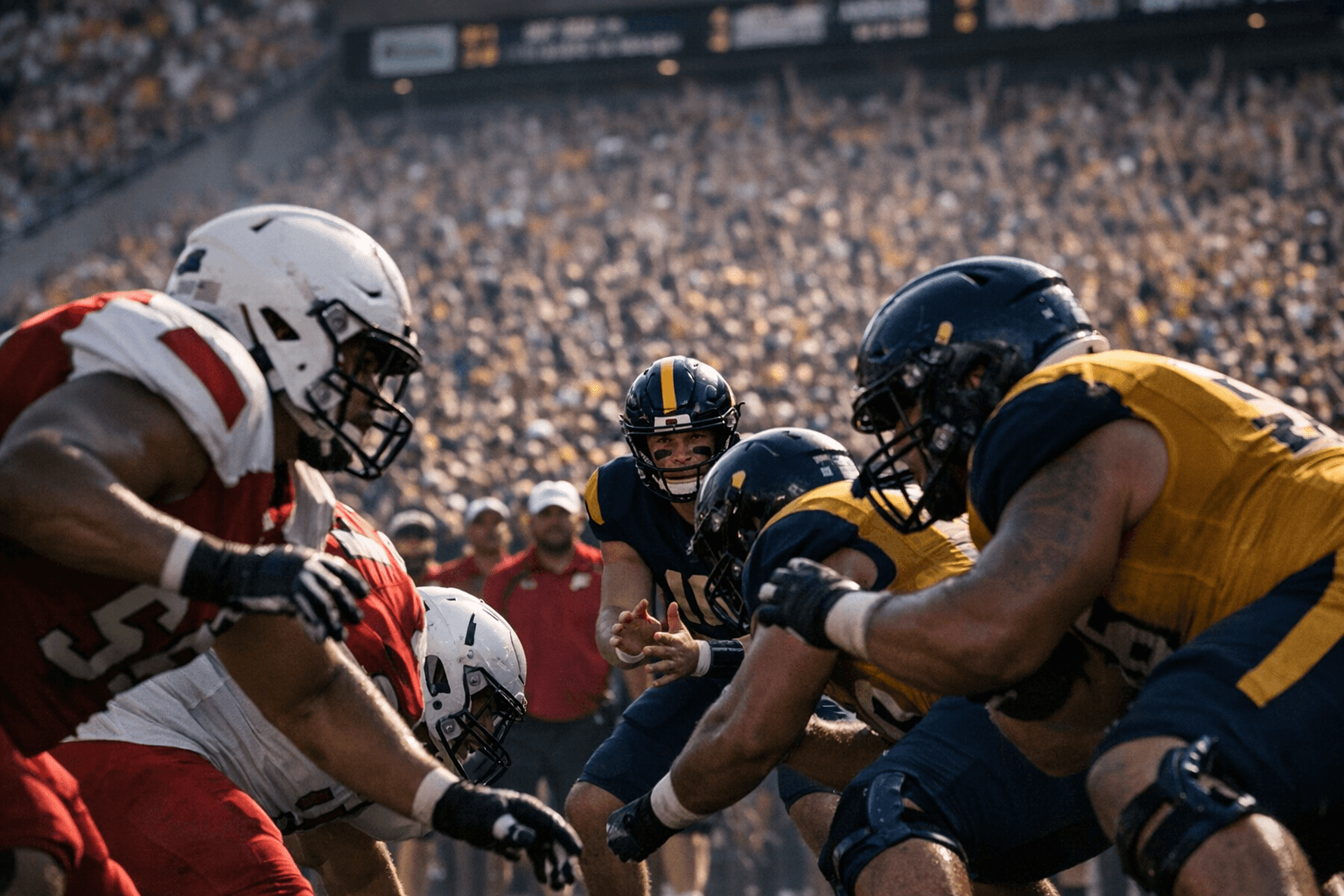
At the FCS level, players often see the field sooner. Scholarships tend to be more flexible in their structure. And critically, there is that true playoff path to a national title, a tangible competitive goal that FBS players in certain conferences will never experience through a bracket. When a North Dakota State or James Madison squares off against an FBS opponent in a season-opener, the FCS program is effectively running a live audition. A competitive showing, or an outright upset, validates every recruiting pitch the coaching staff made in living rooms across the country.
The Financial Logic of Scheduling Across Divisions
FBS programs schedule FCS opponents in part because the financial structure makes it worthwhile for both sides. FCS programs collect significant guarantee fees for traveling to play at major FBS venues, money that can represent a meaningful portion of an athletic department's operating budget. For the FBS program, the scheduling logic involves managing the nonconference slate, protecting the win column early in the season, and filling a home date that generates ticket revenue and gameday spending.
The tension in that arrangement is real. FCS programs are taking the field against opponents with larger rosters, bigger facilities, and deeper recruiting pipelines. But the competitive gap is narrower than the stadium capacity difference suggests, and the occasional upset reshuffles the math for everyone involved.
What Fans Experience on Both Sides
The game-day experience diverges sharply depending on which side of the subdivision line you are standing on. FBS offers huge crowds, loud atmospheres, massive tailgates, and games with national stakes. The spectacle is part of the product.
FCS delivers something different: cheaper tickets, smaller and more intimate venues, a closer feel between the fan base and the team, and high-drama playoff games with frequent upsets. The playoff format alone produces the kind of single-elimination tension that the FBS regular season rarely matches. When the bracket tightens in December, FCS fans are watching games where the wrong result ends the season entirely, which raises the emotional stakes in ways that a bowl game invitation simply does not replicate.
Upset Potential and Why It Matters Beyond the Scoreboard
The possibility of an FCS program knocking off an FBS opponent is not a hypothetical footnote. It is a structural feature of how these cross-division games work. FCS programs that have built sustained winning cultures, the kind of programs that have dominated their own playoff field year after year, arrive at those matchups conditioned to compete in high-pressure games. The FBS program, often treating the game as a warmup, can find itself facing a team that has been preparing for exactly this moment.
When an upset happens, the financial and recruiting ripple effects travel in both directions. The FCS program's phones ring with prospect inquiries. The coaching staff's credibility spikes. The program can point to that result for years as evidence that the talent and preparation are real. For the FBS program on the wrong end of the scoreboard, the loss raises questions about program culture, player preparation, and whether the guarantee-game model is worth the risk.
The same NCAA rulebook governs both teams on that field. The same overtime rules apply. The same clock management principles are in play. Which means when an FCS program wins, there is no asterisk available. The scale was different; the skill level was close enough that the result speaks for itself.
This article was produced by Prism’s automated news system from verified source data, official records, and press releases, then run through automated quality and moderation checks before publishing. The system is built and supervised by the people who set the standards it runs under. Read our full AI policy.
Did this article answer your question?