HBCUs Lead All-Time NFL Draft Production Among Historic FCS Programs
Jackson State leads all FCS programs in all-time NFL Draft picks; HBCUs have produced just 5 draftees in the 2020s, a gap the 2026 class is now aiming to close.
Shedeur Sanders and Travis Hunter were the two loudest names in the 2025 NFL Draft, selected first and second overall by the Cleveland Browns and Jacksonville Jaguars respectively. Both came up at Jackson State. Both were drafted from Colorado. That transfer-portal detour is the sharpest symbol of the tension running through the all-time FCS NFL Draft pipeline rankings published by Opta Analyst: the schools that built the most durable professional football roads in subdivision history are the same ones struggling most visibly to keep elite talent through draft day in the transfer-portal era.
Since Division I split into the FCS (then called Division I-AA) and FBS in 1978, the four programs with the highest all-time totals of NFL Draft selections during their FCS-era runs are all HBCUs. Eight of the top 15 are HBCUs. The full top-16 list, ranked by total FCS-era draftees, reveals which schools built the most reliable pipelines to the NFL and why those pipelines took the shapes they did.
1. Jackson State
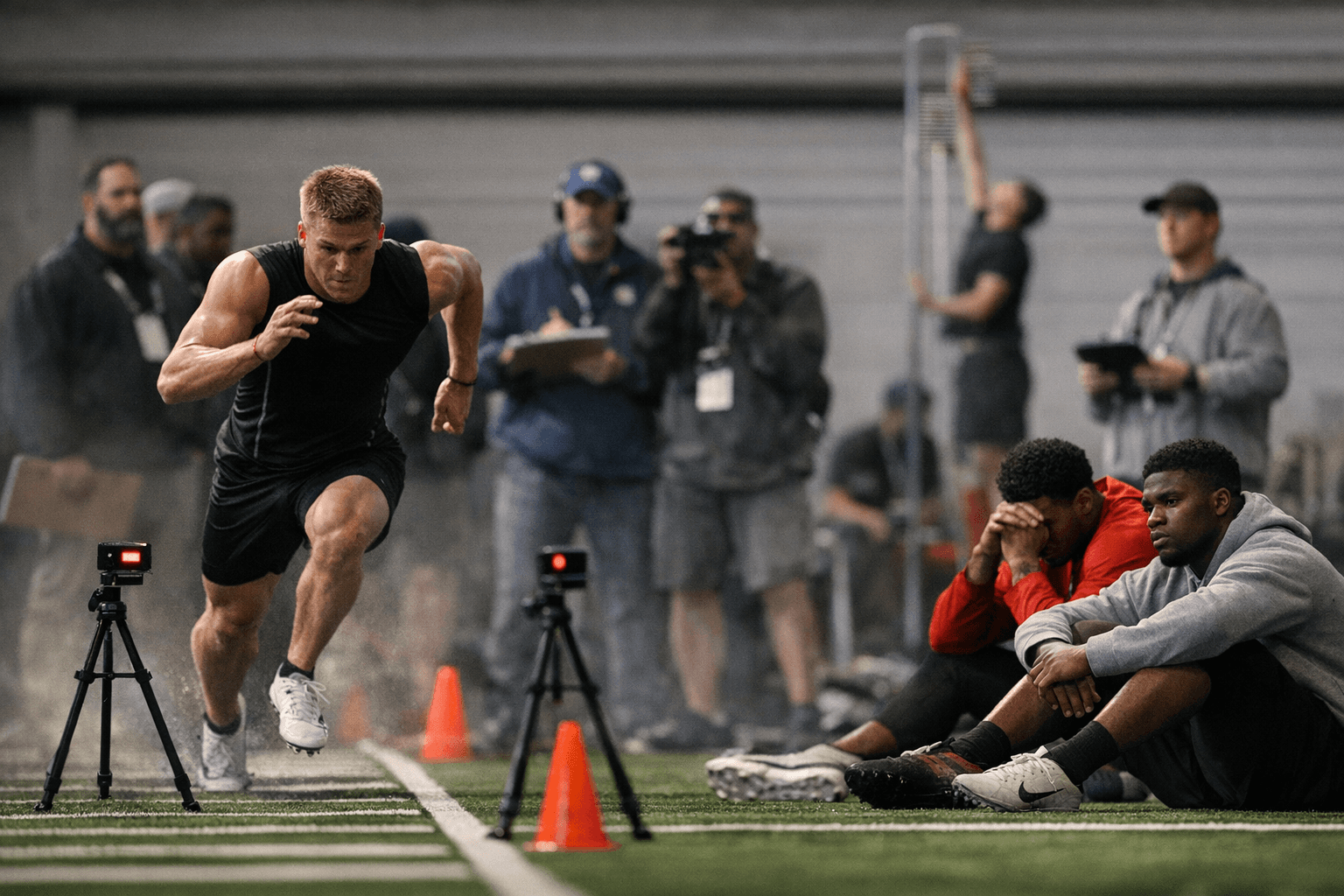
Jackson State leads every FCS program in all-time NFL Draft picks during its FCS-era run. The pipeline stretches from defensive tackle Robert Hardy, taken by the Seattle Seahawks in the 10th round of the 1979 draft, through cornerback Isaiah Bolden, selected by the New England Patriots in the seventh round in 2023, with three first-round selections in between. The Tigers also count Walter Payton, Jackie Slater, Robert Brazile, and Lem Barney among their Pro Football Hall of Fame alumni, a concentration of talent that reflects decades of aggressive recruiting across the South and a defensive back and skill-position factory that NFL scouts have returned to consistently for nearly 50 years. In 2026, edge rusher Quincy Ivory represents the school's best shot at continuing the streak. Ivory ran his 40 at Jackson State's pro day in March and drew interest from all 32 clubs at the NFL's inaugural HBCU Showcase at the Washington Commanders' facility in Ashburn, Virginia. Scouts will watch his first-step quickness and pass-rush repertoire when fall camp opens.
2. Grambling State
Grambling State's 36 FCS-era draft picks place it second all-time, a total built on one of the most storied coaching legacies in college football history. The Tigers' pipeline to the NFL dates back to the early Division I-AA era, with offensive guard Petey Perot going to the Philadelphia Eagles in the second round of the 1980 draft. Grambling's production reflects decades of NFL-caliber position coaching along the offensive and defensive lines, with four Pro Football Hall of Famers from its all-time roster: Willie Davis, Willie Brown, Buck Buchanan, and Charlie Joiner. The most recent FCS-era draftee, defensive tackle Deon Simon, went to the New York Jets in 2015. For 2026, defensive linemen Bryce Cage and Warren Robinson both participated in the HBCU Legacy Bowl and the NFL's HBCU Showcase, giving scouts a direct measurables read on what Grambling's current front-four pipeline looks like.
3. South Carolina State
South Carolina State's 33 FCS-era picks are tied for third all-time and underscore a program with one of the strongest defensive back and linebacker pipelines at the subdivision level. The Bulldogs' first FCS-era draftee was defensive back George Floyd, taken by the New York Jets in the fourth round in 1982; the most recent was offensive tackle Josiah Ezirim, selected by the New Orleans Saints in the seventh round of the 2024 draft. More recent alumni, including defensive tackle Javon Hargrave (now a 49ers starter) and linebacker Shaquille Leonard (a three-time All-Pro with Indianapolis), illustrate the caliber of NFL contributor SC State has produced in the modern era. In 2026, quarterback William Atkins, wide receiver Jordan Smith, defensive lineman Michael Lunz, and defensive back Jarod Washington all attended the HBCU Showcase. Washington's coverage ability and Smith's contested-catch production will be the primary evaluation benchmarks this fall.
4. Tennessee State
Tennessee State's 33 FCS-era picks are tied with South Carolina State for third on the all-time list, a total powered by a remarkable concentration of top-end talent in the program's earlier decades. Center Guy Bingham, Tennessee State's first FCS-era draftee, was taken by the New York Jets in the 10th round in 1980; wide receiver and returner Junior Bergen, selected by the San Francisco 49ers in the seventh round of the 2024 draft, was the most recent. The historical peak of TSU's production includes Hall of Famers Richard Dent and Claude Humphrey along with Too Tall Jones, who was the first overall pick in the 1974 draft before the FCS era but whose draft legacy defined what the school could produce. Linebacker James Stewart, who participated in the 2026 HBCU Showcase, brings TSU's edge-setting tradition forward. His versatility between hand-down and stand-up linebacker alignments will draw attention from coordinators running hybrid fronts.
5. Southern University
Southern University's 26 FCS-era picks have come steadily from both lines, with a particular emphasis on interior offensive and defensive linemen who fit the physical profile NFL teams have historically valued from SWAC programs. Defensive tackle Ken Times, Southern's first FCS-era draftee, was taken by the San Francisco 49ers in the fifth round of the 1980 draft; offensive guard Ja'Tyre Carter, selected by the Chicago Bears in the seventh round in 2022, was the most recent. For 2026, defensive end Ckelby Givens brings Southern back into the draft conversation. Givens has drawn comparisons to previous SWAC edge prospects and will need to post strong measurables this fall to move from priority free-agent status to a draftable grade.
6. Eastern Kentucky
The most surprising entry in the top 10 is Eastern Kentucky, a non-HBCU program from Appalachian Kentucky that sits tied with Southern at 26 FCS-era picks for sixth all-time. Eastern Kentucky's production was built almost entirely on a championship dynasty: the Colonels won multiple Division I-AA titles during the 1980s and routinely sent skill players and linemen to the NFL during that peak window, establishing the program as one of the subdivision's first recognized professional pipelines. Eastern Kentucky's presence this high on an otherwise HBCU-dominated list is the clearest evidence that coaching scheme and era-specific success matter as much as recruiting tradition in building NFL draft volume. The Colonels have not reached those heights since, but their historical footprint remains intact.
7. Florida A&M
Florida A&M's 21 FCS-era draft picks represent the MEAC's strongest historical contribution to the NFL, spread across four decades. Defensive back Thomas Lane, taken by the Minnesota Vikings in the 12th round of the 1980 draft, was the Rattlers' first FCS-era pick; linebacker Brandon Hepburn, selected by the Detroit Lions in the seventh round in 2013, was the most recent. FAMU's pipeline has historically leaned toward defensive backs and skill positions, a reflection of its emphasis on speed-based recruiting in Florida. In 2026, offensive tackles Charles Davis and Ashton Grable both appeared at the HBCU Showcase, giving the Rattlers a chance to revive their draft production through a position that NFL teams are constantly sourcing from smaller schools.
8. North Dakota State
North Dakota State does not crack the all-time top 10 in total FCS-era picks by count alone but is unquestionably the most productive FCS program of the modern era. The Bison, who joined the FCS subdivision in 2004, have produced 12 picks in the last 11 drafts heading into the 2026 cycle, including four consecutive starting quarterbacks: Carson Wentz (2013-15), Easton Stick (2016-18), Trey Lance (2019-21), and Cam Miller (2021-24). Their offensive line pipeline since 2014 has been the most consistent at the subdivision level. NDSU proves that coaching continuity, pro-style scheme installation, and deep NFL relationships built over a relatively short window can generate a modern pipeline that rivals schools with four decades of head starts.
9. Alcorn State
Alcorn State's 17 FCS-era picks, tied with Chattanooga for 13th all-time, reflect a program with consistent but narrow NFL output across four decades. Defensive end Leroy Howell, taken by the Buffalo Bills in the ninth round of the 1984 draft, was the Braves' first FCS-era pick; defensive back Demetrius McCray, selected by the Jacksonville Jaguars in the seventh round in 2013, was the most recent. Alcorn State has historically produced defensive backs and edge players, fitting the pattern of SWAC programs that develop athleticism-first prospects. Linebacker Stemarion Edwards and running back Jacorian Sewell both participated in the 2026 HBCU Showcase, continuing the program's tradition of getting players in front of all 32 clubs at key evaluation events.
The broader shift documented by Opta Analyst is significant: the modern FCS era has produced more measurable, pro-day-tested prospects with wider scouting footprints than any previous generation. With zero HBCU players selected in the 2024 draft and just one in 2025, Alabama A&M offensive tackle Carson Vinson taken by the Baltimore Ravens in the fifth round, the 2026 class carries genuine weight. The 47 HBCU prospects who participated in the NFL's inaugural HBCU Showcase this March represented programs across every major HBCU conference, and the schools sitting atop Opta's all-time list supplied some of the most watched prospects on the field. Individual performance in fall 2026 will determine whether the historical pipeline reasserts itself in April, but the infrastructure to get scouts in front of HBCU talent has never been stronger.
Know something we missed? Have a correction or additional information?
Submit a Tip