Herder maps 2026 FCS realignment, 128 teams across 13 conferences
The FCS now spreads 128 teams across 13 conferences, and the biggest winners are the leagues that gained size, balance, and scheduling leverage.
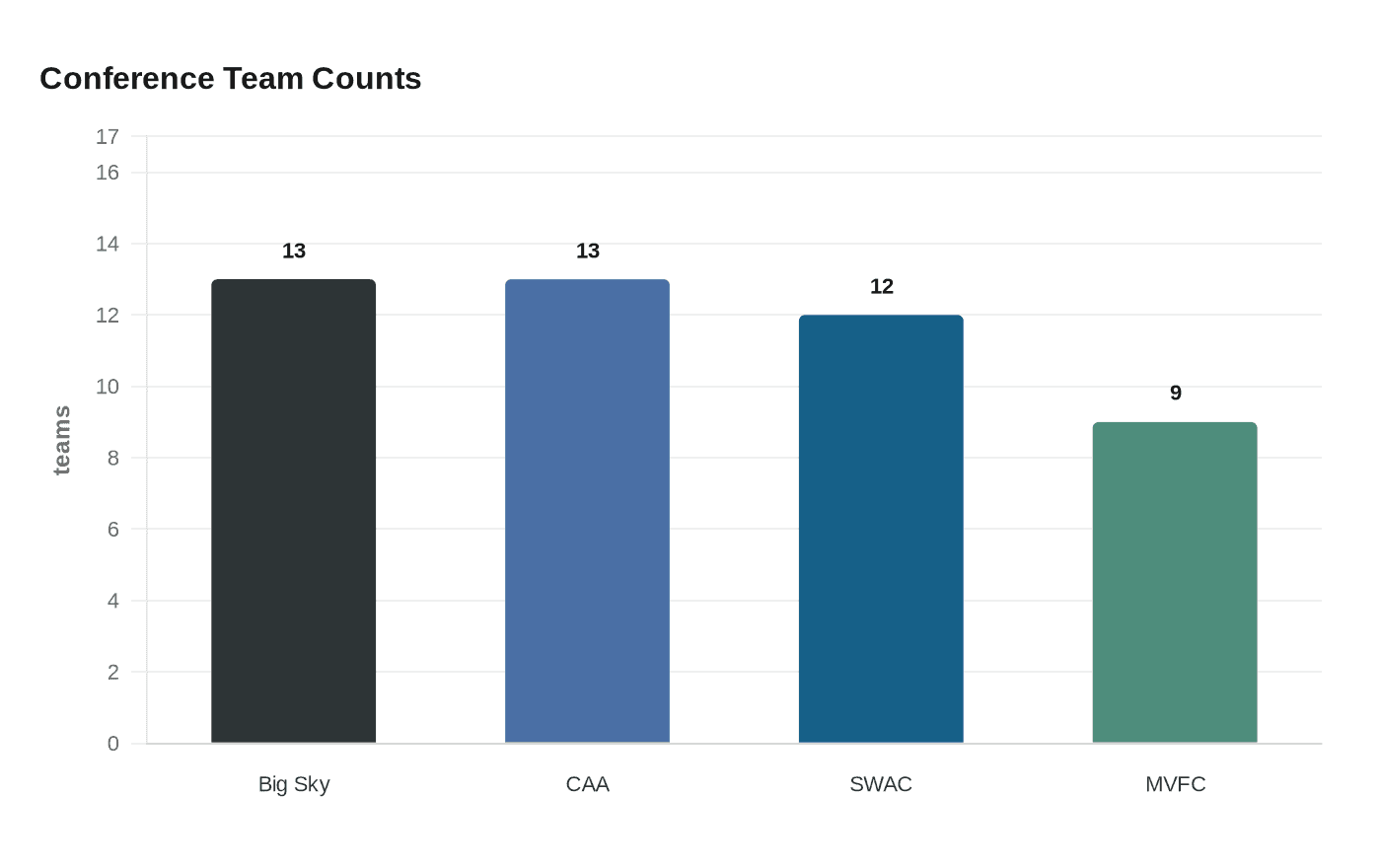
128 teams, 13 conferences, and a reshuffled power map
Herder’s 2026 snapshot puts the FCS at 128 teams across 13 conferences, plus two independents, and that simple number hides the real story: the league structure has become a competitive map of winners and pressure points. The Big Sky and Coastal Athletic Association each sit at 13 teams, the Southwestern Athletic Conference is at 12, and the Missouri Valley Football Conference has been trimmed to nine, which changes everything from scheduling rhythm to playoff positioning.
This is not just a membership update. It is a landscape shift that affects how teams survive the grind, how often contenders are tested, and how much national attention each conference can command. With the 2026 season set to open on August 27, 2026 and run through January 4, 2027, the shape of the race is already being defined by the size and stability of the leagues around it.
The biggest moves are changing the sport’s center of gravity
The most consequential realignment move is North Dakota State leaving the MVFC for the Mountain West as a football-only member beginning July 1, 2026. That is a stunning change for a program that helped define modern FCS dominance, and it creates an immediate ripple effect in both the FCS and FBS spaces. The Bison’s departure removes a national standard-bearer from the MVFC, while also raising the stakes for how the remaining league members replace that weekly measuring stick.
Sacramento State is making a similar football-only jump, joining the Mid-American Conference on July 1, 2026. That move lifts the Hornets into a new platform and further underscores how FCS success can function as a launchpad rather than a destination. When a program like Sacramento State reaches for a higher-profile football home, it validates the ascent path for other ambitious schools trying to turn regional relevance into broader recognition.
West Florida adds another layer of fluidity by entering the United Athletic Conference as a football-playing affiliate. A Division II program moving into FCS football is a structural reminder that the subdivision is still a place where programs can climb, not merely circulate. For the UAC, that matters because affiliate additions change not only the numbers, but also the competitive texture of a conference trying to establish its own identity.
Why size matters: scheduling, balance, and playoff leverage
The clearest structural advantage in 2026 belongs to the conferences that can protect schedule integrity while still delivering enough high-end games to matter nationally. The Big Sky and CAA, each at 13 teams, can absorb change without losing their footprint, and that scale gives them more flexibility in scheduling and more chances to produce ranked matchups. In a season where national perception often tracks strong conference records, that depth matters.
The SWAC at 12 teams also gains from scale, particularly because a large membership allows it to maintain conference visibility across a wide geographic and cultural footprint. Bigger leagues can create more inventory for fans, broadcasters, and playoff arguments. They also reduce the risk that one departure or one injury-riddled season will distort the entire conference race.
The MVFC, by contrast, faces a different reality at nine teams. Smaller does not automatically mean weaker, but it does mean tighter margins, fewer conference games to separate contenders, and less room to absorb roster variance. The league’s response was immediate: it revised the 2026 schedule so every remaining team plays all eight conference opponents, a true round-robin that restores competitive clarity after NDSU’s exit.
The MVFC’s round robin becomes the league’s most important answer
That full round-robin schedule is the MVFC’s clearest attempt to protect legitimacy in a season of transition. Every school will face the same eight-league slate, which removes the unevenness that can creep into larger or more fragmented conference schedules. For a conference that has long been judged by its top-to-bottom strength, that consistency matters almost as much as the results themselves.
It also changes how playoff résumés will be built. When every team plays the same opponents, head-to-head results and common comparisons become cleaner, and that should sharpen the conference title race. In a post-NDSU world, the MVFC’s national credibility will depend on whether the rest of the league can turn structural neatness into elite performance.
Patriot League and Big Sky gain real membership depth
The Patriot League is moving to 10 football members in 2026 after adding Villanova and William & Mary, joining Richmond, which had already moved earlier. That expansion gives the league more scheduling balance and more room to present a stable, coherent identity in a crowded FCS field. A 10-team football footprint also makes the league more resilient if future changes hit the broader Division I landscape.
The Big Sky, meanwhile, adds Southern Utah and Utah Tech as full members effective July 1, 2026. That move matters far beyond simple headcount. It strengthens a league already positioned as one of the FCS’s most visible brands, and it broadens the league’s competitive geography at a time when national relevance often follows footprint, consistency, and the ability to produce playoff-caliber teams across a long season.
The ripple effect reaches independents and the NEC
NCAA.com’s realignment tracker says eight of the 13 FCS conferences are affected by realignment, and that breadth explains why 2026 feels unusually unsettled. Saint Francis University will leave Division I for Division III after the 2025-26 academic year, removing another established name from the FCS map. Chicago State University is starting an FCS football program in 2026 and will begin as an independent, which adds one more wild card to a subdivision already absorbing major change.
The University of New Haven is another sign of the sport’s shifting geography. After joining Division I and the Northeast Conference in 2025, its football team will be more fully integrated into NEC scheduling, with West Haven, Connecticut, becoming part of the broader Division I conversation. For smaller programs, integration into a conference schedule can be as important as any headline move because it determines competitive stability, travel demands, and the visibility needed to build a fan base.
What to watch when the season opens
The opening weeks of the 2026 season will tell the truth about this realignment faster than any offseason projection can. The FCS begins on August 27, 2026, and the first month will reveal whether the Big Sky’s size translates into depth, whether the CAA can leverage its own 13-team profile, and whether the MVFC’s nine-team round robin produces a cleaner, tougher title chase. The playoff picture will not simply be about who won, but about which leagues managed change without losing their competitive edge.
That is the real lesson of Herder’s map. The 2026 FCS season is not just bigger or smaller in places. It is more stratified, more strategic, and more revealing about which conferences can turn realignment into advantage instead of disruption.
This article was produced by Prism’s automated news system from verified source data, official records, and press releases, then run through automated quality and moderation checks before publishing. The system is built and supervised by the people who set the standards it runs under. Read our full AI policy.
Did this article answer your question?