HERO Sports Updates FCS Draft Radar, Compiles 2026 NFL Prospect List
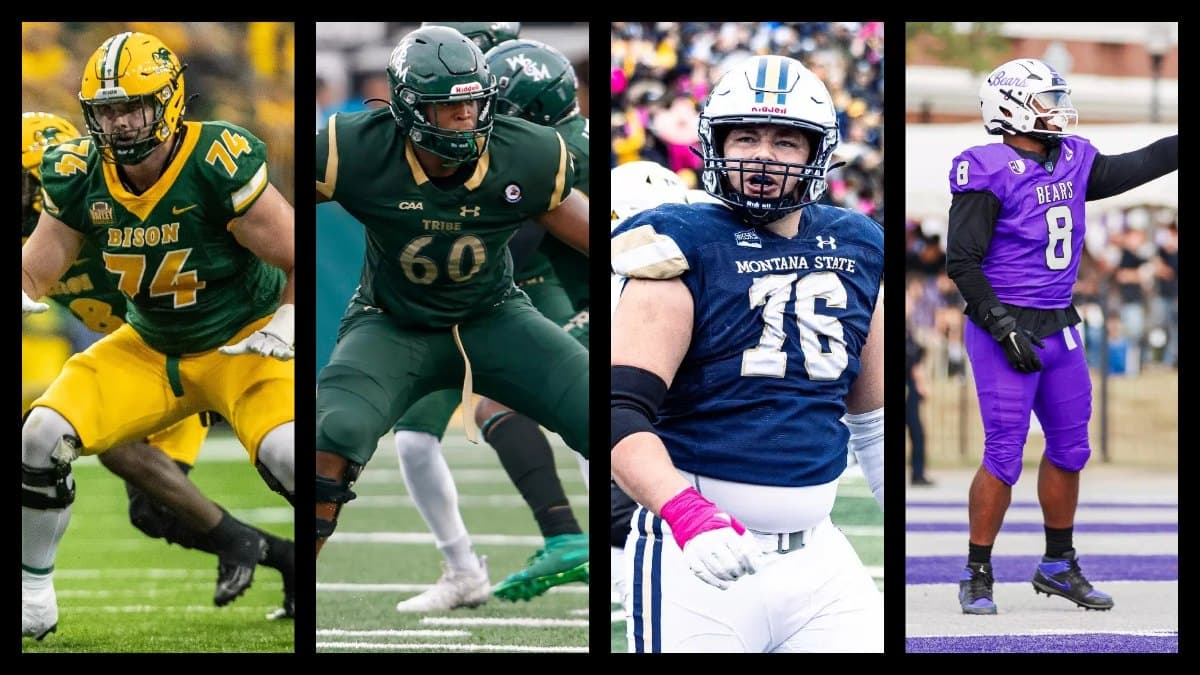
HERO Sports’ Feb. 19 update re-checks FCS names on NFL radars, compiling a working list that spotlights dozens of draftable FCS prospects and reshuffles scouting attention across mid‑majors.
1. why this HERO Sports update matters
HERO Sports’ evaluative roundup gives immediate, measurable lift to FCS visibility on the 2026 NFL Draft map, it “re-checks the FCS names currently on draft radars and compiles a working list of FCS players who project into the 2026 NFL Draft conversation.” That working-list framing (explicitly “not a final ranking”) converts scouting noise into a watchlist that agents, pro scouts and local programs can act on as pro days and spring practices approach; turning passive fans into active sharers is the next step, remember, 98.2% of readers only view without sharing, so this update offers the share-hooks scouts and superfans can use.
2. publication, purpose and data provenance
HERO Sports published an update on February 19, 2026 that, by its own wording, “re-checks the FCS names currently on draft radars and compiles a working list of FCS players who project into the 2026 NFL Draft conversation.” The piece is explicit that it is “an evaluative roundup, not a final ranking” and the Original Report notes the list “draws on Draft Scout data HERO subscr” (that attribution string is truncated in the available excerpt). Practically, that means this is a snapshot built on third‑party scouting inputs and intended to evolve as measurables and game film accumulate.
3. HERO Sports sample prospect entries (verbatim strings from the update)
The HERO Sports snippet names dozens of FCS players; examples preserved verbatim in the dossier include: Jax Leatherwood (Sr), QB, SEMO, Tennessee Tech; Gabe Nunez (Sr), WR, Southern Utah, Tennessee Tech; Anthony Busa (Jr), DB, Stonehill, Tennessee Tech; Jesse Igwe (Sr), OL, Tennessee State, Tennessee Tech; Dylan Pullen (Sr), DT, Texas Southern, Tennessee Tech; Chris Rhodes (Sr), CB, UT Martin, Tennessee Tech; Hyatt Timosciek (Jr), TE, UT Martin, Tennessee Tech; Mateo Lucero (Sr), OL, Wagner, Tennessee Tech. The snippet continues with clusters tied to other programs: Ramier Lewis (So), Daveon Walker (Jr), Knowledge Davis (Jr), Ryan Robinson Jr. (Jr), and Cam’Ron McCoy (Sr) are listed in association with Texas Southern, while a Gardner‑Webb block includes Aidan Bonde (Jr), Preston Hamilton (Sr), Graysen Riffe (Jr) and others. That raw inventory matters, it highlights positional depth (QBs, WRs, OL, DL, DBs and specialists) and shows which mid‑major rosters are producing draftable bodies.
4. Anygivensaturday lists and duplicate signals
Anygivensaturday’s snippets add another pool of names to watch, AJ Pena (Rhode Island OLB) appears repeatedly in the file, while other entries include Kaleb Proctor (Southeastern Louisiana DL), Derek Robertson (Monmouth QB), Treyvhon Saunders (Colgate WR) and Michael Wortham Jr. (Montana WR). The file contains a duplicate block (AJ Pena appears at least three times), which is a red flag for editorial cleanup but also reinforces that regional scouts are repeatedly flagging the same players. Tim Coutras (Tennessee Tech DB) and Zachary Lewis (North Dakota DB) are additional names Anygivensaturday lists; cross‑referencing these with HERO’s working list will be essential for scouting grade consolidation.
5. versus sportssimulator rankings: team context and numeric signals
VersusSportssimulator’s table gives team-level context that matters for how scouts weight player performance: Montana St is shown as 14-2 with a rating string that includes “5.02” and Pwr/Off/Def indicators; North Dakota St is 12-1 with “4.22”; Montana is 13-2 with “4.20”; Illinois St is 12-5 with “3.56”; Tarleton St is 12-2 with “3.33”; Villanova 12-3 with “3.27.” At the bottom of the snapshot are teams like Northwestern St (1-11, rating “-1.36”) and Valparaiso (2-10, rating “-1.44”). Those records and rating differentials are not just rankings, they shape scouting context: a defensive lineman’s production at a 14-2 Montana St team will be viewed differently than similar box scores against a lower-rated opponent.
6. fearthefcs school directory: geography, conferences and program pedigree
The Fearthefcs excerpt provides location and conference anchors that matter for scouting pipelines: Duquesne, Pittsburgh, Pennsylvania (Northeast); East Tennessee State, Johnson City, Tennessee (Southern); East Texas A&M, Commerce, Texas (Southland); Eastern Illinois, Charleston, Illinois (OVC‑Big South); Eastern Kentucky, Richmond, Kentucky (United Athletic); and more. Notable entries for prospect context include West Georgia Wolves, Carrollton, Georgia, 2024, United Athletic, and William & Mary Tribe, Williamsburg, Virginia, 1982 | 2026, Patriot League. Geography and conference affiliation affect pro‑day access, opponent quality, and the visibility teams receive in national scouting circuits.
7. cross‑references, duplicates and dataset ambiguities to resolve
The compiled dossier flags several concrete ambiguities: HERO’s player-table rows include a fourth column (e.g., “| Jax Leatherwood (Sr) | QB | SEMO | Tennessee Tech |”) whose meaning is not defined in the snippet; the Draft Scout attribution string is truncated to “The HERO Sports list draws on Draft Scout data HERO subscr”; and Anygivensaturday includes repeated lines (AJ Pena duplicated). There are multiple “Lewis” entries across sources (Ramier, Renardo, Malik, Zachary) that must not be conflated without first names and schools matched. These are factual bookkeeping items that editors and scouts must clear before publishing combined rankings or offering draft projections.
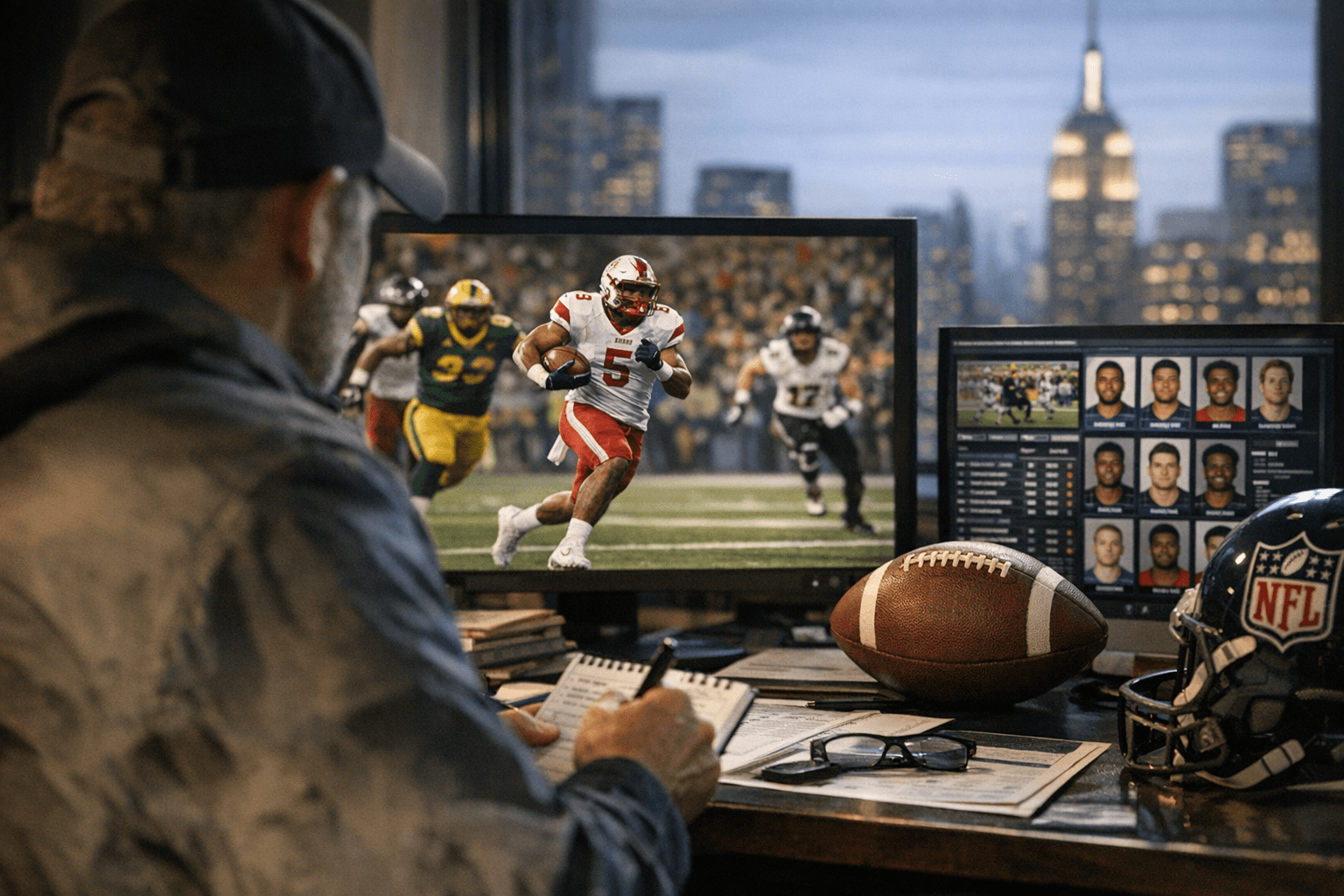
8. what FCS insiders are already saying, Zach McKinnell’s view
Zach McKinnell’s commentary in the SI excerpt frames the subdivision’s health: “If you need further proof that the FCS is going to be just fine, how about we take a quick look ahead to next season? Yes, Montana State looks to be the heavy favorite to repeat with Brent Vigen returning as head coach and over 25 key contributors returning from last season's team, but what about the rest of the subdivision?” He continues, “If I were forced to pick, I would lean South Dakota State at No. 2 right now due to Chase Mason and some solid returning defensive talent. Outside of the Jackrabbits, the rest of my Top 5 would be wide open with some major question marks at Montana, Illinois State, Villanova, and Tarleton State.” McKinnell’s concluding provocations, “Would it shock you if, in five years, Tarleton State, UC Davis, Illinois State, North Dakota, South Dakota, Villanova, Rhode Island, Abilene Christian, Idaho, or Tennessee Tech made a run to Nashville?”, are a direct cultural prompt: this HERO list helps identify the players who could drive those program ascents.
9. immediate scouting and draft implications
This working list operationalizes pro scouting in three ways: (1) it highlights positional commodities (QBs like Jax Leatherwood and Cam’Ron McCoy; WRs like Gabe Nunez and Montez Green; OLs like Jesse Igwe and Mateo Lucero) whose film will be re‑watched; (2) it identifies schools with clustered talent (Tennessee Tech, Texas Southern, Gardner‑Webb, West Georgia) that should expect increased pro‑day traffic; and (3) it gives agents and GMs a starting pool as the pre‑combine calendar (school pro days, Senior Bowl invites) firms up. HERO’s stated purpose, compiling names “who project into the 2026 NFL Draft conversation”, signals that these players should now be monitored for measurables and medicals.
10. business, cultural and social implications for FCS programs
A working NFL prospect list is a recruiting and revenue lever. When HERO and Draft Scout flags concentrate on programs (for example, the Tennessee Tech and Texas Southern strings in the snippet), recruiting pitches gain instant credibility; local economies and donor interest can spike around pro prospects and spring showcases. Culturally, McKinnell’s question about Nashville runs underlines fan‑base and media narratives: a few draft picks from an emerging program can change local identity, season ticket sales and sponsor interest, and that’s why a working list like HERO’s is more than a scouting memo, it’s a business signal.
11. recommended verification and newsroom follow‑ups (practical next steps)
The dossier includes an explicit list of follow‑ups editors should execute: obtain the full HERO Sports Feb. 19 update to capture the complete player list and clarify the fourth column; secure the Draft Scout dataset HERO referenced; retrieve the original Anygivensaturday pages to remove duplicate lines; get the full VersusSportssimulator table to verify column mappings; and fetch the full Fearthefcs page to define the two-year fields. Those actions will turn this working list into a publishable, audit‑ready ranking and clear the outstanding data ambiguities noted above.
12. how fans and scouts should use this list now
Treat HERO Sports’ compilation as a prioritized watchlist, not a finalized board. Re‑watch film of named prospects (the dossier preserves dozens of names: Jax Leatherwood, Gabe Nunez, Anthony Busa, Jesse Igwe, Dylan Pullen, Chris Rhodes, Hyatt Timosciek, Mateo Lucero, Ramier Lewis, Daveon Walker, Knowledge Davis, Ryan Robinson Jr., Cam’Ron McCoy, Will Deady, Johnny Schmitt, Luke Shields, Joshua Tarver, Aidan Bonde, Preston Hamilton, Graysen Riffe, Tae’Shaun Johnson, Maika Finau, Montez Green, Cooper Malaniak, Chavaris Dumas, Renardo Lewis, Tyler Simpson, Bones Marks, Freddie Pelling, Warren Sandbothe, Austin Powell, Collin Hurst, Kymani Santos, Kelik Harris, Justin Montgomery, Malik Lewis, Jaden Henry, Dillon Bryant, Chance Washington, Michael Torres, and the Anygivensaturday names AJ Pena, Kaleb Proctor, Derek Robertson, Treyvhon Saunders, Korion Sharpe, Michael Shulikov and more). Use the list to prioritize pro‑day travel, request measurables, and generate sharable scouting takes, that jump from passive viewing to active sharing is where this update will have the biggest cultural and business impact.
This article was produced by Prism’s automated news system from verified source data, official records, and press releases, then run through automated quality and moderation checks before publishing. The system is built and supervised by the people who set the standards it runs under. Read our full AI policy.
Did this article answer your question?