How FCS Playoffs Work: Postseason Qualification and Automatic Bids
The FCS used a 24-team playoff field with 11 automatic qualifiers and 13 at-large spots; bracket announced Nov. 23 and title decided Jan. 5, 2025 in Nashville.
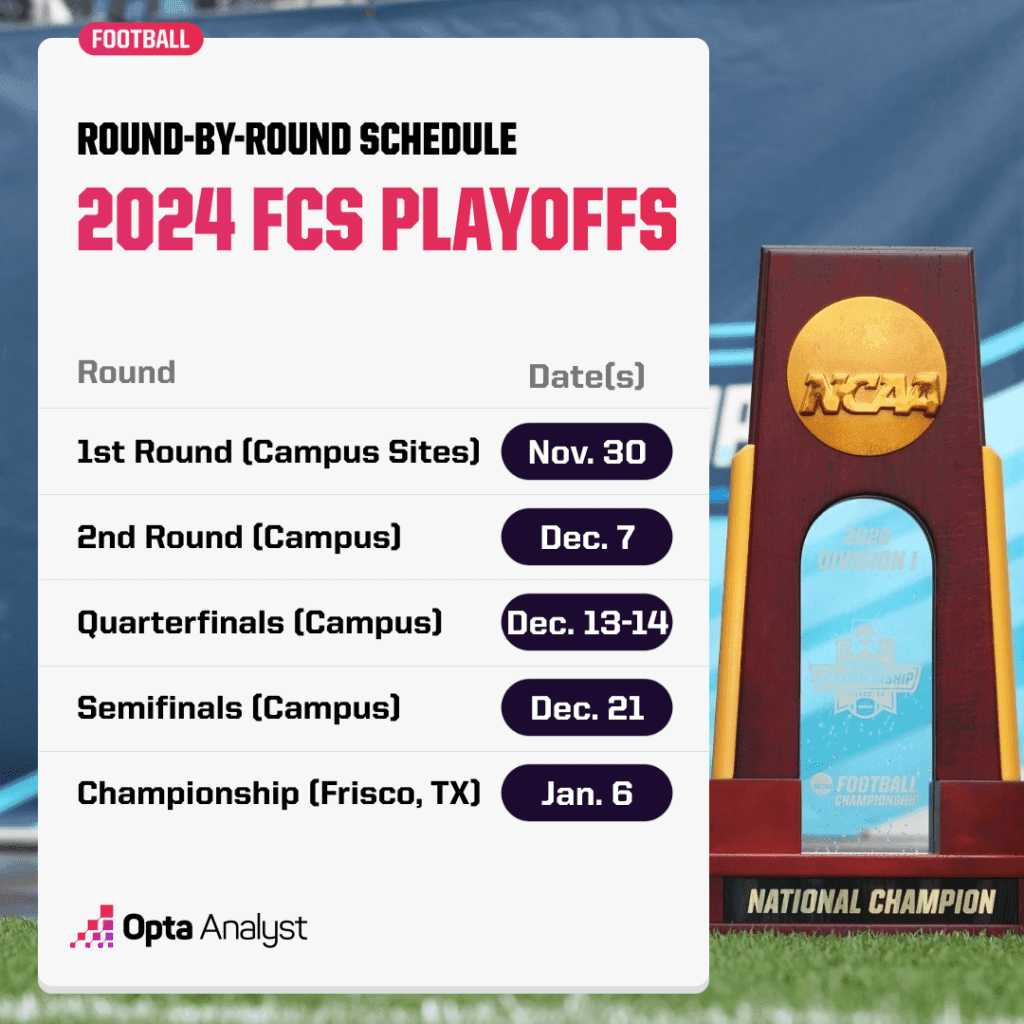
The FCS postseason in the season that culminated in Nashville on Jan. 5, 2025 revolved around a 24-team field, a compact selection process and a clutch run of conference finales that determined 11 automatic qualifiers. For fans, that meant a familiar blend of late-season drama and regional bracket matchups that shaped who earned byes, who traveled, and who needed a committee lifeline.
Eleven conferences secured automatic bids while 13 at-large spots completed the bracket that was announced on Sunday, Nov. 23. The top eight seeds received first-round byes, with the remaining 16 teams meeting in eight opening-round games over Thanksgiving weekend. Selection and seeding were driven by the FCS Playoff Committee, which “made up of representatives from each participating conference, determines at-large qualifiers and maps out the bracket.” Determining the top eight began with a nomination pool limited to teams that received at least 30 percent of the committee's vote; that pool was then ranked No. 1-8. The eight that received byes “also are seeded. The other 16 are not, which has been a point of contention.”
Conference races produced tight finishes and clear clinches. “Central Connecticut State clinched the automatic bid by beating Mercyhurst 35-28 in Week 13.” “Tennessee Tech became the OVC-Big South champion by beating UT Martin 20-17 in Week 13.” “In Week 13, Lehigh beat rival Lafayette 42-32 to earn the Patriot League's AQ spot.” “Drake clinched the automatic bid by topping Morehead State 17-10 in Week 13.” “Mercer clinched the SoCon auto bid in Week 11 by beating Western Carolina, 49-47.” “Stephen F. Austin clinched the Southland auto bid in Week 12 with a win over Lamar. The win clinched them a share of the conference title, and since Lamar is a common opponent between the Lumberjacks and Southeastern Louisiana, SFA gets the automatic qualifying bid.” “Abilene Christian clinched the ASUN-WAC auto-bid in Week 13 with a win over Central Arkansas.” “Montana State clinched the Big Sky auto bid in Week 13 by defeating Montana, 31-28.” “Rhode Island clinched the CAA auto bid in Week 13 by defeating Hampton, 38-10.” “Yale beat rival and previously undefeated Harvard, 45-28, in Week 13 to secure the bid.” “North Dakota State clinched the MVFC auto bid in Week 11 by beating North Dakota, 15-10.”
Procedures around first-round pairings mattered for travel and rivalry matchups. The committee tries to pair teams by geography, with a target that “teams must be within 400 miles of each other (when possible) and did not play in the conference regular season that year for first-round matchups.” That rule explains occasional early-season rematches avoided or allowed; history shows same-league pairings can happen when teams did not meet in league play, as in the 2018 James Madison-Delaware meeting. Policy debates simmered over whether to seed more teams after the NCAA council rejected a 2023 proposal to seed the top 16.
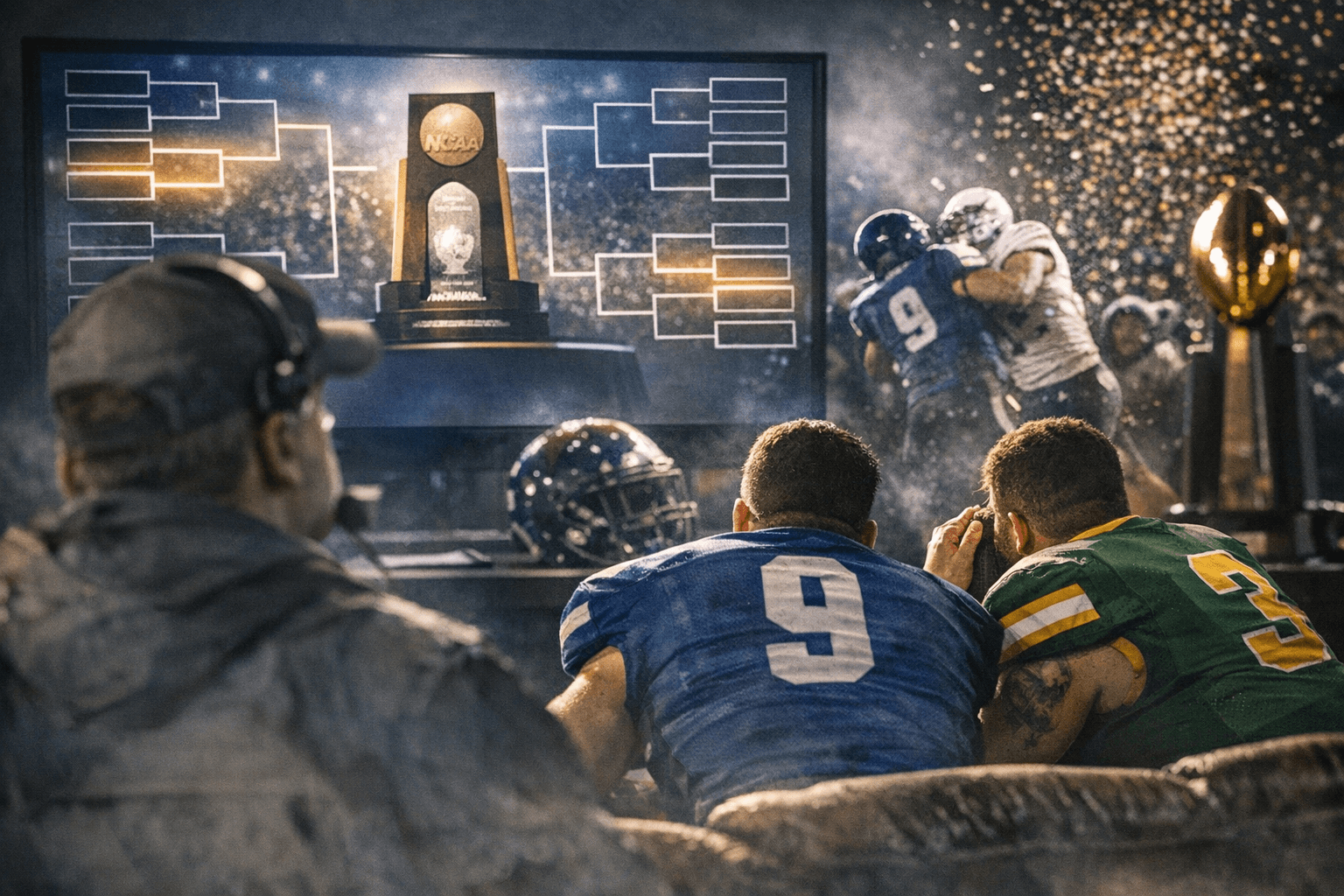
Several wrinkles remain historically and procedurally: FloFootball noted in 2023 that the Ivy League historically opted out and that MEAC and SWAC champions sometimes go to the Celebration Bowl while remaining eligible for at-large consideration. Those historical notes contrast with the NCAA list that included Yale as the Ivy automatic qualifier this season, a discrepancy that highlights how realignment, bowl arrangements and evolving committee practices continue to reshape who gets into the field.
For fans and administrators, the takeaway is straightforward: late November finishes determine postseason leverage, regional pairing rules and the committee's 30 percent nomination threshold decide byes, and the bracket calculus can reward a narrow conference victory as much as a marquee at-large résumé. With bracket mechanics clarified and clinches recorded, attention turns to how at-large selections and seeding influence travel, matchups and potential surprises in future playoff cycles.
This article was produced by Prism’s automated news system from verified source data, official records, and press releases, then run through automated quality and moderation checks before publishing. The system is built and supervised by the people who set the standards it runs under. Read our full AI policy.
Did this article answer your question?