Incarnate Word, Idaho, Western Carolina, Southern, Richmond, NCCU Underperformed in 2025
Six FCS programs entered 2025 with real expectations and came away with clear failure modes, bad lines, QB instability, transfer hemorrhages, and one headline coaching shakeup.
1. Incarnate Word, a top‑five preseason team that collapsed up front and at quarterback
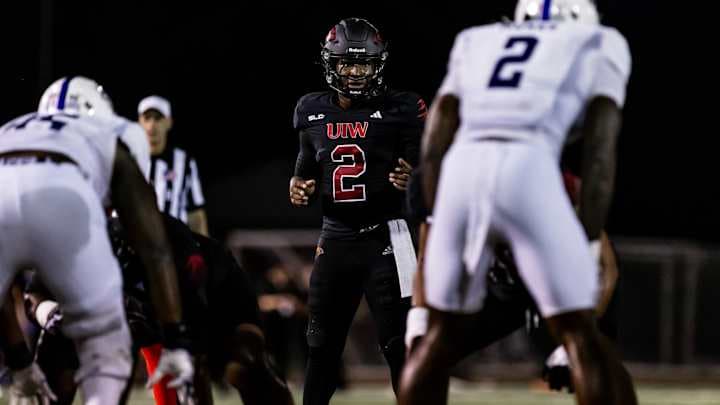
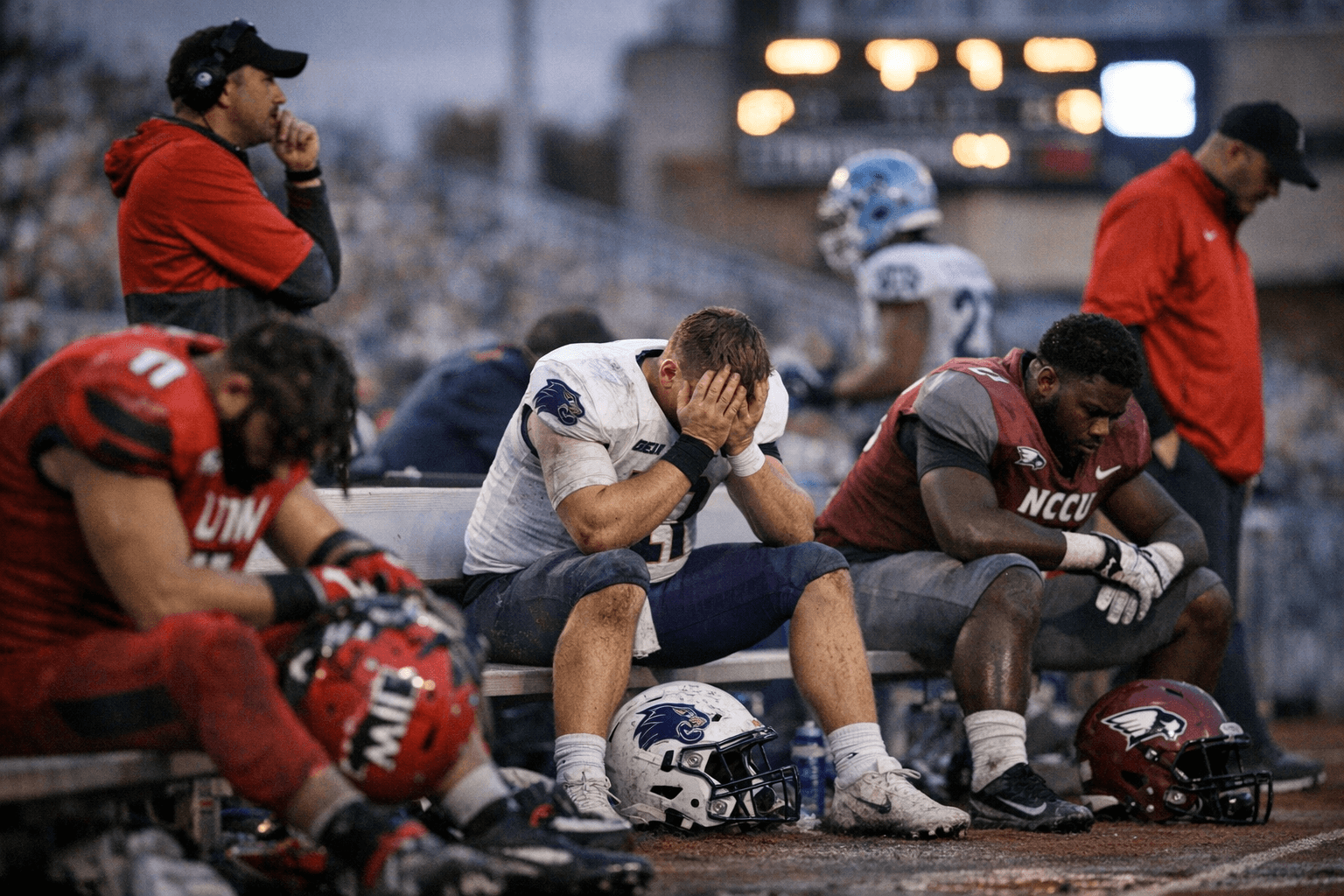
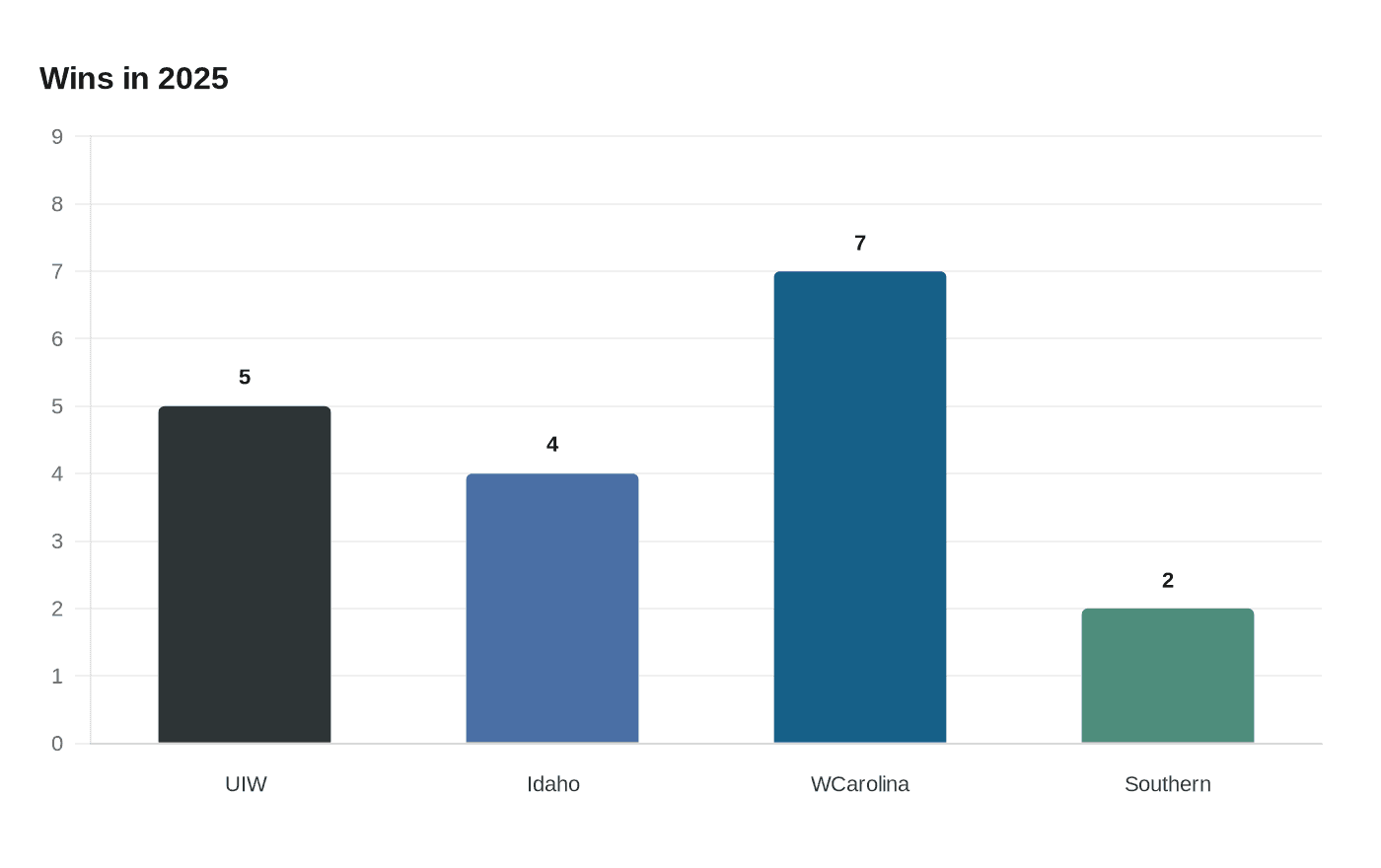
It finished 5-7 (3-5 Southland), a result sharply below its Top‑5 preseason billing, according to National Today. The most damning detail is from Sports Illustrated’s FCS Football Central: “It started with the offensive line, which allowed two or more sacks in nine games this year. Add that to a disappointing season from projected starting quarterback Ricard Torres, who was benched for freshman EJ Colson. All of this led to a 2-6 start before the Cardinals won three of their final four games to secure a 5-7 overall record.” Those nine games with two-plus sacks allowed are a clear structural issue; the benching of Torres for Colson shows the quarterback spot never stabilized. National Today also flags defensive meltdowns, UIW “allowed over 100 combined points in losses to East Texas A&M and UTRGV”, even as they salvaged wins vs. playoff teams Abilene Christian and Lamar. Bottom line: an O-line that couldn’t protect and erratic QB play turned a hype season into a rebound task for 2026.
2. Idaho, preseason top‑15 hype drowned by transfers, injuries and a midseason slide
Idaho closed 4-8 overall and 2-6 in Big Sky play (Herosports and National Today), with Herosports adding a 4-6 mark versus FCS opponents and a No. 12 preseason ranking. The program lost more than 20 players to the transfer portal after Jason Eck’s departure and entered 2025 with just nine returning starters under first‑year head coach Thomas Ford Jr., per Herosports. On the field, the Vandals showed early competitiveness, narrow games vs. San Jose State and Washington State and a close win over non‑scholarship St. Thomas, but the season “collapsed” in mid‑October with back‑to‑back defeats to Northern Colorado and EWU, and closed with a rough 37-16 home loss to Idaho State. National Today adds that starting quarterback Joshua Wood missed time with injury, contributing to Idaho “los[ing] seven of their final nine games, including their last three.” The takeaway: roster attrition plus key injuries turned a Top‑15 projection into a recovery job.
3. Western Carolina, offense carried the team, Dickens did his part, defense did not
Western Carolina’s arc is a classic what‑if: NatToday reports the Catamounts “started 0-3 due to a quarterback suspension before rallying, but still fell short of the playoffs,” while UnderdogDynasty records a 7-5 final mark that wasn’t enough for an at‑large SoCon bid. UnderdogDynasty’s account nails the paradox: “Taron Dickens was arguably the best quarterback in the entire FCS last year but even he could not elevate Western Carolina enough. For yet another painful year for Catamounts fans, WCU was left on the outside looking in when the playoffs came around. The offense did its part but the defense could not keep them in enough games and 7-5 was not enough to nab an at-large SoCon bid. Dickens finished as a top three finalist for the Walter Payton Award but hit the portal when the year wrapped and it seems as though Western Carolina is back to square one as they head into 2026.” Put bluntly: you can have a Walter Payton finalist and still miss the playoffs if the defense cannot make stops, and now WCU must replace Dickens after he entered the portal.
4. Southern, preseason SWAC West favorite reduced to a crisis season and a headline coaching hire
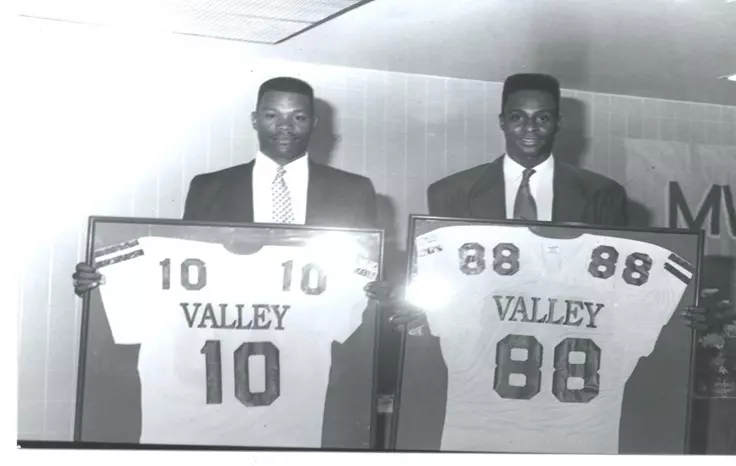
National Today frames this as a shock: Southern entered the year as the preseason SWAC West favorite yet produced “one of the worst seasons in program history at 2-10.” The same report states Terrence Graves “was fired on Oct. 20” and that Marshall Faulk, “the Pro Football Hall of Famer,” was named head coach on Nov. 29. The source wording creates a chronological quirk, the piece also says the Jaguars “started the season 2-10,” which is logically inconsistent with an October firing, but the facts as reported are unmistakable: a 2-10 performance, a midseason coaching exit date listed as Oct. 20, and a blockbuster hire of Marshall Faulk at the end of November. Southern’s immediate task is organizational stabilization; bringing in Faulk is a declaration of intent, but the program’s on-field slide and the fuzzy timeline around Graves’ dismissal underline how deep the reset will need to be.
5. Richmond, a bad first year in a new league that cost postseason continuity
Richmond’s move to the Patriot League came with hopes of dominance; instead, they “went just 3-4 in conference play” and finished tied for sixth, according to National Today and UnderdogDynasty. UnderdogDynasty captures the tone: “In its first year in the Patriot League, Richmond was hoping to be the new bullies on the block. It became clear from the first week, though, that the Spiders would not be able to push their new league mates around. A Week 1 loss to eventual champion Lehigh set the tone and it never really got better from there. Russ Huesman’s unit only ended up winning three conference games and finished tied for sixth in the league when all was said and done. Richmond’s offense couldn’t really get going and the defense, while having some flashy moments, never was able to get any real traction either. It was the first time in the last four years that the Spiders missed out on the playoffs and was their worst record since 2021.” Conference transition can be rocky, but Richmond’s drop is notable because it interrupted four straight playoff appearances and marked their worst season in half a decade.
6. North Carolina Central, continuity didn’t translate to championship output
National Today lists North Carolina Central as having returned the most starters in the MEAC but finishing 8-4 overall and 3-2 in conference, solid on paper, disappointing against the program’s goals. The piece highlights Walker Harris as “the best returning quarterback in the MEAC” for NCCU, yet the team still fell “below their championship goals,” per National Today. That combination, maximum returning experience plus an acknowledged top QB, usually predicts contention. The reality in 2025 was underachievement: NCCU’s record kept them shy of the MEAC title targets they set for themselves coming out of the offseason.
Conclusion, what ties these six misses together Across these six programs the receipts are clear: transfer‑portal churn and depth losses (Idaho, Western Carolina’s post‑season portal movement, Incarnate Word’s own portal class expectations), quarterback instability and injury (UIW’s Torres/Colson shuffle, Idaho’s Joshua Wood, WCU’s Dickens suspension and departure), porous defenses that couldn’t complement explosive offenses (WCU, UIW, Richmond), and disruptive coaching turnover (Southern) explain why preseason inputs didn’t convert to outcomes. Each school now faces a discrete pathway back: shore up offensive lines and QB play at Incarnate Word, restock Idaho’s roster and health chart, rebuild WCU’s defense or its quarterback continuity, stabilize Southern under Faulk, retool Richmond for Patriot League play, and turn NCCU’s returning experience into a championship formula. The 2026 season will be as much about roster construction and staff decisions as Xs and Os, and these six programs provide the clearest lesson that preseason billing buys no forgiveness when execution collapses.
This article was produced by Prism’s automated news system from verified source data, official records, and press releases, then run through automated quality and moderation checks before publishing. The system is built and supervised by the people who set the standards it runs under. Read our full AI policy.
Did this article answer your question?