Iowa transfer L.J. Phillips Jr. impresses teammates after FCS star turn
L.J. Phillips Jr. brought a 1,900-yard FCS season to Iowa, and the Hawkeyes are already seeing the power and toughness that made him a South Dakota star.
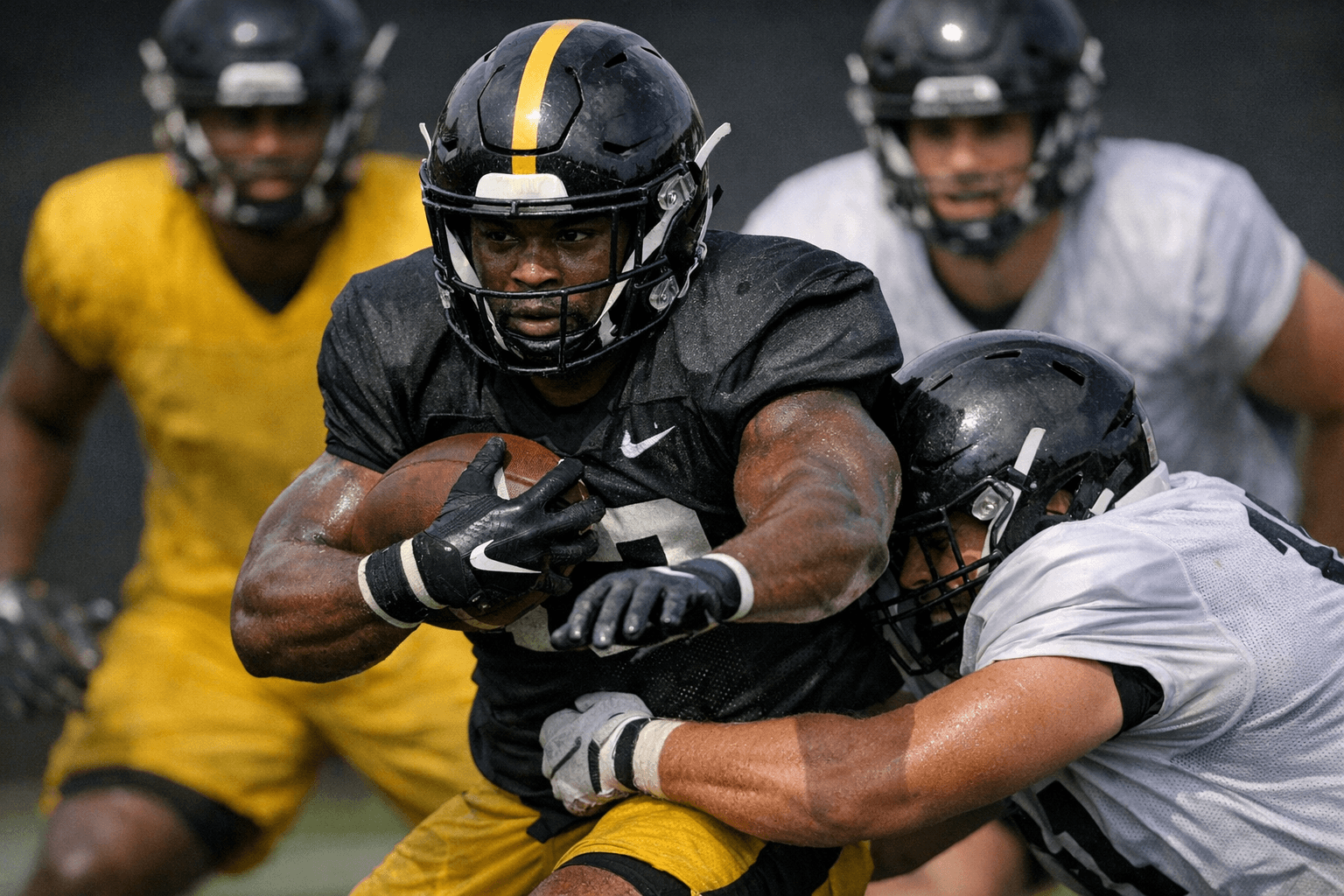
L.J. Phillips Jr. arrived in Iowa City with an FCS résumé that already looked like Big Ten production, and the Hawkeyes have noticed. The 5-foot-9, 225-pound back from Wichita, Kansas, transferred after a breakout South Dakota season and has quickly won over Iowa’s running backs room with the same downhill style that made him one of the subdivision’s most productive runners.
South Dakota credited Phillips with a program-record 1,921 rushing yards on 294 carries last fall, while ESPN listed his line at 1,920 yards, 19 rushing touchdowns, 28 receptions for 195 yards and another score. He played in all 14 games, made two starts, reached 1,000 rushing yards in only eight games and posted a 301-yard outing that stands second in school history. Iowa’s roster bio backs up the acclaim: first-team All-America honors from Walter Camp, AFCA and Sports Illustrated, second-team recognition from the Associated Press and Phil Steele, plus first-team all-conference honors from Phil Steele and second-team All-MVFC recognition.
Iowa moved quickly once Phillips entered the transfer portal on Dec. 18. He committed on Jan. 11, choosing the Hawkeyes over Penn State, and the fit is obvious inside a backfield that also includes Kamari Moulton and Xavier Williams. Iowa’s official roster now lists him as Lendon Phillips Jr. from Wichita, and the Hawkeyes are expecting him to be a major piece in Tim Lester’s run-heavy offense.
The early reviews have come from people who see him every day. Jay Norvell, Iowa’s new running backs coach and a significant part of the program’s spring overhaul, has made Phillips a priority, describing him as almost impossible to tackle because of his size, strength, attitude and style. Nathan McNeil added that Phillips keeps moving even after taking a hard shot. That is the clearest translation yet from Vermillion to the Big Ten: contact balance, toughness after first contact and the kind of workload tolerance that let him turn one FCS season into a school-record run.
For Iowa, Phillips is more than a portal add. He is proof of a broader trend in college football, where Power 4 programs increasingly look to the FCS for backs who can step in immediately rather than learn on the job. If Phillips carries South Dakota’s production into Big Ten play, Iowa’s ground game will gain another proven hammer, and the case for elite FCS backs as plug-and-play difference makers will only get stronger.
This article was produced by Prism’s automated news system from verified source data, official records, and press releases, then run through automated quality and moderation checks before publishing. The system is built and supervised by the people who set the standards it runs under. Read our full AI policy.
Did this article answer your question?