Montana Grizzlies Build Depth in Spring After Strong NFL Pro Day
Tight end Evan Shafer's 30 bench-press reps at Pro Day would have led all TEs at the NFL combine. Montana's spring game on April 10 reveals who fills the snaps he and 14 teammates left behind.
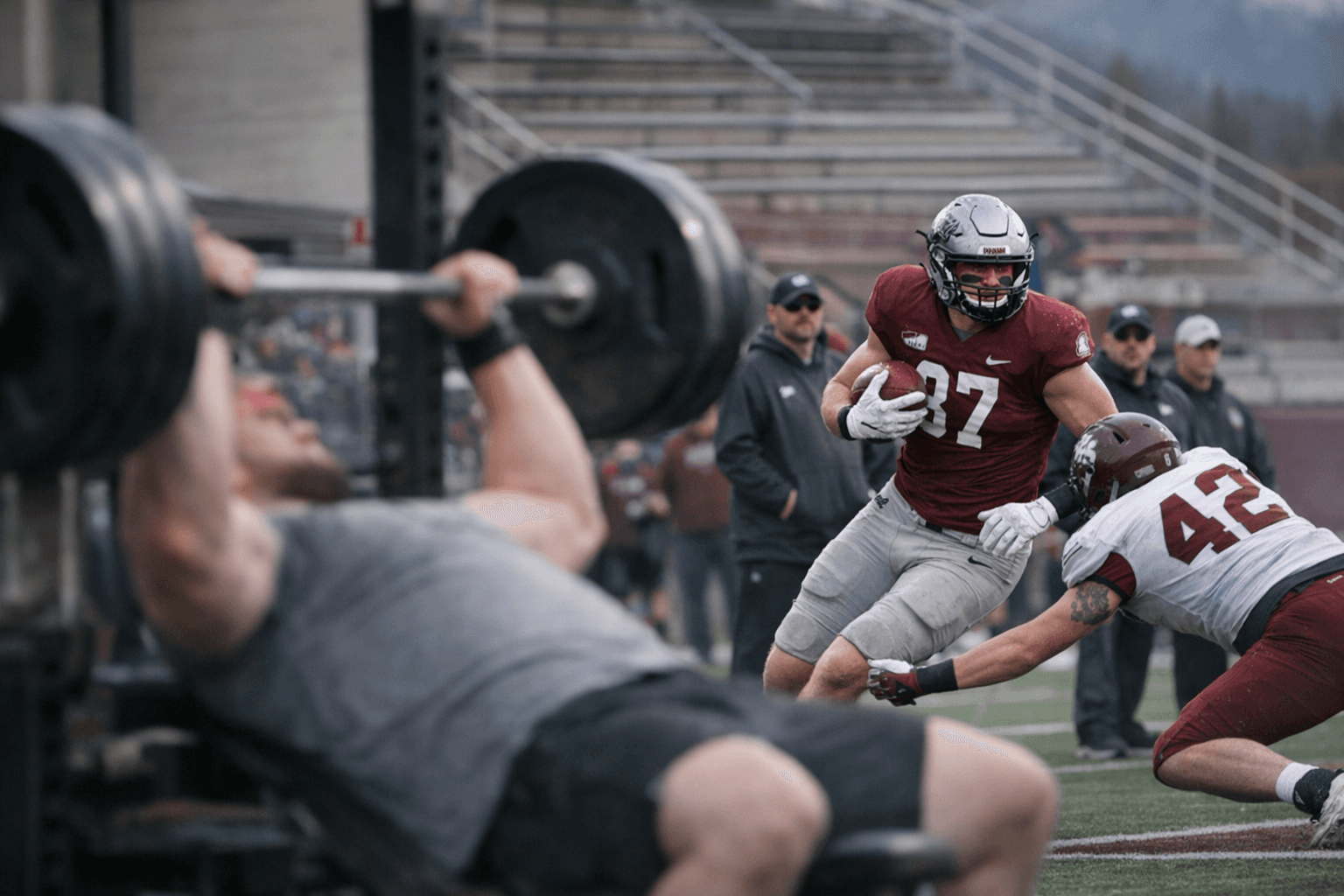
Fifteen former Montana Grizzlies showed up to the Grizzly Indoor Practice Facility on April 3 with a common goal: earn a professional contract. What they left behind, collectively, is the most significant roster reconstruction the program has faced entering a new coaching era.
Tight end Evan Shafer made the strongest individual statement at Pro Day, posting 30 repetitions on the 225-pound bench press, a number that would have led all tight ends at the NFL Scouting Combine. Guard Liam Brown added 26 reps, which would have ranked second among guards at the combine. Wide receiver Michael Wortham, who etched his name into the Grizzly record books in a single season, clocked the fastest 40-yard dash (4.48 seconds), the fastest 3-cone drill, and the fastest shuffle of anyone on the field. Defensive end Kellen Detrick posted a 36-inch vertical jump, placing him in the top 10 among edge rushers at the combine level. Scouts from 12 professional organizations watched it all from the sideline.
Those numbers underscore exactly what Montana's spring depth chart must now replace. Shafer, Wortham, Detrick, and Brown were pillars of the 13-2 squad that set a new season-ticket sales record in 2025. Cornerbacks Prince Ford and Kenzel Lawler, who combined for 42 games in a Grizzly uniform, also participated in Pro Day workouts, further thinning the secondary.
The reconstruction is happening under new head coach Bobby Kennedy, who was formally introduced on February 5 after Bobby Hauck's departure for an assistant role at Illinois. Spring practice opened March 2 at the Grizzly Indoor Practice Facility and runs through the spring game on April 10. Kennedy has kept the core intact: quarterback Keali'i Ah Yat, running back Eli Gillman, wide receiver Brooks Davis, and linebacker Peyton Wing all remained with the program through the coaching transition without entering the transfer portal.
The most urgent position battles are in the trenches and the secondary. On defense, Montana is scrapping Hauck's signature 3-3-5 system entirely. New defensive coordinator Eric Sanders is installing a new scheme, a significant conceptual shift that demands spring snaps before the 2026 opener. With Detrick gone, the Grizzlies need a pass rusher who can create the third-down pressure he reliably delivered. The second and third defensive line rotation, untested against FCS competition, must establish itself before April 10.
At cornerback, replacing both Ford and Lawler against the Big Sky's top receivers is a two-deep problem, not a one-position battle. Montana faces Eastern Washington, Weber State, and Sacramento State in conference play, all programs with receivers who can expose depth issues quickly. Spring is the window to identify whether any developmental corners can hold up in man coverage.
At tight end, the Shafer void matters most in the red zone. His blocking and receiving capability made Montana's offense difficult to defend in condensed space, and whoever claims that role this spring will need to demonstrate chemistry with Ah Yat under live conditions.
Brent Pease returns as offensive coordinator, providing continuity in the passing game, while Kennedy has opened spring practices to every high school coach in Montana, signaling early emphasis on the recruiting pipeline. The April 10 spring game will serve as the first real scorecard for a program that won 13 games last fall and is betting its returning core can absorb the departures that lit up a pro day just four days earlier.
This article was produced by Prism’s automated news system from verified source data, official records, and press releases, then run through automated quality and moderation checks before publishing. The system is built and supervised by the people who set the standards it runs under. Read our full AI policy.
Did this article answer your question?