Montana State aims to scale success beyond football under Costello
Montana State has turned football into a department-wide engine, and Costello’s next challenge is keeping the Bobcats ahead as FCS money, staffing, and realignment accelerate.

The Bobcats are not trying to prove they belong anymore
Montana State has moved past the “nice story” phase. Under Leon Costello, the Bobcats are acting like a program that expects success to compound, not fade, and that attitude is the real headline. The football team still drives the spotlight, but the bigger message is that Bozeman is building an athletic department designed to outlast one great run and absorb the next wave of college-sports chaos.
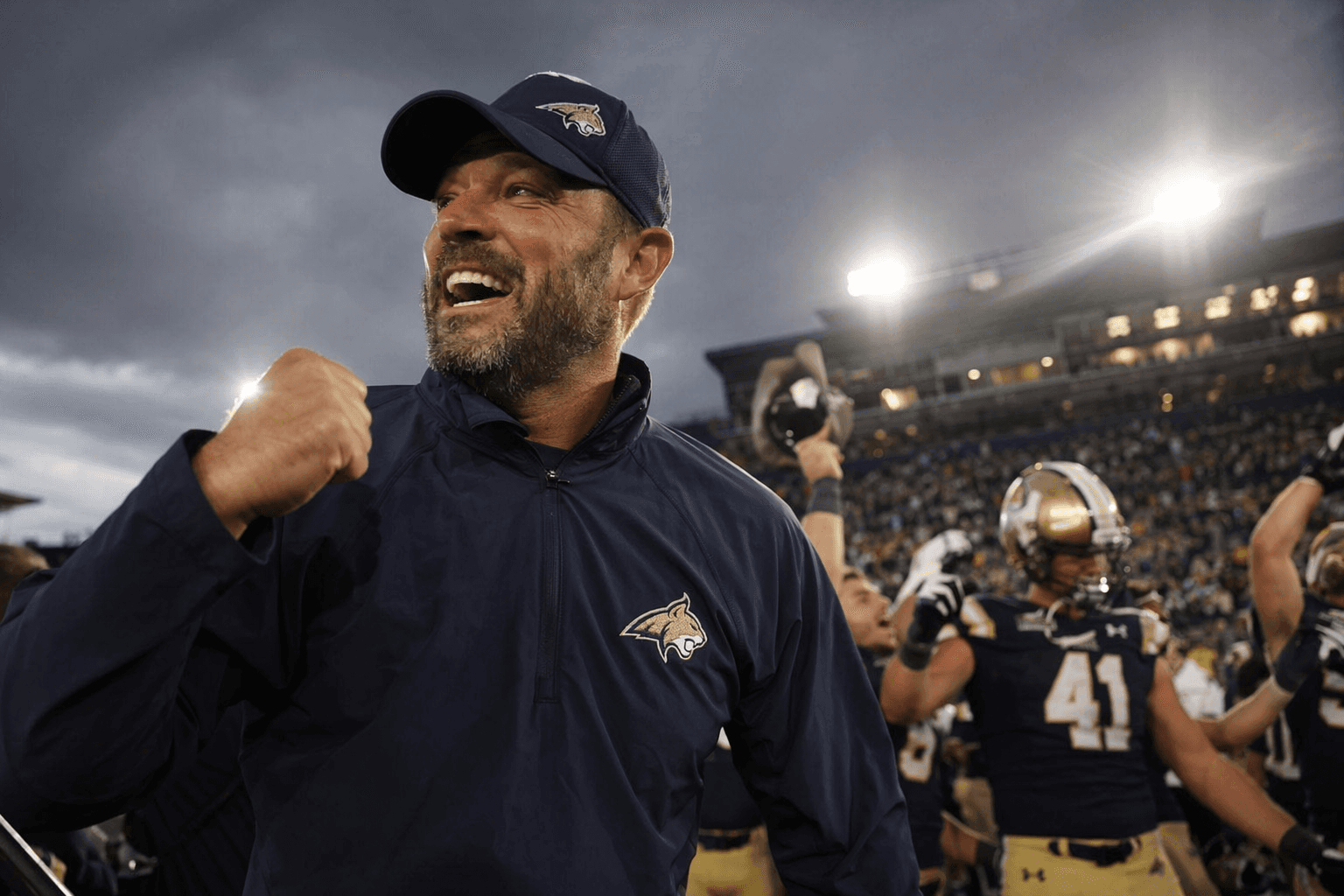
That is why Costello’s comments land as more than an interview. They read like a blueprint for how an FCS power keeps pace when private equity talk, revenue sharing, staffing growth, and facility spending start pulling on the same rope. Montana State is trying to protect its standard while also widening the base beneath it, and that approach may be the clearest warning sign for the rest of the subdivision.
The facilities plan was the first real tell
Montana State’s thinking did not begin with the 2024 title-level surge. The university released its Athletics Facility Master Plan in September 2017 as a 20-year vision for MSU athletics, and that plan has shaped everything since. The Bobcat Athletic Complex, a 40,000-square-foot building, was part of Phase I and was built to house football operations, study space, locker rooms, meeting rooms, training areas, health services, and rehabilitation space.
The money behind it tells you almost as much as the building itself. Montana State says 525 donors helped raise the needed $18 million in just two years, then the football program moved into the facility in fall 2021 before the public grand opening during Homecoming Week on October 8, 2021. That is not window dressing. That is a school deciding that football infrastructure is not a luxury, but a competitive weapon.
Football is the engine, but the whole car benefits
Costello’s core point is simple: when football wins, everything else gets easier. Bigger crowds create more visibility, more revenue, and more oxygen for the rest of the department, and Montana State has enough recent proof to make that case without blinking. The department says Costello has overseen more championships, postseason opportunities, All-America honors, and national academic honors than any comparable stretch in school history, and MSU recognized him as the 2024-25 NACDA FCS Athletic Director of the Year.
The numbers on the field are just as loud. Montana State finished 2024 at 15-0 and played for the FCS national championship. Tommy Mellott won the 2024 Walter Payton Award after throwing for 2,759 yards and 31 touchdowns, a stat line that matters because it shows the offense had both explosiveness and consistency when the stakes were highest. In other words, this is not a department hoping football can carry the brand. Football already is the brand.
The crowd number is the part the rest of the FCS should circle
Montana State’s fan base is not theoretical. HERO Sports’ 2024 FCS attendance data put the Bobcats third nationally in regular-season average home attendance at 21,899 per game, behind Jackson State and Montana. That matters because attendance is not just atmosphere, it is leverage. It changes what a program can promise recruits, what kind of environment visiting teams face, and how much revenue a department can funnel back into everything from staffing to facilities.
That kind of home-field pull is also why Montana State’s model is so hard for smaller FCS departments to copy. You can admire the blueprint without being able to afford the lumber. The Bobcats have turned winning Saturdays into a flywheel, and once that wheel is spinning, it helps every other sport ride along.
The money stream is no longer just fund-raising
Montana State has not limited itself to donor campaigns and facility drives. The department extended its Under Armour partnership through June 30, 2030, building on a relationship that began in 2012, and school officials say new agreements with Under Armour and Learfield have produced record revenues from both. That matters because modern athletics departments do not survive on sentiment. They survive on recurring revenue, brand partnerships, and the ability to keep reinvesting before the gap widens.
Costello has been at Montana State since the summer of 2016, and the timeline is important. Since then, the department has not just won more, it has built the administrative muscle to sustain winning. More full-time roles, stronger revenue, and better facilities mean the Bobcats are not waiting for the market to change around them. They are trying to change their own floor first.
Revenue sharing is the next line Montana State has already drawn
The House settlement and direct revenue sharing are the next stress test, and Costello’s stance is pragmatic rather than dreamy. By spring 2025, Montana State was preparing to participate once the settlement took effect, and Costello acknowledged the obvious: MSU cannot walk into a recruiting battle and match schools that are offering millions. But that is not the same as being powerless.
That is the line that should make FCS powers pay attention. Montana State is betting it can still sell something bigger than a check, and in the FCS that usually means three things: a winning culture, a visible path to playing time, and an environment that feels like a real investment rather than an apology. The Bobcats are not pretending the arms race does not exist. They are trying to survive it by being organized enough, successful enough, and visible enough to matter anyway.
What this says about the Big Sky, and the future beyond it
For the Big Sky Conference, Montana State’s trajectory is both stabilizer and threat. It raises the league’s profile because a 15-0 team in Frisco, Texas, with a Walter Payton Award winner and 21,899 fans a game makes the entire conference look stronger. It is also a warning because the more Montana State separates itself on facilities, staffing, and revenue, the more the gap grows inside the subdivision.
That gap is the real story here. The FCS is entering an era where money, not just coaching, will decide who can keep climbing. Montana State looks like a program built to stay elite in the subdivision, but the scale of its investment also hints at a school thinking beyond the old FCS ceiling. Costello is not talking like an athletic director trying to preserve a comfortable niche. He is talking like someone preparing for a future in which the Bobcats either keep expanding or get left behind by schools willing to spend faster.
That is why Montana State matters now. It is not just a championship-level team. It is a model for what the next era of FCS success will require, and a reminder that in Bozeman, the real competition is no longer just on Saturdays.
This article was produced by Prism’s automated news system from verified source data, official records, and press releases, then run through automated quality and moderation checks before publishing. The system is built and supervised by the people who set the standards it runs under. Read our full AI policy.
Did this article answer your question?