Montana State Tops Way-Too-Early FCS Top 25; Beau Brungard Highlighted
Fans will learn why Montana State sits atop the NCAA’s way-too-early FCS top 25, how Beau Brungard and transfer activity shape the chase, and which roster stories to watch.

1. No. 1, Montana State
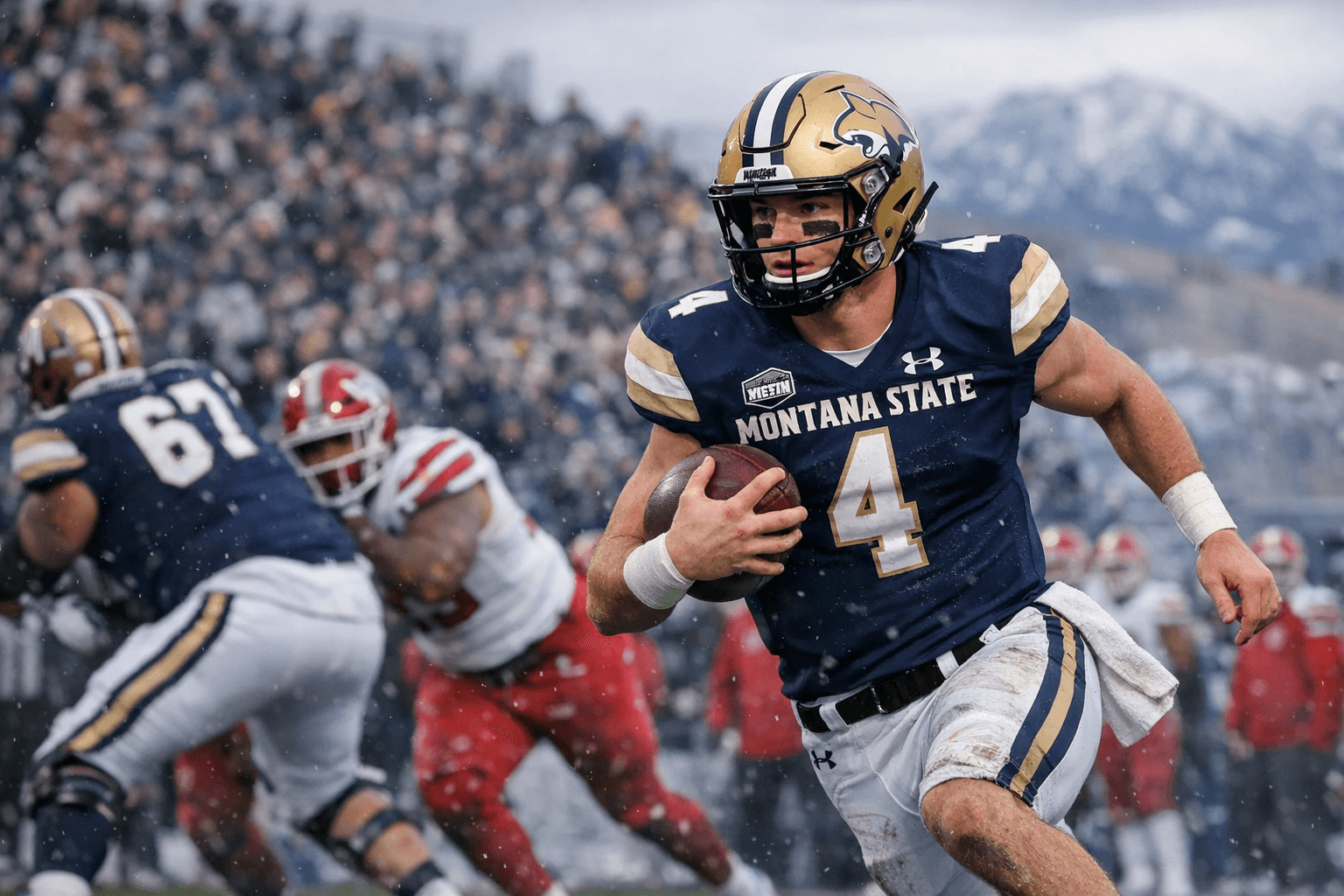
Montana State opens the offseason outlook as the NCAA’s way-too-early No. 1, buoyed by a returning core that gives the Bobcats rare continuity at the top of the FCS. Explicitly listed returns include Justin Lamson, RB Adam Jones, WR Taco Dowler and OL Titan Fleischman, a balance of skill positions and line play that fuels both identity and recruiting cachet. That continuity translates to cultural momentum for the program, stronger season-ticket retention and a clearer blueprint for postseason expectations.
2. No. 2, Youngstown State (listed inside the way-too-early top-10)
Youngstown State is cited as opening inside the way-too-early top-10, anchored by “the best player in FCS football in 2026, reigning Walter Payton Award winner Beau Brungard.” The NCAA notes, “However, he alone isn’t the reason the Penguins open in the way-too-early top-10,” pointing to a defense that returns All-American Mike Wells alongside Mike Voitus and Ebony Curry Jr. The Penguins “also added eight FBS transfers and six FCS transfers, including four players in a secondary that needs replacing in 2026,” and the assessment is clear: “The defense should hold its own this year, allowing Brungard to have another season that gets YSU to the playoffs.”
3. No. 3, (slot not specified in provided excerpts)
The full NCAA numeric for this slot wasn’t included in the provided excerpt, so the identity of No. 3 is not specified here. That gap highlights a bigger offseason reality in FCS: early lists give watchers a roadmap but spring practices and portal movement ultimately finalize pecking order. For readers, this slot is a reminder to track depth-chart releases and transfer confirmations before taking way-too-early rankings as gospel.
4. No. 4, (slot not specified in provided excerpts)
This slot was not named in the excerpted material, but the wider transfer landscape, both FCS portal classes and FBS downdrafts, is relevant for how midlevel FCS slots will shake out. Bleacher Report’s transfer analysis framed how power-conference movement accelerates roster churn, and that macro flow affects opportunity windows for FCS programs when FBS scraps cascade down the market.
5. No. 5, South Dakota (noted at No. 16 in the NCAA excerpt)
South Dakota is explicitly listed at No. 16 in the supplied NCAA excerpt, but its quarterback room and supporting cast are central offseason storylines wherever it sits in a top-25 ordering. “The loss of quarterback Aidan Bouman is a major one for South Dakota,” the NCAA copy states, then details options: Nevan Cremascoli (backup with FBS starting experience), Jackson Proctor (who led Dartmouth to an Ivy League title) and redshirt freshman Austyn Modrzewski as a threat to win the job. Whoever emerges will “benefit from the return of All-American running back Charles Pierre Jr. to ease any growing pains,” and the piece finishes on a foundational note: “Combined with head coach Travis Johansen leading the defense, South Dakota should be good even without its star quarterback.”
6. No. 6, Lamar (explicitly listed at No. 17 in the NCAA excerpt)
Lamar is shown at No. 17 in the excerpt with a 2025 finish of 8-5 and an FCS first-round appearance; that recent postseason experience is a program-building milestone. An 8-5 season and playoff berth provide recruiting uplift and donor enthusiasm, and Lamar’s placement in the way-too-early list reflects momentum that the staff will try to convert into a deeper run. Expect the Cardinals to emphasize continuity and situational improvement as the quickest path to moving up next fall.
7. No. 7, (slot not specified in provided excerpts)
No team for this precise slot appears in the excerpts, but the Big Sky and regional coaching churn matter here: CBSSports reports a seismic Big Sky development, “Montana football coach Bobby Hauck retires effective immediately”, and while that concerns the University of Montana (not Montana State), coaching shifts in the same conference influence scheduling, recruiting pipelines and rivalry atmospherics that affect any top-25 slot in the region.
8. No. 8, (slot not specified in provided excerpts)
This empty slot is a space to watch for the ripple effects of coaching changes and portal trickle-downs across the FCS. Changes at conference rivals and serviceable portal pickups can flip midwinter projections, and programs that stay aggressive in evaluation periods will likely climb into this level by preseason.
9. No. 9, (slot not specified in provided excerpts)
Bleacher Report’s transfer quick hits illuminate the broader roster marketplace affecting slots like this one. The B/R sidebar lists high-profile FBS moves, “No. 3 Indiana: Josh Hoover (via TCU)” and several others, and its macro read that “The SEC and Big Ten are tied with eight representatives each in our Super Early Top 25, and each conference has two teams inside the top four of the rankings” signals how attention and resources can skew toward certain conferences, indirectly influencing FCS scheduling, TV windows and the talent pipeline.
10. No. 10, Tarleton State
Tarleton State appears explicitly at No. 10 with last year’s finish: “12-2 (FCS quarterfinalist),” a breakthrough performance that legitimizes the program on the national FCS stage. A quarterfinal run accelerates fundraising, facilities investment and recruiting footprint, and Tarleton’s placement here reflects an institutional moment where expectations rise alongside community and alumni engagement. For smaller programs, sustaining that leap will hinge on staff continuity and smart portal additions.
11. No. 11, (slot not specified in provided excerpts)
The NCAA excerpt does not identify No. 11, leaving room for teams who harvest smart portal classes or return veteran cores to claim this zone. The offseason trend to watch is which programs convert single-season momentum into multi-year stability through targeted transfers and player development cycles.
12. No. 12, (slot not specified in provided excerpts)
Sports Illustrated’s broader college-football frame, though FBS-focused in the supplied material, offers a model for how champions translate success into portal reloading and roster turnover; SI’s vivid line reads, “The confetti has barely settled on the Hard Rock Stadium turf, yet the page must turn. Indiana completed what may have been unthinkable a few months ago in Miami Gardens. The Hoosiers defeated the hometown Hurricanes 27-21 to cap a perfect 16-0 campaign.” That quote illustrates how narrative momentum matters; FCS programs that craft a compelling next-season story gain recruiting and media advantage for slots like this.
13. No. 13, (slot not specified in provided excerpts)
This slot is unfilled in the excerpts but is emblematic of teams that will be judged by offseason acquisition strategy: who brings in difference-making transfers, who holds onto homegrown talent, and whose staff sells a postseason vision to prospects.
14. No. 14, (slot not specified in provided excerpts)
The transfer economy creates volatility around mid-pack preseason rankings. Programs that read the portal well, whether by snagging skill players, veteran offensive linemen, or quarterbacks with starter experience, will frequently leap into slots like this by fall roster clarity.
15. No. 15, (slot not specified in provided excerpts)
This slot may pivot on quarterback clarity, as the NCAA notes across several programs. Quarterback departures and returns calibrate expectations markedly: losing a starter hurts short-term projections, while adding proven signal-callers can vault teams upward.
16. No. 16, South Dakota (explicitly listed)
South Dakota is explicitly at No. 16 in the NCAA excerpt with a 2025 finish of “10-5 (FCS quarterfinalist)” and the quarterback turnover narrative already described. That quarterfinal pedigree plus an All-American back in Charles Pierre Jr. shows how programs with strong run games can smooth transitions under center and maintain defensive identity under coaches like Travis Johansen.
17. No. 17, Lamar (explicitly listed)
Lamar’s listing at No. 17 reiterates a program on the rise after an 8-5 season and a first-round playoff appearance. Ranking at this level captures both progress made and the uphill work needed to become a consistent top-tier FCS contender, especially in recruiting and depth building.
18. No. 18, (slot not specified in provided excerpts)
Unspecified here, this slot typifies teams that could be sleepers based on portal harvests or junior-year breakouts. Watch programs that publicly tout top-portal classes or have returning All-Conference performers as candidates to inhabit this space in preseason updates.
19. No. 19, (slot not specified in provided excerpts)
This slot often belongs to squads with a mix of veteran leadership and limited depth. For such teams, late-spring evaluations and summer conditioning reports will be decisive in confirming whether preseason optimism holds.
20. No. 20, (slot not specified in provided excerpts)
Again unlisted in the excerpts, this slot will likely be decided by special-teams steadiness, secondary experience and coaching continuity, three underrated pillars that often separate first-round exits from deeper playoff runs.
21. No. 21, (slot not specified in provided excerpts)
Mid-late top-25 slots reward programs that find bargain transfers and coach well up to the opening kickoff. The Tennessee Tech example shows how a strong portal class can be framed as roster salvage or reinvention heading into a new season.
22. No. 22, (slot not specified in provided excerpts)
Teams here often leverage an elite skill player to mask roster thinness; Beau Brungard at Youngstown State is the archetype in the top tier, and similar single-player impacts can lift squads into late top-25 consideration.
23. No. 23, (slot not specified in provided excerpts)
This slot will be fertile ground for programs that build momentum in late spring, either by naming an experienced quarterback or by making a statement in marquee spring games and camps.
24. No. 24, (slot not specified in provided excerpts)
As with adjacent slots, the combination of transfer savvy, returning veterans and coaching continuity determines whether a program stays in or falls out of the preseason top 25 once full lists and depth charts land.
25. No. 25, (slot not specified in provided excerpts)
The final top-25 slot is the most volatile; it frequently flips between programs that made small postseason runs and those that add a high-upside transfer. Tennessee Tech’s portal haul, for instance, is the type of offseason narrative that can vault a program into this spot by the time fall practice reports arrive.
Closing practical wisdom Treat way-too-early lists as a scouting map, not a final scorecard: prioritize watching Montana State’s returned starters, Youngstown State’s ability to pair Beau Brungard with a steady defense, and programs that aggressively convert portal momentum into depth (Tennessee Tech is an explicit example). Track official transfer confirmations, spring depth charts and coaching stability before placing confidence bets, those checkpoints separate offseason optimism from realistic championship pathways.
This article was produced by Prism’s automated news system from verified source data, official records, and press releases, then run through automated quality and moderation checks before publishing. The system is built and supervised by the people who set the standards it runs under. Read our full AI policy.
Did this article answer your question?