Montana State's 2026 Title Sparks Analysis of FCS Repeat Champions
Montana State’s title run shows what it takes to repeat in the FCS, fans will learn the historical patterns, roster blueprints, and modern trends that shape repeat champions.
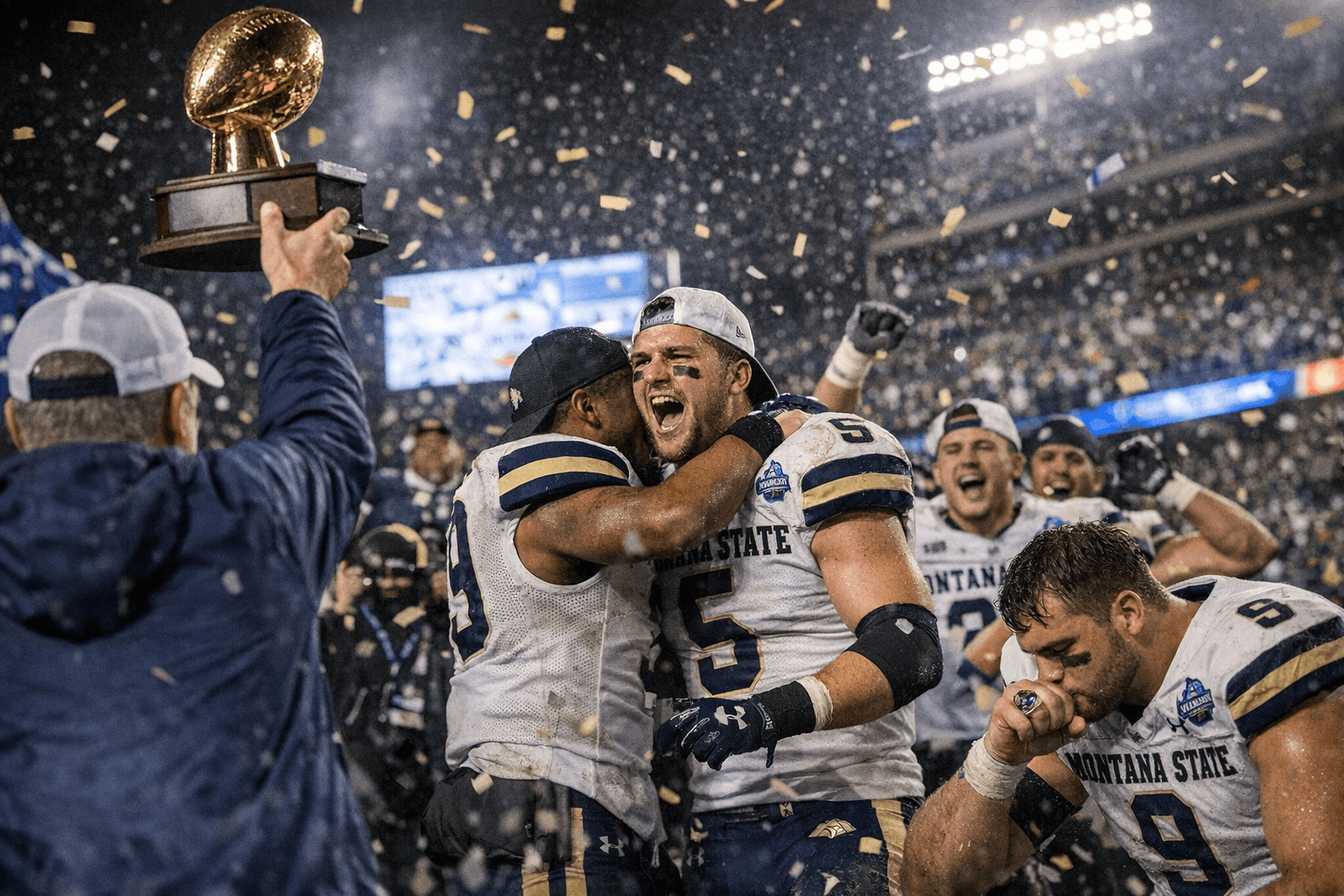
Montana State’s 2026 championship doesn’t just add a trophy to the case; it reignites a conversation about dynasty-building at the FCS level. This guide dissects the historical precedent, the roster and roster-management mechanics that underpinned the Bobcats’ victory, and the modern forces, portal, NIL, coaching markets, that alter repeat odds.
1. Historical repeat champions and longer streaks
Montana State’s triumph sits alongside a shortlist of FCS programs that have managed true sustained runs, the most famous being Appalachian State’s three-peat and North Dakota State’s multiple-title eras. Appalachian State proved in its run that a tight program identity and recruiting pipeline can yield consecutive crowns, while North Dakota State converted institutional commitment and coaching continuity into repeated dominance. Back-to-back and multi-year streaks are rare in FCS history, which makes any repeat attempt culturally and competitively significant; they are milestones that rewire how other programs plan.
2. The anatomy of a modern FCS repeat
Repeating in today’s FCS requires more than momentum from a single championship season; it demands institutional systems. Key ingredients include coaching continuity that preserves scheme and culture, depth across the 2-deep (especially along the offensive line and front seven), a reliable pipeline of talent via recruiting and the transfer portal, and special teams that can flip field position in playoff chess matches. Successful repeaters also manage attrition, replacing NFL-caliber losses without losing identity, and integrate portal arrivals quickly so depth never becomes a liability.
3. Montana State’s championship roster construction and returning‑player profile
Montana State’s 2026 roster construction blended veteran starters, high-impact transfers, and young contributors who were ready to step up, creating the kind of roster architecture that supports a title defense. The Bobcats leaned on positional balance, trenches-first recruiting, versatile secondary options, and playmakers who thrive in Bos-style clock control, which allowed schematic flexibility in close playoff games. That returning-player profile (core starters plus depth at skill spots) gives Montana State a realistic chance to be a contender next year, though sustaining a title run hinges on limiting attrition to the portal and converting underclassmen into reliable starters.
4. Explaining game outcomes, player performances, and team dynamics
Championship runs are decided in micro-moments: a late third-down stop, a special-teams swing, a red-zone efficiency differential. Teams that repeat tend to win the trenches and win the turnover margin; individual star turns matter, but complementary football wins titles. Montana State’s postseason demonstrated cohesive dynamics, veterans setting the tone, young players executing without panic, and coaches dialing situational plays, all of which turned tight outcomes into victories and kept momentum intact through the bracket.
5. Programs historically and structurally built for sustained postseason success
Beyond isolated championship seasons, certain programs have institutional advantages that make sustained success likelier. North Dakota State and Appalachian State exemplify programs with recruiting footprints that match identity, investment in facilities and analytics, and coaching pipelines that retain philosophical continuity. Structural advantages include regional recruiting monopolies, steady budget commitment to operations, and a culture where stepping up from the depth chart is expected, those features create repeatability, not randomness.
6. Industry trends reshaping repeat odds in the FCS
The transfer portal, NIL deals, and coaching-market volatility have rebalanced parity and power. The portal provides a shortcut to plug holes but also raises roster churn; programs that exploit it wisely gain an edge. NIL has enabled FCS programs in certain markets to retain and recruit players who might otherwise leave for FBS. Meanwhile, coaching poaching can decapitate contenders mid-cycle; programs that institutionalize systems (so replacements can plug in seamlessly) are better positioned to defend titles. Playoff structure and media visibility also affect recruiting and revenue pathways, changing the business calculus for repeat attempts.
7. Cultural and social implications of a repeat, or attempted dynasty
When an FCS program repeats, it galvanizes local economies, alumni giving, and town-and-gown identity in ways that ripple beyond the field. Repeat champions become rallying points: high school recruits in the region take note; local businesses see playoff-weekend boosts; and the program’s brand becomes a commodity in the NIL marketplace. There are social trade-offs, too: concentration of success can intensify debates about parity, conference realignment, and whether talent should migrate to programs with the best NIL deals rather than best fit.
- Track coaching continuity, head coach and coordinator retention influences scheme stability and player development.
- Monitor portal movement, who you lose and who you gain in key position groups (O-line, QB, edge rush) tells a clearer story than headlines.
- Watch returning starters by phase, offense, defense, special teams; depth in the trenches and experience at QB are bellwethers.
- Evaluate recruiting class fit, not just rank, players who match the system’s identity matter more than raw star power.
- Pay attention to late-summer depth chart battles, young players who win their job become difference-makers in playoff weather.
8. Tactical takeaways for fans, bettors, and practitioners (what to watch next)
Practical wisdom to apply: if you want to anticipate whether Montana State, or any FCS champion, can repeat, don’t chase highlight reels; map continuity. Check how many starters return, who the program adds in the portal, whether the coaching staff remains intact, and whether the recruiting pipelines are steady. Repeat championships are less about a single transcendent season and more about building a durable engine that survives departures and thrives under pressure. Follow those levers, and you’ll see the contenders before the bracket forms.
This article was produced by Prism’s automated news system from verified source data, official records, and press releases, then run through automated quality and moderation checks before publishing. The system is built and supervised by the people who set the standards it runs under. Read our full AI policy.
Did this article answer your question?