Morgan State linebacker Erick Hunter surges into late NFL Draft buzz
Erick Hunter’s late draft buzz is built on more than hype: 102 tackles, elite HBCU Showcase testing and real interest from multiple NFL mocks.
The name NFL teams keep circling
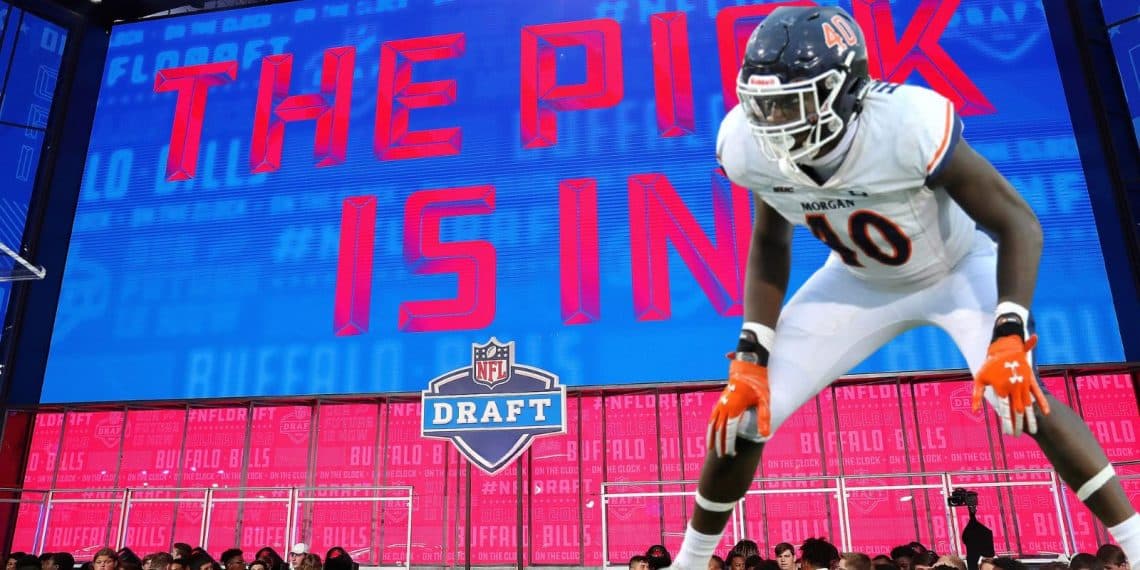
Erick Hunter is no longer just a strong HBCU linebacker with good tape. He is showing up in mock drafts from national analysts, and that is the signal that matters most this close to the NFL Draft. ESPN’s Jordan Reid projected the Morgan State linebacker to the Indianapolis Colts with pick 254, NFL.com’s Chad Reuter linked him to the Minnesota Vikings, and Yahoo Sports slid him to the New England Patriots. That is not random noise. That is a late-round conversation built on proof.
Hunter’s rise matters because the league usually does not hand out draft equity to FCS defenders without a clear reason. At 6-foot-4 and 220 pounds, he has the frame teams want in a modern space linebacker, and he backed that up at the NFL’s 2026 HBCU Showcase and International Player Pathway Pro Day in Ashburn, Virginia, where clubs were on hand to scout draft-eligible HBCU players.
Why the showcase changed the conversation
The testing numbers are what pushed Hunter from interesting to believable. At the showcase, he posted a 4.48-second 40-yard dash, a 4.21-second short shuttle, a 10-foot-10 broad jump and a 37-inch vertical. That is the kind of athletic profile that makes scouts stop thinking only about level of competition and start thinking about projection.
For a linebacker, that combination matters more than raw highlight plays. The NFL has been leaning harder into defenders who can run, redirect and survive in space without getting washed out by size. Hunter fits that mold. He is big enough to play downhill, but the times and explosiveness show he can chase, close and survive in coverage looks that used to expose smaller-school linebackers on draft day.
The production is even better than the buzz
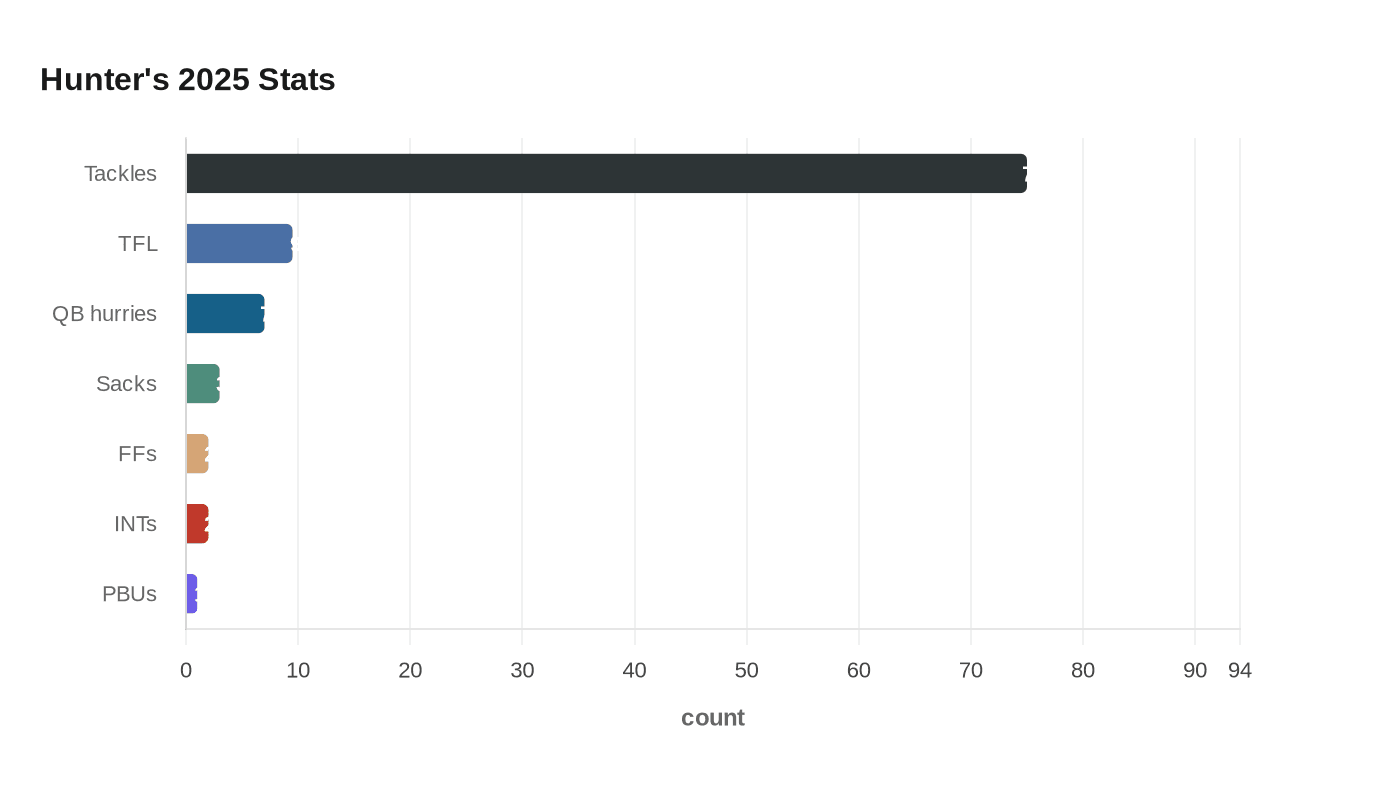
The real reason Hunter keeps surfacing is that the testing did not appear out of nowhere. Morgan State’s numbers show a defender who piled up impact all season. During the regular season, he led the MEAC with 75 tackles and ranked sixth in tackles for loss with 9.5. He also logged 7 quarterback hurries, 3.0 sacks, two forced fumbles, two interceptions and a pass breakup.
Morgan State later said he finished the 2025 season with 102 tackles, 14 tackles for loss and four sacks, while starting all 12 games. That is the profile of a player who was not just around the ball, but was often the reason the ball stopped. Add in a 90-yard blocked-kick return touchdown against Norfolk State, and you get the kind of all-around production that makes evaluators believe the player can contribute in more than one way.
The honors match the tape
The awards list backs up the stat line. Hunter was a 2025 All-MEAC first-team selection and was named a BOXTOROW HBCU All-American, an FCS Football Central All-American third-team selection, a Phil Steele FCS All-American third-team selection and a Stats Perform FCS second-team All-American. Morgan State also said he was a finalist for the 2025 HBCU Player of the Year.
That matters because draft buzz can often be inflated by one good workout or one hot month. Hunter’s case is different. The honors show sustained recognition across conference, HBCU and national FCS circles. When multiple outlets and award panels are all pointing in the same direction, NFL teams tend to pay attention.
What kind of player he becomes in the NFL
Hunter’s appeal is less about one classic position label and more about role flexibility. He profiles as the kind of late-round linebacker teams want when they need speed, pursuit and special teams value from day one. If the draft does not land him, the same traits make him a natural priority free agent target.
That is the modern blueprint for smaller-school defenders. Teams are not only asking whether a player dominated in college. They are asking whether he can cover ground, survive in a hybrid front, and play with enough violence to earn snaps on kickoff coverage while learning the defense. Hunter’s testing, production and size all point to yes.
The mock draft movement reflects that reality. If an analyst is willing to attach a pick to a player from Morgan State at the back end of the seventh round, the player has crossed a real threshold. He is no longer being discussed only as a camp body. He is being discussed as someone who could survive the cut line and make a roster argument.
Why this matters for Morgan State and the HBCU pipeline
For Morgan State, Hunter is more than a good player. He is another national proof point. The program can now point to a linebacker who moved from Capitol Heights, Maryland, and Westlake High School to All-MEAC honors, All-American recognition and legit draft chatter. That is the kind of trajectory that helps recruiting, validates development and keeps the Bears visible well beyond Baltimore.
The bigger story is the pipeline itself. HBCU defenders do not need perfect hype machines to reach the NFL. They need the right mix of production, measurables and stage performance. Hunter has all three. He showed it in games, confirmed it in workouts, and then kept showing up in mock drafts from respected evaluators.
That is why his name keeps appearing now. He did the one thing late-round prospects have to do: he made it hard for teams to ignore him.
This article was produced by Prism’s automated news system from verified source data, official records, and press releases, then run through automated quality and moderation checks before publishing. The system is built and supervised by the people who set the standards it runs under. Read our full AI policy.
Did this article answer your question?