North Dakota State’s NFL pipeline spans decades, with 14 draftees since 2014
Wentz, Lance and Zabel headline NDSU's NFL factory, where 14 draft picks since 2014 have turned Fargo into the FCS benchmark.
The standard starts in the 1960s
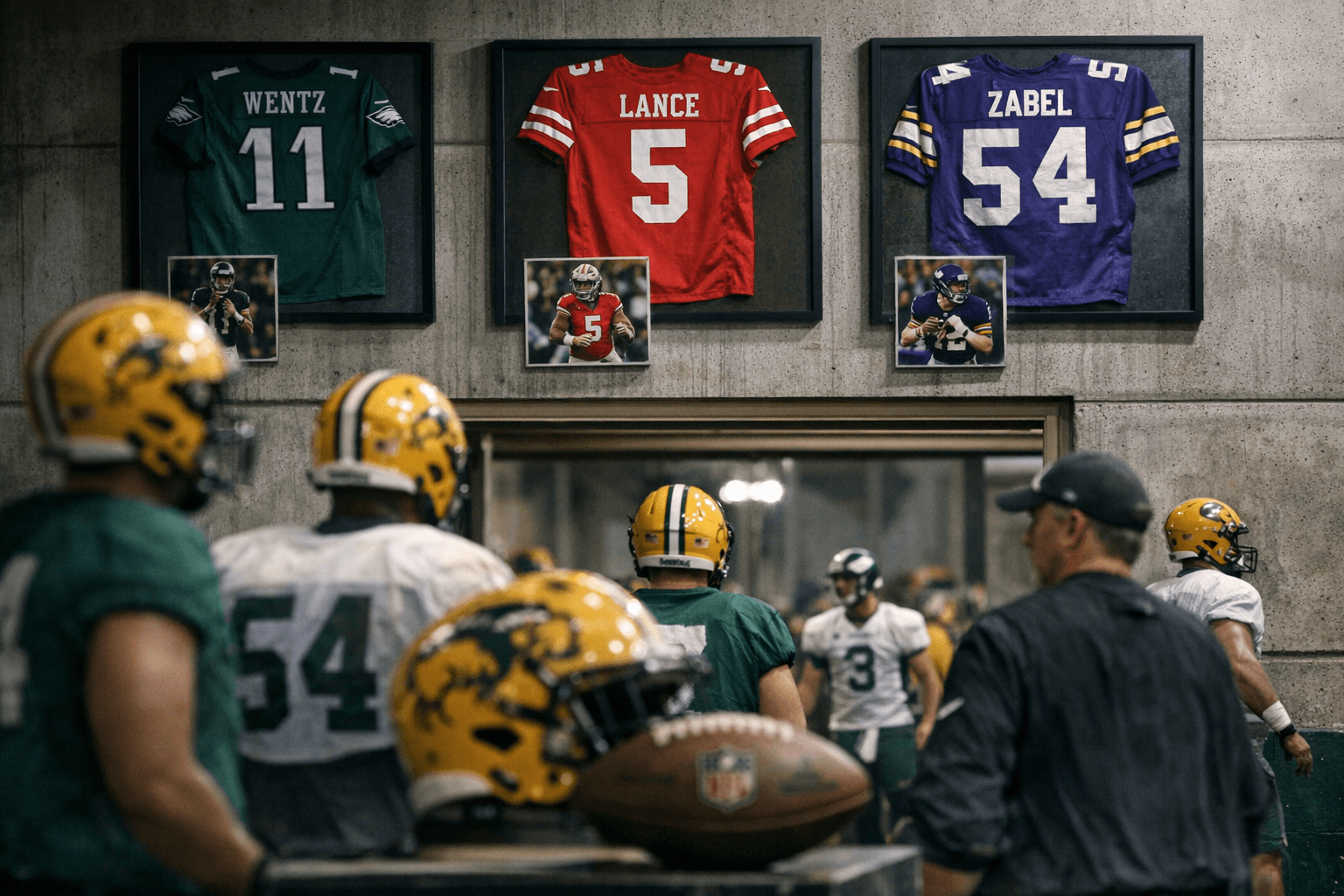
Carson Wentz, Trey Lance and Grey Zabel are the names that make North Dakota State impossible to ignore, but the deeper story is older and sturdier than any one star. HERO Sports’ draft table stretches back to 1965 and shows dozens of Bison selections, with names like Phil Hansen, Stacy Robinson, Doug Lloyd and Joe Mays reminding every new prospect that Fargo has been sending football talent to the league for generations.
That history matters because it strips away the idea that NDSU is riding a brief wave. The program has turned draft relevance into a habit, and the modern surge since 2014 only sharpened a reputation that was already built over decades. When scouts talk about the Bison, they are not describing a one-off pipeline, they are describing a program that made NFL production part of its identity.
Carson Wentz set the modern ceiling
Wentz was the player who made it clear the Bison could deliver far more than depth pieces. Taken in the first round in 2016, he gave NDSU a national headline that resonated far beyond FCS circles and reset what the position looked like coming out of Fargo.
His selection mattered because it changed the evaluation of every quarterback who came after him. Once an NDSU passer became a first-round NFL pick, the program stopped being viewed as merely efficient at developing small-school quarterbacks and started being treated as a legitimate source of premium draft capital.
Joe Haeg helped widen the blueprint
Joe Haeg was part of the wave that showed NDSU's NFL reach was not limited to a single glamour position. His draft path reinforced the idea that the Bison were teaching pro-ready football across the line, where technique, strength and adaptability travel well from the FCS to Sundays.
That kind of pick matters in a draft room because it changes how talent evaluators view the whole roster. If one NDSU lineman can make the leap, the logic goes, then the program is not simply producing isolated success stories. It is producing an NFL skill set.
Kyle Emanuel carried the defense into the conversation
Kyle Emanuel made it harder to reduce the Bison to an offensive-line factory. His selection showed that NDSU's draft credibility extended to defenders who played with the same discipline and physicality that defined the program on Saturdays.
That is a major part of the Bison's appeal to NFL teams. The program's players arrive with a reputation for understanding assignments, tackling with purpose and fitting into a structured defense quickly. Emanuel helped make that case visible.
Billy Turner kept the line factory moving
Billy Turner gave the pipeline another premium anchor, because linemen are still the position where the NFL's trust has to be earned the hard way. NDSU kept producing big bodies who could stay square, protect the pocket and survive a move up in competition, and Turner became part of that proof.
For a program like NDSU, those types of selections carry weight beyond the player himself. They become evidence that the Bison are not just winning games in the Missouri Valley, they are building professionals.
Easton Stick kept quarterback credibility alive
Easton Stick mattered because quarterback production only becomes a real program asset if it keeps repeating. After Wentz, Stick kept NDSU in the quarterback conversation and reminded teams that the Bison were not dependent on one outlier talent.
That consistency is one of the strongest indicators of a real pipeline. A school can land one big quarterback pick and call it a breakout. When another quarterback follows, the standard becomes repeatable.
Dillon Radunz expanded the tackle pipeline
Dillon Radunz pushed the offensive line reputation deeper into premium territory. Tackle prospects are evaluated for movement, balance and the ability to handle NFL athletes in space, and NDSU kept proving that its front line could meet that test.
Radunz is part of the reason the Bison draft story is so persuasive to front offices. The program has not only produced linemen, it has produced linemen who can fit multiple blocking schemes and handle the jump in speed that separates college football from the league.
Jabril Cox showed the defense was still exporting talent
Jabril Cox expanded the map again, this time for linebackers. His presence in the draft picture reinforced that NDSU's defensive development was not limited to one scheme or one era, but was capable of sending linebackers to the league with the instincts to match the physical profile.
For draft evaluators, that matters because linebackers are often judged on reaction time, football IQ and versatility. Cox's selection fit the larger NDSU profile perfectly, a player developed inside a program that prizes quick diagnosis and violent finishing.
Trey Lance made the first-round conversation undeniable
Trey Lance brought the Bison back into the first-round spotlight in 2021 and made the quarterback pipeline impossible to dismiss. He became the third North Dakota State player to go in the first round, joining Wentz and later Zabel in a class that has given the program rare NFL prestige.
The value of Lance's selection goes beyond the pick itself. It told the sport that NDSU could still produce one of the most valuable assets in football, a first-round quarterback, while maintaining the kind of team success that keeps the whole machine humming.
Christian Watson gave the pipeline a skill-position burst
Christian Watson added speed, visibility and a different kind of pro upside to the list. His draft story showed that NDSU is not confined to the trenches, even if the offensive line remains its signature calling card.
That matters culturally as much as it does competitively. A receiver with national recognition helps broaden the perception of the program, proving that the Bison can develop explosive playmakers who stand out in an offense built on precision and toughness.
Cordell Volson reinforced the interior line standard
Cordell Volson continued the run of offensive linemen who arrive from Fargo with pro-ready traits. In an era when NFL teams obsess over line depth, Volson represented exactly the kind of trustworthy, scheme-flexible player that keeps NDSU on scouting reports year after year.
This is where the pipeline becomes more than a list of names. It becomes a business model, one that turns repeated development at one position group into draft-day credibility across the league.
Cody Mauch proved the Bison mold still fits the modern NFL
Cody Mauch kept the line tradition current by arriving with the kind of versatility that NFL teams covet. His profile fit the Bison template, tough, adaptable and well-schooled in the details that matter when the game gets faster and the margins get smaller.
Mauch also helped show that the NDSU brand still travels in a changing league. The NFL keeps evolving, but the Bison keep producing linemen who can absorb that change and still look like they belong from the first day of camp.
Grey Zabel raised the bar for FCS offensive linemen
Grey Zabel's No. 18 overall selection by the Seattle Seahawks at Lambeau Field was a milestone that reshaped the ceiling for FCS offensive linemen. He became the highest-drafted offensive lineman in FCS history and only the third Bison first-rounder, a status that places him in the same company as Wentz and Lance.
His pick landed at a meaningful moment for the program, right after NDSU's 35-32 win over Montana State in the FCS title game. That 10th championship in 14 seasons, and 18th football national title overall, gave the draft story even more force, because the Bison were pairing team dominance with elite pro output in real time.
Cam Miller and the next chapter starts in the FBS
Cam Miller's 2025 selection helped push NDSU's Division I-era total to 17 NFL Draft picks, with 14 of those coming since 2014. Opta Analyst noted that the 11-year run would tie for 69th among FBS programs, a stunning benchmark for a school that is only now moving to the Football Bowl Subdivision for football beginning July 1, 2026.
That move to the Mountain West changes the frame, but not the standard. North Dakota State is carrying its draft reputation, its championship record and its development identity into a new level of competition, which means the next prospect out of Fargo will no longer be measured only against FCS history, but against a program that already proved it could turn dominance into NFL proof.
This article was produced by Prism’s automated news system from verified source data, official records, and press releases, then run through automated quality and moderation checks before publishing. The system is built and supervised by the people who set the standards it runs under. Read our full AI policy.
Did this article answer your question?